The World's Biggest Airplane Buyer Just Quit the Long Haul
IndiGo has nearly 1,000 jets on order and still couldn't make Europe pay. Its widebody retreat hands India's international boom to Air India and the Gulf hubs — and the gap between demand and permitted seats is where the money moves.

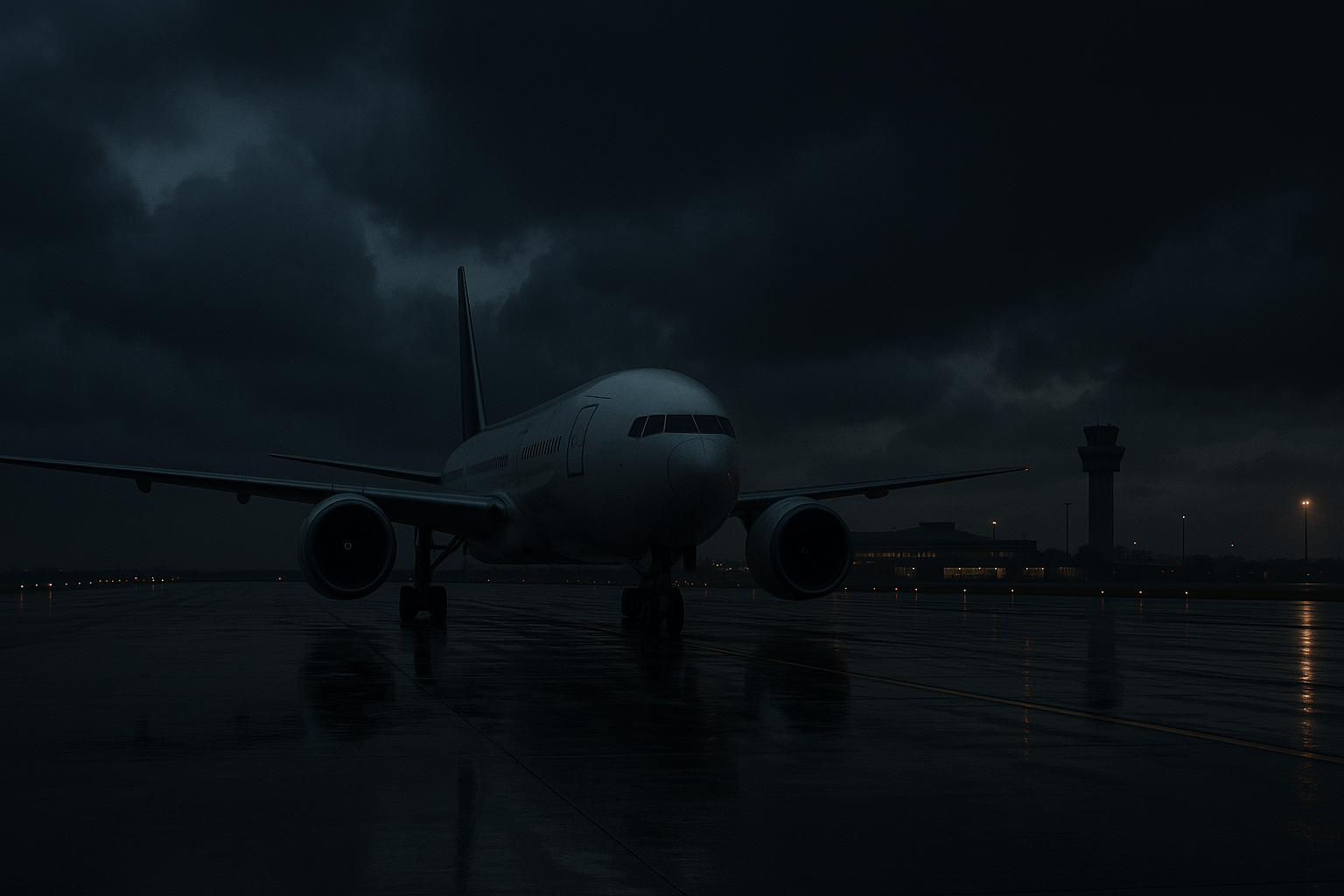
On July 31, India's largest airline filed one of the quieter capitulations of the year. IndiGo will end all widebody operations on October 25, return its six leased Boeing 787-9s to Norse Atlantic Airways by October 31, suspend London Heathrow entirely until its own Airbus A350s arrive, and downgrade its flagship Mumbai–Amsterdam route to a single-aisle jet.
No profit warning, no crisis press conference. Just an airline with nearly 1,000 aircraft on order — the largest order book in the history of commercial aviation — conceding that it cannot currently fly people from India to Europe at a profit.
The reasons IndiGo gave were bland by design: "a volatile operating environment and escalating geopolitical tensions." The mechanics underneath are anything but. What broke IndiGo's long-haul experiment is the same force quietly repricing intercontinental aviation everywhere: the map itself has changed, and the industry's economics haven't caught up.
The experiment that hit a wall
IndiGo is arguably the most successful airline story of the last two decades. It carries more than 60% of India's domestic traffic, runs the low-cost playbook better than anyone in Asia, and has ordered aircraft at a scale no carrier ever has. Long-haul was the logical next act: damp-lease six 787-9s from Norway's Norse Atlantic as a bridge, launch Manchester in July 2025, add London Heathrow, Copenhagen, and Amsterdam, then take delivery of its own A321XLRs and A350s and go global.
The bridge collapsed in stages. Copenhagen was suspended in February 2026. Manchester ends August 31. Now the whole widebody program is done — roughly fifteen months after it started.
What actually killed it
Three forces converged, and none of them are inside IndiGo's control.
The closed corridor. Pakistan shut its airspace to Indian carriers in April 2025 after the Pahalgam attack, and has extended the ban in rolling increments ever since. Every IndiGo flight to Europe now detours around Pakistan — up to three hours of extra flying on westbound routes. Extra hours mean extra fuel, extra crew, fewer rotations per aircraft, and missed connections. India's government has estimated the closure costs its airlines around $800 million a year. Air India puts its own hit at roughly ₹5,000 crore ($600 million) over twelve months and has asked New Delhi for relief. IndiGo's projected share is about ₹1,300 crore.
War-priced fuel. The Middle East conflict pushed Brent above $100 and jet fuel to levels that punish exactly the kind of thin-margin, high-utilization economics a low-cost long-haul operation depends on. IndiGo's June-quarter EBITDAR margin halved — 15.6%, down from 28% a year earlier — and the airline swung to a net loss of about ₹2,380 crore (roughly $270 million) on revenue that grew 19%. Read that again: demand is booming, and the operation still lost money.
The dollar bill. The 787s were leased in dollars, fuel is bought in dollars, and the rupee has been sliding. A damp lease — where the lessor's crews come with the aircraft — is the most expensive way to fly a widebody, tolerable only as a short bridge in benign conditions. Conditions stopped being benign.
The part that matters for everyone else
It is tempting to file this as one airline's misstep. It isn't. IndiGo's retreat is the first hard proof that the new geography of conflict — closed Pakistani airspace, missile risk over the Gulf, a fragmented Russian corridor — has structurally repriced who can profitably connect continents.
Consider what IndiGo is actually doing on Amsterdam: replacing a 300-seat widebody with a 195-seat A321XLR. The single-aisle jet burns less fuel, risks less capital, and makes a detour-lengthened route survivable. The XLR is becoming the workaround aircraft for a world where great-circle routes are political fiction — and IndiGo has dozens of them on order, with nine arriving this year alone.
Meanwhile, Air India inherits a long-haul "monopoly" it can barely afford to fly — it has been cutting its own European and North American network under the same detour costs. And foreign carriers, led by the Gulf hubs, already carry a record share of India's international traffic.
Here is the thing: Indian international demand is not shrinking. It is the fastest-growing major aviation market on earth, and its passengers haven't stopped flying to Europe and America. Somebody carries them. The question the rest of this briefing answers is who — and which of the five listed companies positioned around that traffic actually collects.
The rest of this briefing is for paid members: the seat-cap arithmetic showing demand running at two and a half times permitted supply on India–Dubai, the five listed ways to own the grounded long-haul gap (two trade in Europe, one in Singapore, two in Mumbai), why IndiGo's retreat just weakened Delhi's hand in the bilateral talks, and the catalyst calendar from August 31 to the first A350 delivery.
AlphaBriefing Paid gets you every investment thesis, scenario framework, and catalyst brief we publish — the analysis private intel clients pay four figures for, at a fraction of that.