The Water War: Iran Is Hacking America's Water Supply — and a $25 Billion Industry Is Racing to Respond
Iranian IRGC hackers are actively infiltrating U.S. water treatment systems. A joint federal advisory confirms the threat is real — and a booming OT security market is the investment story nobody is watching.

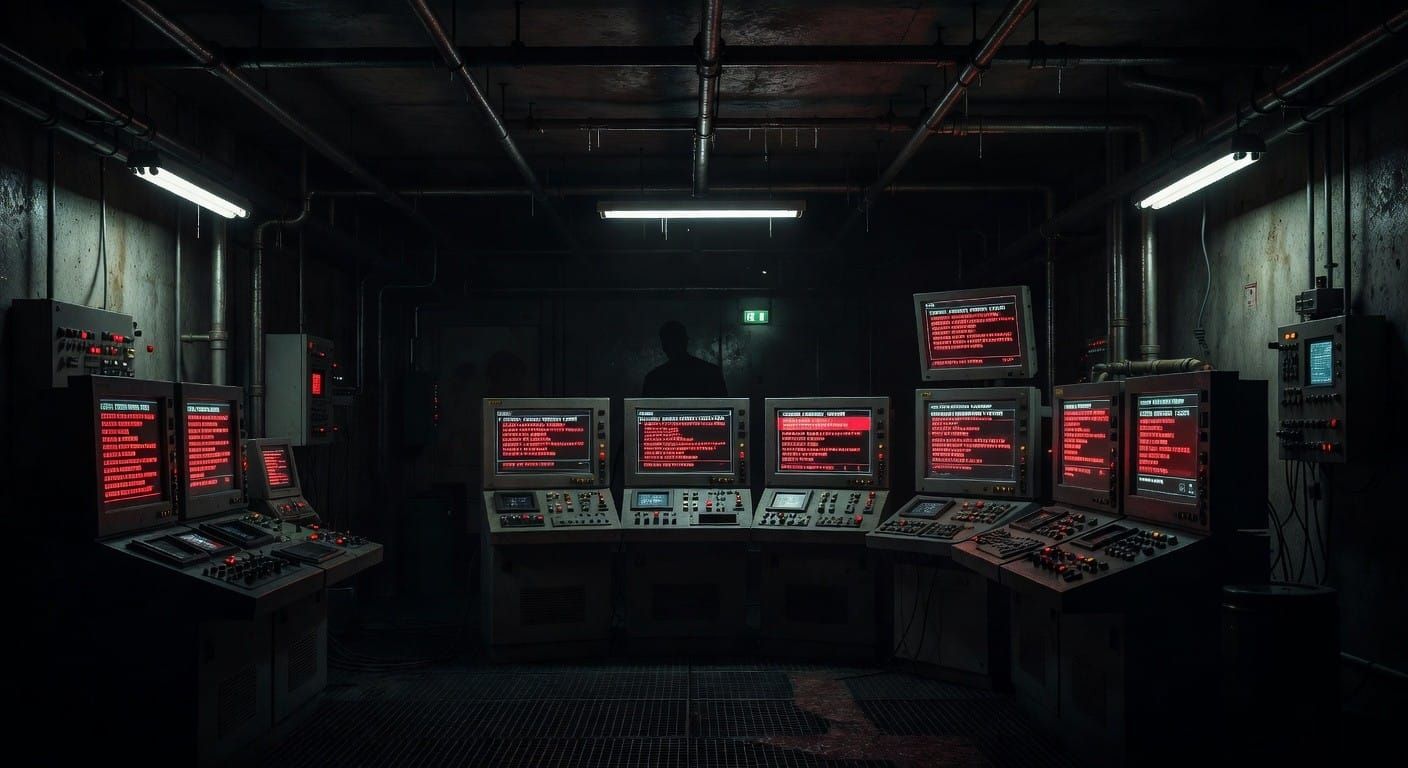
Iran's cyber army is inside America's water systems. On April 7, a joint advisory from six federal agencies — CISA, the FBI, NSA, EPA, DOE, and U.S. Cyber Command — confirmed what security professionals had feared: hackers linked to Iran's Islamic Revolutionary Guard Corps are actively exploiting programmable logic controllers across U.S. critical infrastructure, with water treatment plants as primary targets.
This isn't theoretical. It's happening now. And a $25 billion market is being built to stop it.
The Attack Surface Nobody Talks About
America runs on invisible infrastructure. Roughly 150,000 public water systems serve 300 million people, and the vast majority are operated by small municipalities with IT budgets that wouldn't cover a Silicon Valley intern's salary. These systems rely on decades-old SCADA (Supervisory Control and Data Acquisition) networks — industrial control systems designed in an era when "cybersecurity" meant locking the server room door.
The problem: those systems are now connected to the internet.
CISA's April advisory — designated AA26-097A — details an Iranian campaign targeting Rockwell Automation Allen-Bradley PLCs, the workhorses of American industrial control. The attackers aren't stealing data. They're manipulating physical processes: wiping controller configurations, tampering with sensors, and altering the human-machine interfaces that operators rely on to monitor water treatment.
The implications are chilling. A compromised PLC at a water treatment facility doesn't just crash a computer — it can alter chemical dosing, manipulate pressure systems, or shut down treatment processes that keep drinking water safe.
From Advisory to Reality: The Minot Attack
On March 14, the threat stopped being abstract. A ransomware attack struck the water treatment plant in Minot, North Dakota — a facility serving 80,000 residents. The SCADA system went dark. Operators scrambled to manual gauge readings, running the plant by hand for 16 hours while technicians worked to regain control. Full recovery took over two weeks, requiring complete server reinstallation.
Water quality was maintained — barely. No ransom was paid. No group has claimed responsibility, though the timing aligns with the broader Iranian campaign documented in the CISA advisory.
Minot was lucky. The next target might not be.
The attack pattern is consistent with what intelligence agencies have been tracking since the CyberAv3ngers campaign of late 2023, when IRGC-linked hackers compromised over 75 Unitronics PLCs across U.S. water systems. That was treated as a wake-up call. The April 2026 advisory suggests the alarm was ignored.
The Vulnerability Is Structural
The core problem isn't technical sophistication — it's neglect. Most U.S. water utilities spend less than 5% of their operating budgets on cybersecurity. Many lack dedicated IT staff entirely. The EPA has regulatory authority but limited enforcement capability, and its efforts to mandate cybersecurity assessments have been met with legal challenges from industry groups and state attorneys general.
The result is a patchwork of defenses that amounts to a national security liability. Consider:
- 52,000 community water systems in the U.S. serve populations under 10,000 — most lack any meaningful cyber defense
- SCADA systems at many facilities use default passwords or run on Windows XP-era operating systems
- Remote access — expanded during COVID for operational convenience — created thousands of new attack vectors
- No federal cybersecurity mandate exists for water utilities (unlike power grids, which fall under NERC CIP standards)
The asymmetry is stark. A nation-state cyber unit with resources measured in hundreds of millions of dollars is targeting systems defended by municipalities with IT budgets in the tens of thousands.
The $25 Billion Market Response
Where governments have been slow, capital has been fast. The operational technology (OT) security market — the industry segment focused on protecting industrial control systems — is projected to reach $25 billion in the U.S. alone by 2030, nearly doubling from $4.6 billion in 2025. Globally, the sector is forecast at $38.6 billion by 2030.
The money is flowing to a handful of companies building the digital immune system for critical infrastructure:
Claroty, an Israeli-founded startup, raised $150 million in January 2026 at a $3 billion valuation. Its platform provides visibility and threat detection across industrial networks — the kind of technology that could have flagged the Minot attack before it crippled operations. An IPO is widely expected within 18 months.
Nozomi Networks was acquired by Mitsubishi Electric in late 2025 for roughly $900 million — a deal that signaled industrial giants are treating OT cybersecurity as a must-have, not a nice-to-have. Nozomi's AI-powered anomaly detection is now being embedded directly into industrial equipment.
Dragos, the OT security firm founded by former NSA analysts, has become the go-to incident responder for water utility attacks. The company has been involved in multiple 2026 incidents and is positioning for a public listing.
Among publicly traded companies, Fortinet (FTNT), Palo Alto Networks (PANW), and CrowdStrike (CRWD) have all expanded their OT security offerings, recognizing that the next frontier of cybersecurity isn't the corporate data center — it's the water plant, the power grid, and the gas pipeline.
The Geopolitical Accelerant
The timing of Iran's escalation is not coincidental. The IRGC cyber campaign intensified in March 2026, coinciding with the broader U.S.-Iran military confrontation and the ongoing disruption of the Strait of Hormuz. Cyber operations against critical infrastructure serve as asymmetric deterrence — a signal that Iran can impose costs on American soil without firing a missile.
This pattern has historical precedent. Russia's Sandworm group attacked Ukraine's power grid before the 2022 invasion. China's Volt Typhoon has been pre-positioning in U.S. critical infrastructure since at least 2023 — a capability designed to be activated in a Taiwan contingency. Iran is now following the same playbook.
Senate hearings in February 2026 highlighted the convergence of threats: Russia, Iran, and China are all probing American water systems, each with different tactical objectives but a shared strategic goal — demonstrating the ability to disrupt daily life in the American homeland.
What Comes Next
The federal response is accelerating, but from a standing start. The EPA has launched free cybersecurity assessments for water utilities. CISA is distributing technical guidance and indicators of compromise from the April advisory. A bipartisan bill — the Water System Cybersecurity Enhancement Act — is moving through committee, though passage before 2027 is uncertain.
The private sector isn't waiting. Utilities in major metropolitan areas are signing contracts with OT security vendors at record rates. Managed security service providers specializing in water and wastewater are seeing 300% year-over-year growth in pipeline.
For investors, the thesis is straightforward: critical infrastructure cybersecurity is a sector with mandatory demand, regulatory tailwinds, and a threat environment that only intensifies. The companies building defenses for water systems, power grids, and industrial facilities are positioned at the intersection of national security and market opportunity.
The question isn't whether America's water infrastructure will face more attacks. It's whether the defenses will be built before the next one succeeds.
Get this level of intelligence every day. Subscribe to AlphaBriefing — free, member, and paid tiers available.
Sources & Further Reading
- CISA — Advisory AA26-097A: Iranian-Affiliated Cyber Actors Exploit PLCs Across U.S. Critical Infrastructure
- EPA — Joint Cybersecurity Advisory on Water Systems Regarding Iranian Threats
- StateScoop — Minot, North Dakota Water Treatment Ransomware Attack
- Claroty — $150 Million Series F Funding Announcement
- IndustrialCyber — Claroty Funding and CPS Security Market Growth
- BankInfoSecurity — Claroty, Nozomi, Armis Top Cyber-Physical Security Rankings
- U.S. Senate EPW Committee — Whitehouse Highlights Urgent Cyber Threats to U.S. Water Systems
Disclaimer
AlphaBriefing is an independent intelligence publication. The content in this article is produced for informational and educational purposes only. Nothing published by AlphaBriefing constitutes financial, investment, legal, tax, or regulatory advice, nor should it be construed as a solicitation or recommendation to buy, sell, or hold any security, asset, or financial instrument.
All views expressed are those of the author at the time of writing and are subject to change without notice. Markets are volatile and unpredictable; past performance is not indicative of future results. Any investment involves risk, including the possible loss of principal.
AlphaBriefing and its principals, employees, or contributors may hold positions in securities or assets mentioned in this article. This should be considered a potential conflict of interest. No material relationship with any company referenced exists unless explicitly disclosed. Readers should conduct their own due diligence and consult qualified financial, legal, and tax advisors before making any investment decisions.
Information in this article is drawn from public sources believed to be reliable at the time of publication. AlphaBriefing makes no warranty, express or implied, as to the accuracy, completeness, or timeliness of any information herein. AlphaBriefing accepts no liability for any loss or damage arising from reliance on this content.
© AlphaBriefing. All rights reserved. Unauthorized reproduction or distribution is prohibited.