The Electoral Supercycle: Three Elections in Six Months Will Reshape Latin America — and Your Portfolio
Colombia, Peru, and Brazil are all choosing presidents within six months. The outcomes will redirect commodity flows, sovereign debt trajectories, and billions in capital across Latin America's largest economies.

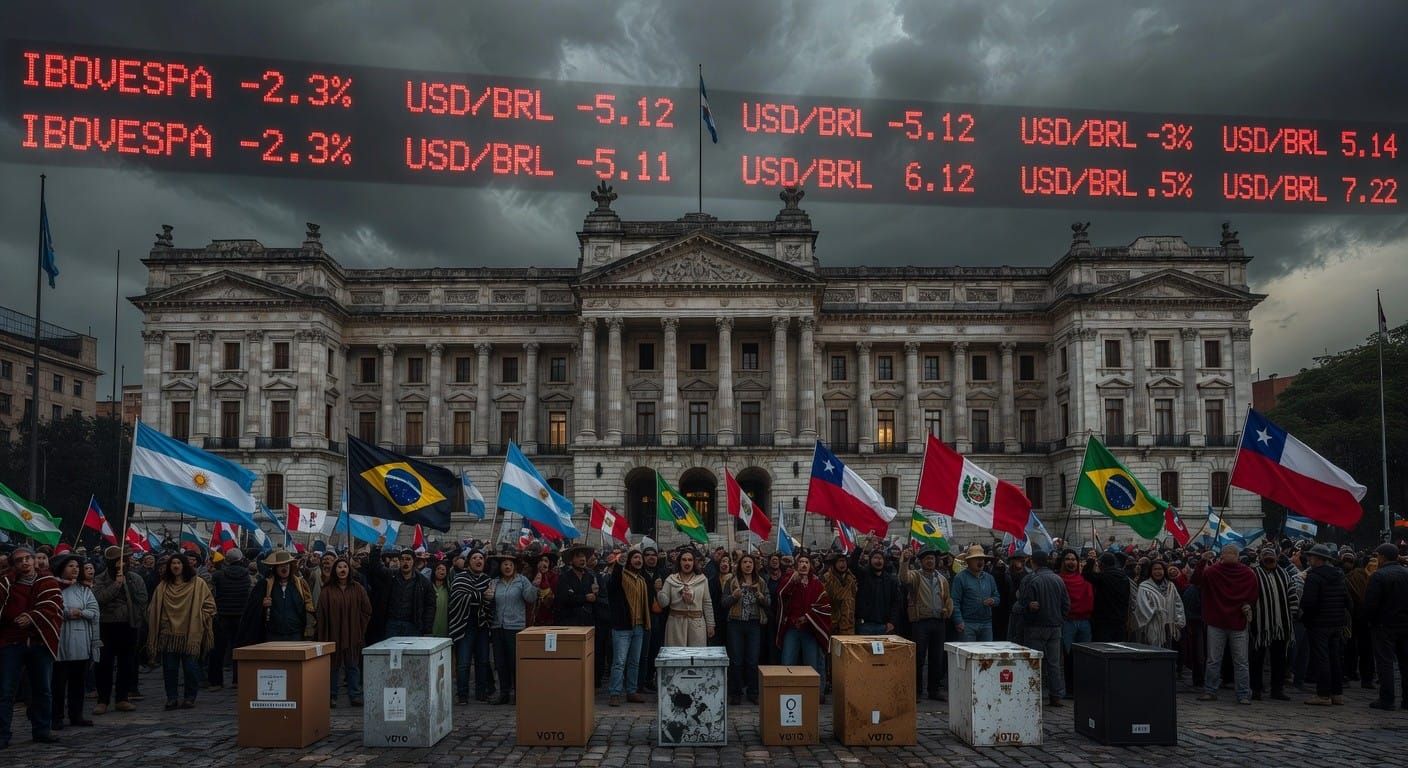
Latin America is heading into the most consequential electoral cycle in a generation. Between now and October, three of the region's largest economies — Colombia, Peru, and Brazil — will choose new presidents, collectively determining the policy direction for over 450 million people and trillions of dollars in GDP.
This isn't just a political story. It's a capital allocation story.
The outcomes will reshape commodity flows, sovereign debt trajectories, foreign direct investment regimes, and the strategic balance between Washington and Beijing across the Western Hemisphere. For investors, the Latin American electoral supercycle of 2026 is the single most important emerging market event of the year.
The Calendar: Three Elections, Six Months, One Region
The sequence matters. Each election feeds into the next, creating a cascading sentiment effect across Latin American assets:
- Colombia — First round May 31, runoff June 21
- Peru — Runoff June 7 (first round completed April 12-13)
- Brazil — First round October 4, runoff October 25
All three countries are navigating deep structural challenges: fiscal deficits, security crises, institutional erosion, and the gravitational pull of US-China competition. All three have incumbent administrations with mixed records. And all three races are genuinely competitive — no foregone conclusions.
Colombia: The Most Immediate Flashpoint
Colombia votes in 30 days, and the race is a three-way contest that almost guarantees a runoff.
The frontrunners:
- Iván Cepeda (Historic Pact, left) leads first-round polls at 31-39%, promising to continue Gustavo Petro's peace talks and social spending programs
- Paloma Valencia (Democratic Centre, center-right) polls at 20-32%, running on stronger military action and ending negotiations with armed groups
- Abelardo de la Espriella (MSN, right) captures 18-28% with an "iron fist" security platform and closer US alignment
The backdrop is grim. Pre-election violence has escalated, with bombings and ELN threats dominating the campaign's final weeks. Colombia's fiscal deficit is the worst in 30 years. Unemployment sits at 8.8% with 2.34 million jobless. The peso has been under sustained pressure.
Why it matters for investors: Colombia is the swing state of Latin American debt markets. A rightward shift could trigger a relief rally in Colombian sovereign bonds and stabilize the peso. A Cepeda victory continuing Petro's agenda would likely widen spreads further. The VanEck EM Bond ETF (EMBX) carries approximately 5.3% Colombia exposure — its largest Latin American country weight — making it a direct proxy for this election's outcome.
Peru: The Fujimori Question Returns
Peru's first round on April 12-13 was characteristically chaotic — logistical failures delayed counting for weeks, fraud claims flew, and the ONPE chief resigned. But the results are now clear:
- Keiko Fujimori (Fuerza Popular, right) — 17.12%
- Roberto Sánchez (Juntos por el Perú, left) — 12.04%
They'll face off on June 7 in a runoff that echoes Peru's chronic left-right divide. Fujimori, running for the presidency for the fourth time, represents continuity with Peru's market-friendly extractive economy model. Sánchez represents the leftist populist tradition that nearly derailed the mining sector under Pedro Castillo.
Peru is the world's second-largest copper producer and a major silver and zinc exporter. The election outcome directly impacts mining investment flows, licensing regimes, and the trajectory of projects worth tens of billions of dollars.
The fragmented Congress complicates everything. Fuerza Popular secured the largest bloc (40 deputies, 22 senators) but falls well short of a majority in Peru's newly restored bicameral legislature — the first since the 1990s. Governing will require coalition-building, which Peru has historically been terrible at.
This is where the analysis gets actionable. AlphaBriefing members get the full investment framework — scenarios, positioning, and the bottom line.
Subscribe to AlphaBriefing — Free, Member, and Paid tiers available.