The Fed Just Outsourced Its Brain
Kevin Warsh just handed the Fed's operating manual to fifteen outsiders — Marc Andreessen, a Nobel laureate, and Walmart's former CEO among them. Every asset you own is priced off the rulebook they were hired to rewrite.

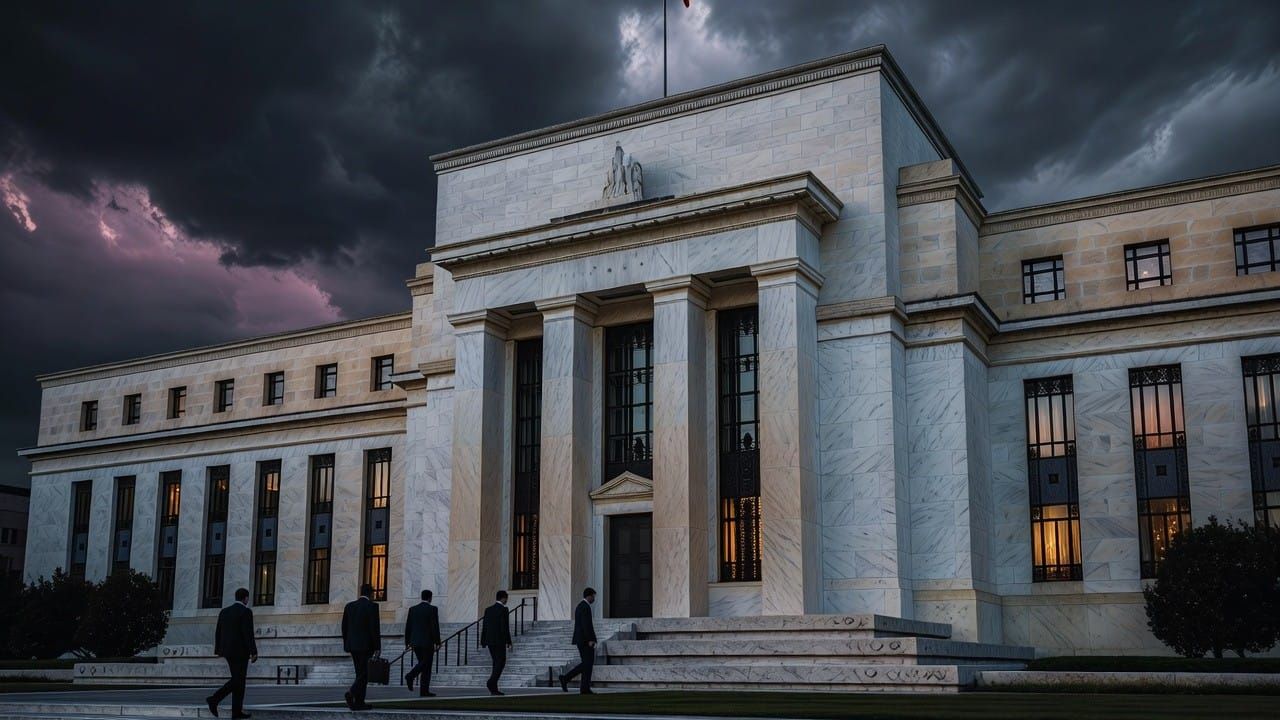
At 3:00 p.m. on Thursday, the Federal Reserve published a press release that read less like central bank communication and more like a university hiring announcement. Marc Andreessen. Raj Chetty. Mervyn King. Thomas Sargent. Raghuram Rajan. Doug McMillon — the man who ran Walmart. Fifteen outside advisers in all, organized into five task forces, each assigned to review a piece of how the Federal Reserve conducts monetary policy.
The market filed it under personnel news and moved on. That is a mistake. Rate decisions change the price of money for a few quarters. What Chairman Kevin Warsh set in motion on July 9 is a formal review of the machinery that produces every rate decision — the communications, the balance sheet, the data, and the inflation framework itself. Every asset you own is priced off that machinery. It has just been placed, in its entirety, under review, with findings due to the Federal Open Market Committee by year-end.
What Warsh Actually Announced
The five task forces, per the Fed's own release:
- Communications — how the Fed "conveys policy deliberations and decisions amid uncertainty." Co-led by Peter Fisher (former head of the New York Fed's markets desk), Arminio Fraga (former president of the Central Bank of Brazil), and Mervyn King (former governor of the Bank of England).
- Balance Sheet Policy — "the costs, benefits, and institutional implications of the Federal Reserve's current balance sheet regime." Co-led by Harvard's Karen Dynan, former Reserve Bank of India governor Raghuram Rajan, and former Fed governor Jeremy Stein.
- Data — improving "the quality and timeliness of real economic signals." Co-led by Harvard's Raj Chetty, former Walmart CEO Doug McMillon, and Chicago's Kevin Murphy.
- Productivity and Jobs — assessing "the economic impact of new general-purpose technologies, including artificial intelligence." Co-led by Marc Andreessen of Andreessen Horowitz, Stanford growth economist Charles Jones (currently on leave at Anthropic), and Microsoft executive Asha Sharma.
- Inflation Frameworks — revisiting "how the Federal Reserve understands and responds to the drivers of inflation." Co-led by Greg Mankiw (former CEA chair), Nobel laureate Thomas Sargent, and William White, the former Bank for International Settlements adviser who spent two decades arguing that central banks themselves manufacture the cycles they fight.
"The U.S. economy has changed significantly over the last generation, and never more so than right now," Warsh said in the release. The task forces will operate independently, supported by Fed staff, with a mandate to "follow the evidence" and deliver findings to the FOMC.
Read the roster carefully and a pattern emerges: these are not neutral auditors. Nearly every panel is anchored by people who have publicly criticized the tool they are now assigned to review.
Seven Weeks of Precedent
Warsh was sworn in as the seventeenth Fed chair on May 22. It took him one meeting to start dismantling the furniture.
At his debut FOMC in June, the policy statement was stripped of forward guidance language — the market-soothing sentences about the likely path of rates that have anchored Fed communication since the financial crisis. Warsh then declined to submit his own projection to the dot plot, calling the structure unhelpful for the conduct of policy, while telling colleagues they were free to keep submitting theirs. A chairman boycotting his own institution's signature communication device is not a subtle signal.
The balance sheet is next on his list, and he has never hidden his view: the Fed's roughly $6 trillion in holdings distorts markets, entangles the central bank in fiscal politics, and dulls its primary interest-rate tool. Reuters reported in June that he intends to work with the Treasury to shrink it — gradually, but deliberately. And when the June meeting minutes were released on July 8, the story around them was not their content (growing inflation concern, rates held at 3.50%–3.75%) but whether Warsh will curtail the minutes themselves as part of his communications review.
So the July 9 announcement is not a blue-ribbon commission that will gather dust. It is the formalization of a demolition already underway — now staffed with fifteen outside names senior enough to give the FOMC intellectual cover to adopt whatever emerges.
The Reaction Function Is the Product
Here is why this matters more than the next rate decision. Markets do not really price what the Fed does; they price how the Fed reacts — the predictable mapping from economic data to policy response. The dot plot, the minutes, the QT schedule, the 2% inflation framework: together they form the reaction function, the operating system on which every discounted cash flow, every mortgage rate, and every currency cross runs.
That operating system was last formally rewritten in August 2020, and the rewrite (flexible average inflation targeting) helped produce the slowest inflation response in modern Fed history. Warsh has now put all four pillars under simultaneous review — while inflation runs at 4.2%, more than twice target, and the policy rate sits below it.
The question that matters for your portfolio isn't whether the review happens. It's which of the five task forces actually moves asset prices, what gets rewritten first — and what to own while the rulebook is in beta.
The rest of this briefing is for paid members: the task-force-by-task-force market read ranked by asset-price impact, the Andreessen trapdoor that could let the Fed hold rates through 4% inflation, the three trades that benefit from a reaction function in flux, and the catalyst calendar running through the year-end reports.
AlphaBriefing Paid gets you every investment thesis, scenario framework, and catalyst brief we publish — the analysis private intel clients pay four figures for, at a fraction of that.