Europe's Last Convergence Trade: Why the Western Balkans Are the Investment Opportunity Nobody Is Watching
Six countries. €6 billion in EU funding. Great-power competition from Russia and China. With a critical summit weeks away, the Western Balkans may be Europe's most underpriced investment opportunity.

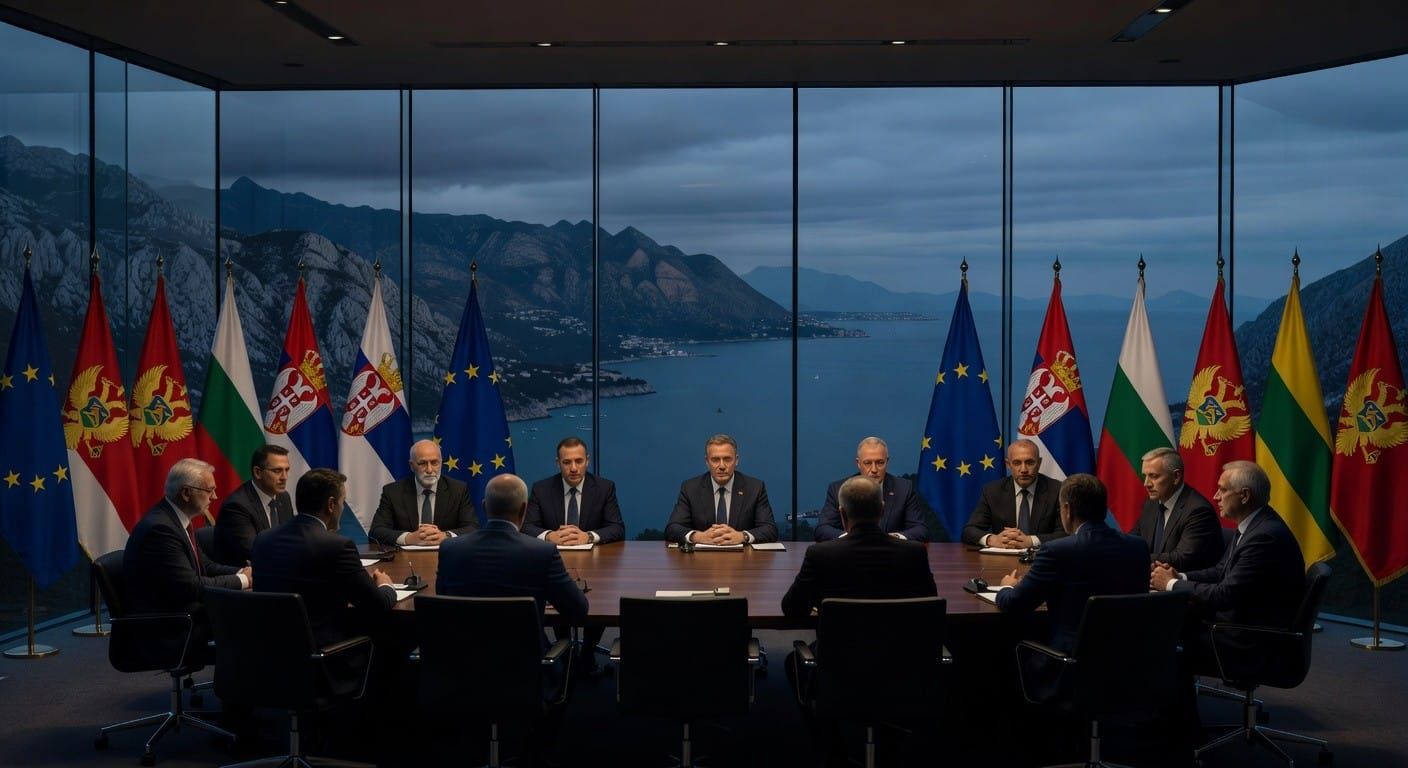
Six weeks from now, EU leaders and the heads of six Western Balkan nations will gather in Montenegro for a summit that could reshape the investment map of southeastern Europe. The meeting — scheduled for early June — comes at a moment of unusual urgency. Russia is running hybrid warfare operations through the region. China is arming Serbia and wiring its cities with Huawei surveillance infrastructure. And the EU, stung by years of enlargement fatigue, is finally putting real money behind its promises.
The numbers are significant: €6 billion in the Growth Plan. €822 million from the European Investment Bank in 2025 alone. A €171 million infrastructure package dropped in January. And a private-sector call that could unlock another €4 billion.
For investors, this is a region most still file under "frontier markets — don't bother." That's starting to look like a mistake.
The Strategic Case: Why Now
The Western Balkans — Albania, Bosnia and Herzegovina, Kosovo, Montenegro, North Macedonia, and Serbia — have been "on the path" to EU membership for over two decades. For most of that time, enlargement was an abstraction. A diplomatic gesture. Something Brussels talked about at summits and promptly forgot.
Russia's invasion of Ukraine changed the calculus overnight.
Suddenly, the black hole in the middle of Europe — surrounded by EU and NATO members on nearly every side — looked less like a bureaucratic inconvenience and more like a strategic vulnerability. Moscow was running GRU-linked training camps near Serbia's Loznica. Beijing was selling FK-3 air defense missiles and CH-92 drones to Belgrade. Milorad Dodik was threatening secession in Bosnia's Republika Srpska for the hundredth time — except now he had real backers.
The EU's response was, by Brussels standards, fast. The Growth Plan allocated up to €6 billion in grants and loans to integrate the six countries into the Single Market ahead of full membership. The Reform and Growth Facility tied disbursements to concrete reforms — rule of law, anti-corruption, judicial independence. Commissioner Marta Kos visited Montenegro in March to personally inspect progress.
The message was clear: enlargement is no longer optional. It's a security imperative.
The Frontrunners
Not all six countries are equal. Two stand out.
Montenegro is the region's undisputed leader. It has opened all 33 negotiation chapters and closed more than 14. It targets full EU membership by 2028. The World Bank projects 2.9% GDP growth in 2026, and the EBRD has been steadily increasing its exposure. The June summit — being held on Montenegrin soil — is both a reward for progress and a pressure mechanism to keep it going.
Albania is close behind. GDP growth is forecast at 3.4–3.5% for 2026, supported by tourism, energy investment, and a disciplined reform agenda. FDI inflows rose to €1.63 billion in 2025, up 3.4% year-over-year, with energy and real estate leading the charge. The EU's enlargement commissioner singled out Albania and Montenegro as "doing best" among the six.
Then there's North Macedonia, which showed 3.5% growth in 2025 but saw FDI plunge to €468 million — down from €1.2 billion the prior year — as political uncertainty and Bulgaria's identity disputes stalled EU talks. It's a cautionary tale: reform momentum matters more than headline growth.
The Great Power Chessboard
What makes the Balkans uniquely interesting — and uniquely risky — is the great-power competition playing out across six small countries with a combined population smaller than New York City's metro area.
Russia's playbook is hybrid warfare, pure and simple. Pro-Russian media outlets like Sputnik Srbija and RT Balkan pump anti-Western narratives to an audience where 54% of Serbians still view Russia favorably. The GRU operates training camps. Wagner-linked groups and the Night Wolves motorcycle gang function as paramilitary proxies. And Gazprom Neft's ownership of Serbia's NIS refinery — now under US sanctions forcing divestment by March 2026 — has been funding operations for years.
A Le Monde investigation in March revealed Serbia as a "main hub for Russian destabilization operations in Europe," with operatives recruited for vandalism campaigns across France.
China's approach is sharper-edged but quieter. Serbia is now Beijing's top European arms client, importing 57% of its military hardware from China between 2020 and 2024. Huawei and Hikvision surveillance systems are deployed across 40+ Serbian municipalities. The Budapest-Belgrade railway — a BRI flagship — is creating infrastructure dependency. Joint military exercises ("Peace Defenders 2025") signal growing interoperability.
The investment implication is binary: countries aligning with the West (Montenegro, Albania) are de-risking and unlocking EU capital. Countries hedging (Serbia) face sanctions risk, political instability, and investor uncertainty.
This is where the analysis gets actionable. AlphaBriefing members get the full investment framework — scenarios, positioning, and the bottom line.
Subscribe to AlphaBriefing — Free, Member, and Paid tiers available.