Congress Promised to Save Rural Hospitals. The Same Law Is Closing Them.

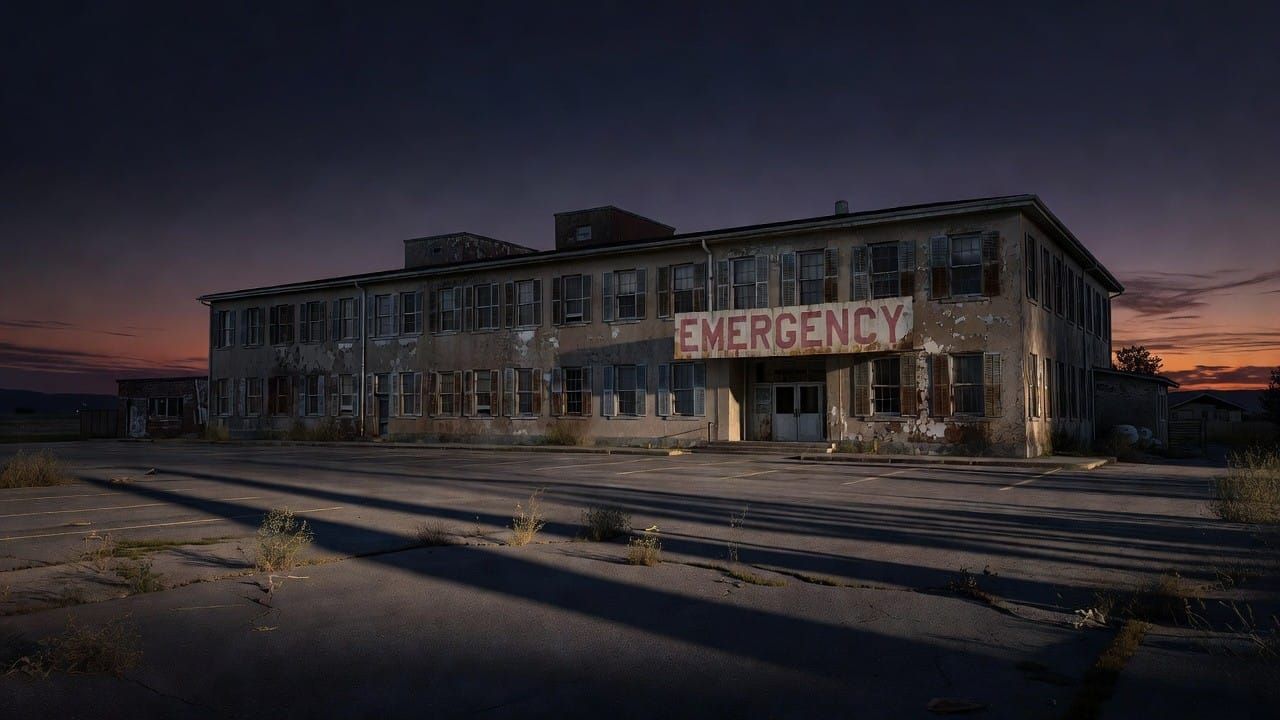
In hundreds of American towns, the local hospital is the largest employer, the anchor of Main Street, and the only thing standing between a heart attack and a ninety-minute drive. In 2026, a growing number of those buildings are going dark — and the federal law that was supposed to protect them is the reason why.
The math is brutal and it is not hypothetical. More than 100 rural hospitals have closed in the past decade. More than 40% of the roughly 1,800 still standing already operate at a loss. And the One Big Beautiful Bill Act — the sweeping 2025 reconciliation law now phasing in — is projected to cut federal Medicaid spending by roughly $911 billion over ten years and add 10 million people to the ranks of the uninsured. For a rural hospital running on a 3% margin in a good year, that is not a budget adjustment. It is a death sentence delivered on a delay.
This is a story about health care. But for investors, it is also a story about where tens of billions of dollars of patient volume, real-estate risk, and reimbursement exposure are about to move — and who is positioned to catch it.
The patient was already sick
Rural hospitals did not become fragile in 2026. They have been bleeding for fifteen years, squeezed by a structural problem that Wall Street rarely prices: their customers are disproportionately old, poor, and publicly insured. Medicaid and Medicare reimburse below the cost of care. Private insurance, which cross-subsidizes the difference in urban systems, is thin on the ground in a county of 12,000 people.
The result is an industry where the median facility has almost no cushion. The average rural hospital operating margin was about 3% in 2023, and roughly 44% of rural hospitals ran negative margins. More than 300 have already stopped delivering babies. More than 300 have eliminated general surgery. More than 450 have shut down chemotherapy. A "hospital" that can no longer deliver a baby or remove an appendix is, increasingly, a building with a sign on it.
That is the baseline. Now add the cuts.
What changes in 2026
The OBBBA does not close hospitals directly. It does something quieter and more lethal: it removes the revenue that kept the lights on.
By tightening eligibility, imposing work requirements, and squeezing the provider taxes and state-directed payments that states use to fund Medicaid, the law strips reimbursement out of exactly the facilities least able to absorb it. One analysis found independent rural hospitals could lose an estimated $465 million in patient revenue in 2026 alone — an average of about $630,000 per hospital. That single year of pressure is enough to push 55 additional independent rural hospitals into negative net income, bringing the total number of independents at serious risk of closure to around 380.
Look wider and the numbers get worse. The Center for Healthcare Quality and Payment Reform counts more than one-third of all rural hospitals at risk of closing. Other estimates put more than 700 facilities in the danger zone over the life of the cuts, with roughly 300 at immediate risk. These are not all going to close tomorrow. But the direction of travel is unambiguous, and 2026 is the year the slope steepens.
The $50 billion that doesn't add up
Here is the part that should make any analyst pause. The same law that gutted Medicaid also created a $50 billion Rural Health Transformation Program — $10 billion a year for five years, with first-year state awards averaging roughly $200 million. It was negotiated specifically to win over Republicans who feared the bill would take out rural hospitals in their states.
On paper, $50 billion sounds like a rescue. In practice, it is a band-aid stretched over a severed artery, and it is being applied in the wrong places.
The fund is being distributed in a way that is largely disconnected from where the Medicaid losses actually land. Because a meaningful share is split among states rather than weighted to need, low-population states can come out ahead while the states with the most rural hospitals come up short. By one estimate, Wyoming could receive roughly 14.5 times what it stands to lose from the Medicaid cuts, while states dense with rural facilities — Kentucky, Washington, Oregon — are projected to receive far less than they lose.
Worse, much of the money is steered toward "transformation" — technology, telehealth platforms, consultants, regional redesign — rather than simply keeping inpatient doors open. Early reporting suggests the fund is pushing many hospitals to shrink their footprint, convert to lower-acuity models, or close service lines, not to sustain full-service care. The fund, in other words, is less a lifeline for the rural hospital than a managed wind-down with a friendlier name.
Follow the volume, follow the money
When a rural hospital closes, the patients do not disappear. The demand for care simply relocates — and so does the revenue. For investors, the question is not whether rural health care is in crisis. It plainly is. The question is where the displaced volume, capital, and risk flow next.
The exposed. The most direct pressure falls on the Medicaid-heavy managed-care insurers — the companies whose books are concentrated in exactly the populations losing coverage. Fewer enrolled members and a sicker remaining risk pool is a difficult combination, and the market has spent the past year repricing that exposure. Small independent and critical-access systems with no balance-sheet depth are simply uninvestable as standalone credits. And the cautionary tale already on the tape is the hospital-real-estate model: the spectacular unwinding of one large hospital landlord showed how quickly thin-margin operators can stop paying rent. Rural hospital real estate is the most fragile collateral in that asset class.
The consolidators. Closure is rarely the end of a market — it is a transfer of share. Larger for-profit hospital chains have spent a decade building regional hubs designed to absorb volume from a wide catchment. As local facilities close or downsize to clinics, the higher-acuity cases — surgeries, deliveries, cancer care, complex admissions — funnel toward those hubs. Consolidation is the structural winner of a closure wave, even as it lengthens drive times for patients.
The substitutes. Where the building disappears, the workaround scales. Telehealth and virtual-care platforms, freestanding emergency departments, urgent-care rollups, and — grimly but really — ground and air medical transport all stand to gain volume as care decentralizes. A meaningful slice of that $50 billion fund will flow not to bricks but to vendors: digital-health companies, EHR and remote-monitoring providers, and the consultants who package "rural transformation." For those businesses, the crisis is a procurement event.
The bottom line
Strip away the politics and the structure is clean. A law cut nearly a trillion dollars from the program that keeps the poorest hospitals in the country solvent, then bolted on a fund too small, too misallocated, and too focused on "transformation" to stop the closures it was sold to prevent. The predictable result is an acceleration of a fifteen-year trend: the steady conversion of rural America into a health-care desert.
For the 60 million Americans who live in those communities, this is measured in drive times, delivery deserts, and preventable deaths. For the market, it is a redistribution — of patient volume toward consolidated urban and regional systems, of growth toward the digital and transport layers that fill the gap, and of risk away from the Medicaid-exposed names that priced this in slowly and painfully over the past year.
The hospital on Main Street was never just a hospital. It was an employer, an anchor, and a piece of infrastructure. In 2026, Washington is quietly deciding which of those it is willing to let fail — and the capital that follows health care is already adjusting to the answer.
Get this level of intelligence every day. Subscribe to AlphaBriefing — free, member, and paid tiers available.
Sources & Further Reading
- Healthcare Finance News — Additional 55 rural hospitals at risk of closure should Medicaid cuts pass
- KFF — A Closer Look at the $50 Billion Rural Health Fund in the New Reconciliation Law
- Healthcare Dive — The $50B rural health transformation fund is pushing many hospitals to shrink
- Georgetown Center for Children and Families — Rural Hospitals Feeling Impact of H.R. 1 Medicaid Cuts
- Commonwealth Fund — Federal Cuts to Medicaid Could Affect Hospitals in Nearly Every State
- Families USA — Federal Medicaid Cuts Would Force Rural Hospitals to the Brink of Closure
- Chartis — 2026 Rural Health State of the State
Disclaimer
AlphaBriefing is an independent intelligence publication. The content in this article is produced for informational and educational purposes only. Nothing published by AlphaBriefing constitutes financial, investment, legal, tax, or regulatory advice, nor should it be construed as a solicitation or recommendation to buy, sell, or hold any security, asset, or financial instrument.
All views expressed are those of the author at the time of writing and are subject to change without notice. Markets are volatile and unpredictable; past performance is not indicative of future results. Any investment involves risk, including the possible loss of principal.
AlphaBriefing and its principals, employees, or contributors may hold positions in securities or assets mentioned in this article. This should be considered a potential conflict of interest. No material relationship with any company referenced exists unless explicitly disclosed. Readers should conduct their own due diligence and consult qualified financial, legal, and tax advisors before making any investment decisions.
Information in this article is drawn from public sources believed to be reliable at the time of publication. AlphaBriefing makes no warranty, express or implied, as to the accuracy, completeness, or timeliness of any information herein. AlphaBriefing accepts no liability for any loss or damage arising from reliance on this content.
© AlphaBriefing. All rights reserved. Unauthorised reproduction or distribution is prohibited.