A Town of 1,700 Just Showed How America's Water Gets Taken Offline
More than 30 Minnesota water systems were hit in one weekend, a treatment plant went dark, and the FBI says the campaign spans at least seven states. The vulnerability isn't the technology — it's how America organizes its water.

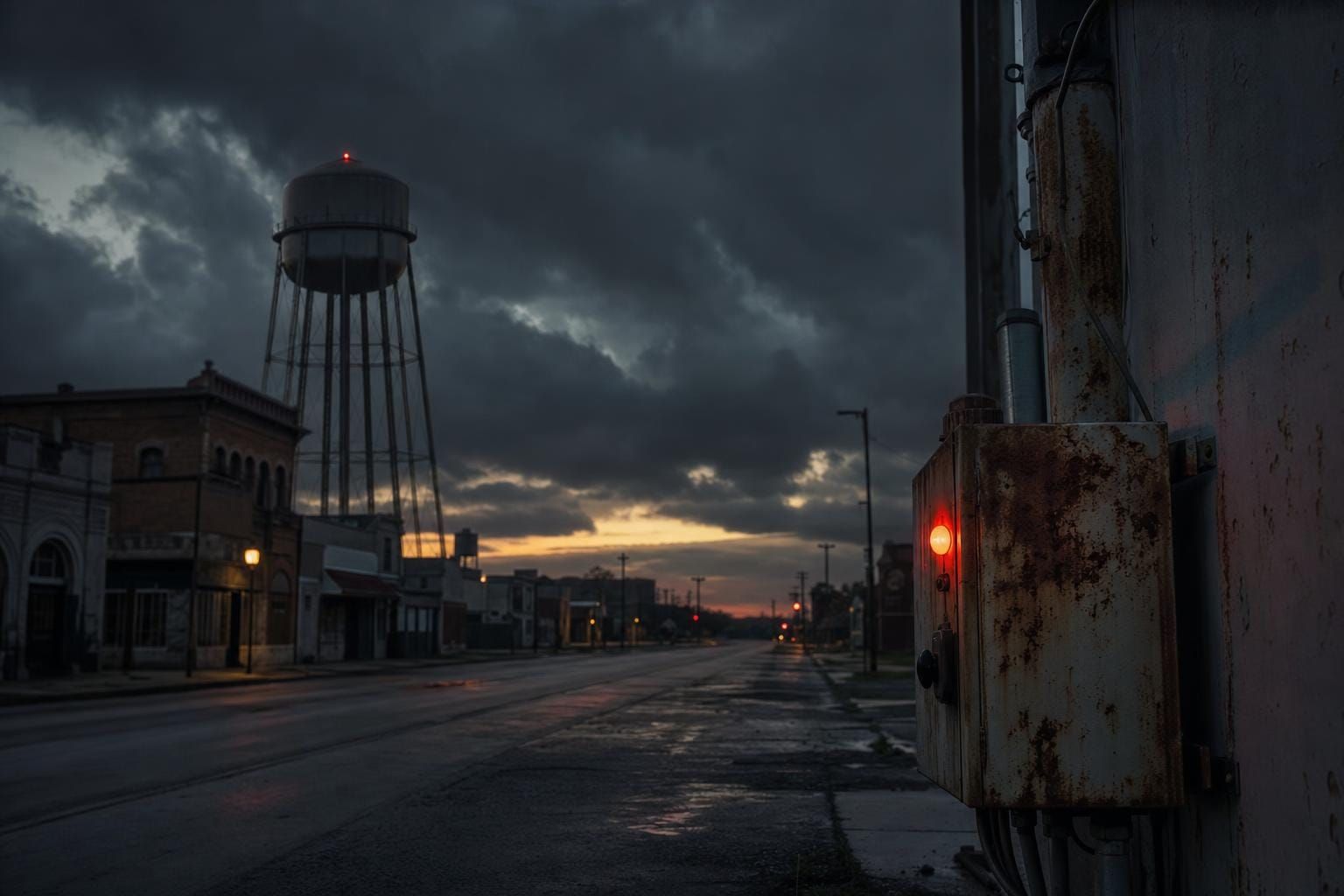
Sometime over the weekend of July 26, the water treatment plant in Braham, Minnesota — a town of about 1,700 people an hour north of Minneapolis — went offline. Crews found the well feeding the water tower malfunctioning and asked residents to minimize water use while they ran the system by hand.
Braham was not alone. By midweek, Minnesota officials confirmed that more than 30 community water systems across the state had been hit by coordinated malicious cyber activity in a single weekend. Four went public: Braham's plant outage, failed communications at Plymouth's water towers and wastewater lift stations, compromised automated controls in South St. Paul, and a declared local emergency in Maple Plain.
Then the aperture widened. On July 30, the FBI and the EPA issued a joint public service announcement: water and wastewater utilities in at least seven states have reported the same pattern since July 27. Attackers are reaching internet-facing programmable logic controllers — the boxes that tell pumps and valves what to do, largely aging Rockwell Automation/Allen-Bradley MicroLogix units — changing their IP addresses and passwords, and locking operators out of monitoring and control. Some incidents degraded operations: pressure loss, flooding. The agencies noted that pressure loss is not an inconvenience but a contamination pathway — it can let untreated groundwater seep into drinking-water pipes.
No agency has named an attacker. A Tenable researcher called the tactics "consistent with the broader CyberAv3ngers threat ecosystem" — the Iranian-linked crew that defaced water controllers in Aliquippa, Pennsylvania in 2023 — and CISA re-circulated an advisory on Iranian-affiliated actors exploiting PLCs the same day the FBI spoke. With the US–Iran ceasefire having collapsed into renewed hostilities this summer, the retaliation thesis writes itself. It is also, for investors, mostly beside the point.
The Warnings Era Just Ended
For fifteen years, water-sector cyber has been a story about what almost happened. The reported 2021 intrusion at Oldsmar, Florida, where a remote hand briefly pushed the lye setting a hundredfold higher. Aliquippa in 2023, where a booster station went to manual after its controller was defaced with an anti-Israel message. Volt Typhoon, pre-positioned in US infrastructure networks for years without pulling a trigger. Each produced advisories, hearings, and no structural change.
This is different in kind: a coordinated, multi-state campaign that produced actual operational impacts — a plant offline, pressure loss, flooding — across dozens of systems in the same week. The distance between "attackers are inside" and "the water stopped" just went to zero, and it happened while the market's attention was on the Fed and megacap earnings.
The Structure Is the Vulnerability
Here is the number that matters: the United States has roughly 50,000 community water systems, and more than 90% of them serve fewer than 10,000 people. Water is the most fragmented critical-infrastructure sector in the country — and the only major one with no mandatory federal cybersecurity standard. The electric grid has had auditable NERC CIP requirements since 2008. Banks live under standing examination regimes. Water has voluntary guidance.
It isn't for lack of trying. In March 2023 the EPA moved to fold cybersecurity into routine sanitary surveys. Three state attorneys general sued, the two big water-utility associations joined them, a federal appeals court stayed the rule, and the EPA withdrew it within seven months. The sector's own trade groups argued — not entirely wrongly — that thousands of small systems had neither the money nor the staff to comply.
Which is precisely the point. The reason a town of 1,700 has a controller from a discontinued product line sitting on the open internet is that a cellular link is how a two-person public works department watches a water tower at 2 a.m. The alternative — network segmentation, monitored access, a security engineer — does not exist at Braham's scale, at Maple Plain's scale, or at the scale of the tens of thousands of systems like them. The FBI's recommended fixes are all correct and mostly unaffordable for the people they're addressed to.
So the real question raised by this week is not whether water utilities will "take cybersecurity seriously." It is who ends up owning these systems, who pays for hardening them, and through what structure the money flows. That is where the repricing starts.
The rest of this briefing is for paid members: the three-layer repricing now in motion — the listed consolidators positioned to roll up compromised small systems (and the state laws that make it profitable), where a mandate would actually route the compliance spend (including the uncomfortable answer on Rockwell), the municipal-bond angle nobody is writing about, and the 90-day catalyst calendar.
AlphaBriefing Paid gets you every investment thesis, scenario framework, and catalyst brief we publish — the analysis private intel clients pay four figures for, at a fraction of that.