Why the Government's New Ten-Year Jobs Map Runs Through Hospitals and Power Lines
The first official employment forecast of the AI era projects a decade of job growth at a third of the old pace — with one in three new jobs in healthcare, AI's hiring running through the power grid, and 752,000 back-office jobs gone.

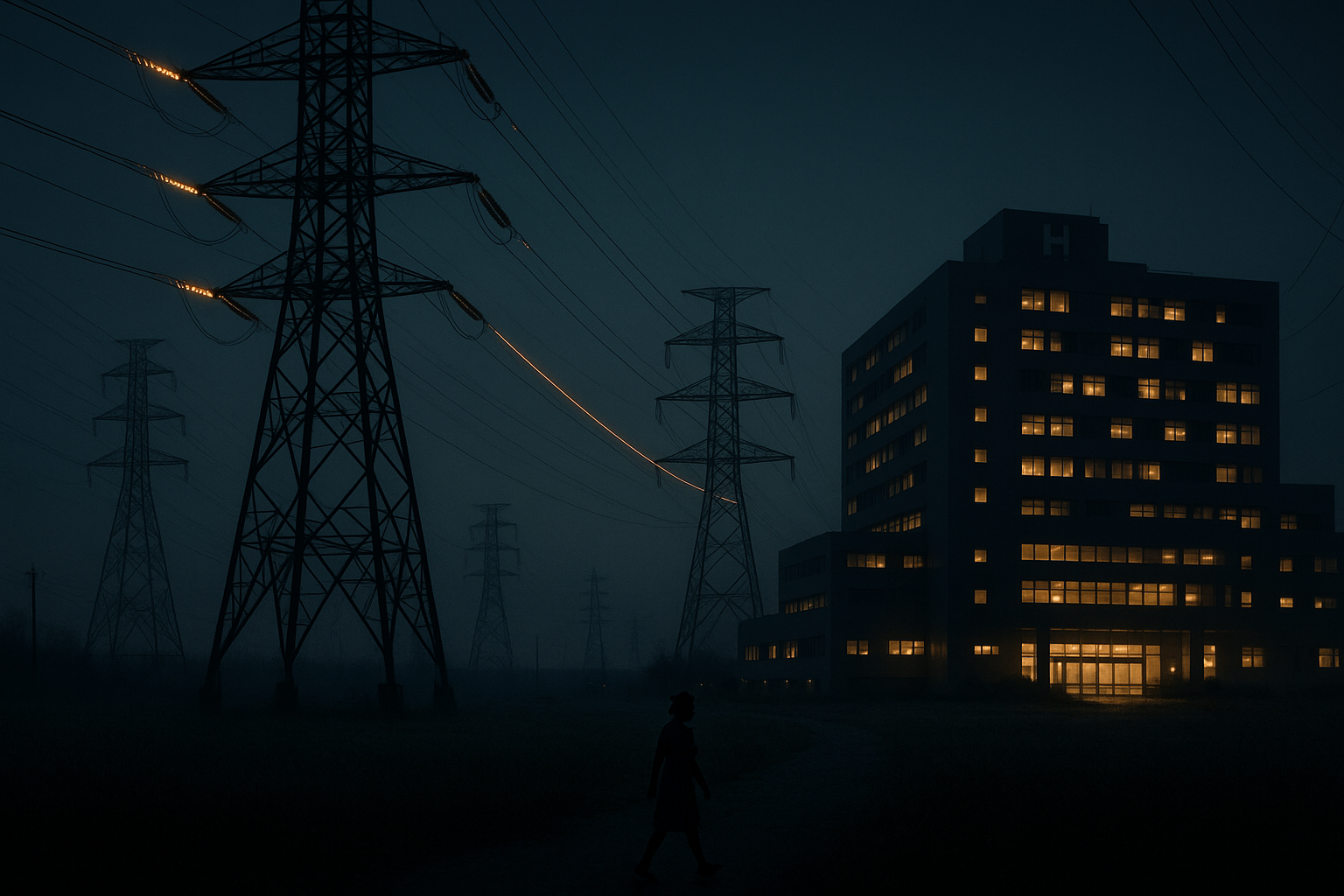
The Bureau of Labor Statistics does one thing no other agency does: every year, it publishes the federal government's official forecast of what Americans will be doing for a living ten years from now. Thursday morning's edition — the 2025–2035 projections, released at 10 a.m. Eastern — is the first one built for the AI decade. It comes with a new companion dataset that scores every occupation in America by its exposure to artificial intelligence.
The headline number is the quiet shock. BLS projects the US economy will add 5.9 million jobs over the next ten years — total employment rising from 170.3 million to 176.2 million. That is 3.5 percent growth for the entire decade, against 10.9 percent recorded over 2015–2025. The American jobs engine, per the government's own forecast, is slowing to roughly a third of its previous speed.
But the composition of that map matters more than its size. Three findings stand out.
One in three new jobs is a healthcare job. Private healthcare and social assistance is projected to add over 2.2 million jobs — about 37 percent of all net new employment through 2035. Healthcare support is the fastest-growing occupational group in the economy (+13.3 percent), and the single fastest-growing occupation in America isn't in tech at all: nurse practitioners, at +41 percent. The largest job-adding detailed industry is services for the elderly and persons with disabilities, at +625,400. The driver is demographics — an aging population and rising chronic disease — and demographics don't respond to interest rates or model releases.
The AI boom's hiring runs through the power grid. The fastest-growing major sector in the economy is utilities (+9.8 percent), driven almost entirely by electric power generation, transmission, and distribution — with AI's electricity demand named explicitly by BLS. Four of the ten fastest-growing detailed industries are electricity-driven. Solar photovoltaic installers (+36.5 percent) and wind turbine technicians (+29.5 percent) rank among the five fastest-growing occupations in the country. Electrical equipment and component manufacturing — batteries, energy storage, fiber optic cable for AI data transmission — is projected to grow 25.9 percent.
AI's job destruction is six times bigger than its job creation. The computing infrastructure, data processing, and web hosting industry — the closest thing to a "data center jobs" line item — grows 25.1 percent but adds only 120,400 jobs. Office and administrative support, the occupations generative AI automates first, is projected to shed 752,100 jobs — the largest decline of any group, at a rate BLS attributes directly to AI-powered automation tools. Sales occupations decline 1.4 percent for the same reason. On the government's own math, the back office loses six jobs for every one the server halls create.
One more first: the AI exposure dataset published alongside the projections is built partly on observed usage telemetry from Anthropic's Claude and Microsoft's Copilot, blended with the academic exposure literature. The federal statistical system is now treating AI-lab logs as labor market data.
So the official map of the next decade shows a slower engine, a healthcare workforce absorbing a third of all growth, an electricity buildout hiring faster than the technology sector it powers, and a back office quietly emptying out. The question the map doesn't answer is the one that matters for portfolios: when job growth stalls but demand doesn't, what happens to wages, margins, and the sectors on either side of that gap?
The rest of this briefing is free — it just requires a free AlphaBriefing account: the three labor trades the government's map points to, the sector re-rating hiding inside the utilities line, and the scenario where BLS's own "conservative" AI assumptions break.
Create your free account → — 30 seconds, no card.