Why Is the Strait of Hormuz Still Empty?
The US-Iran ceasefire is five weeks old, yet only 10 tankers a day transit a strait that used to see 130 — and war-risk premiums are rising, not falling. The physical market is pricing a structural premium the equity market refuses to believe.

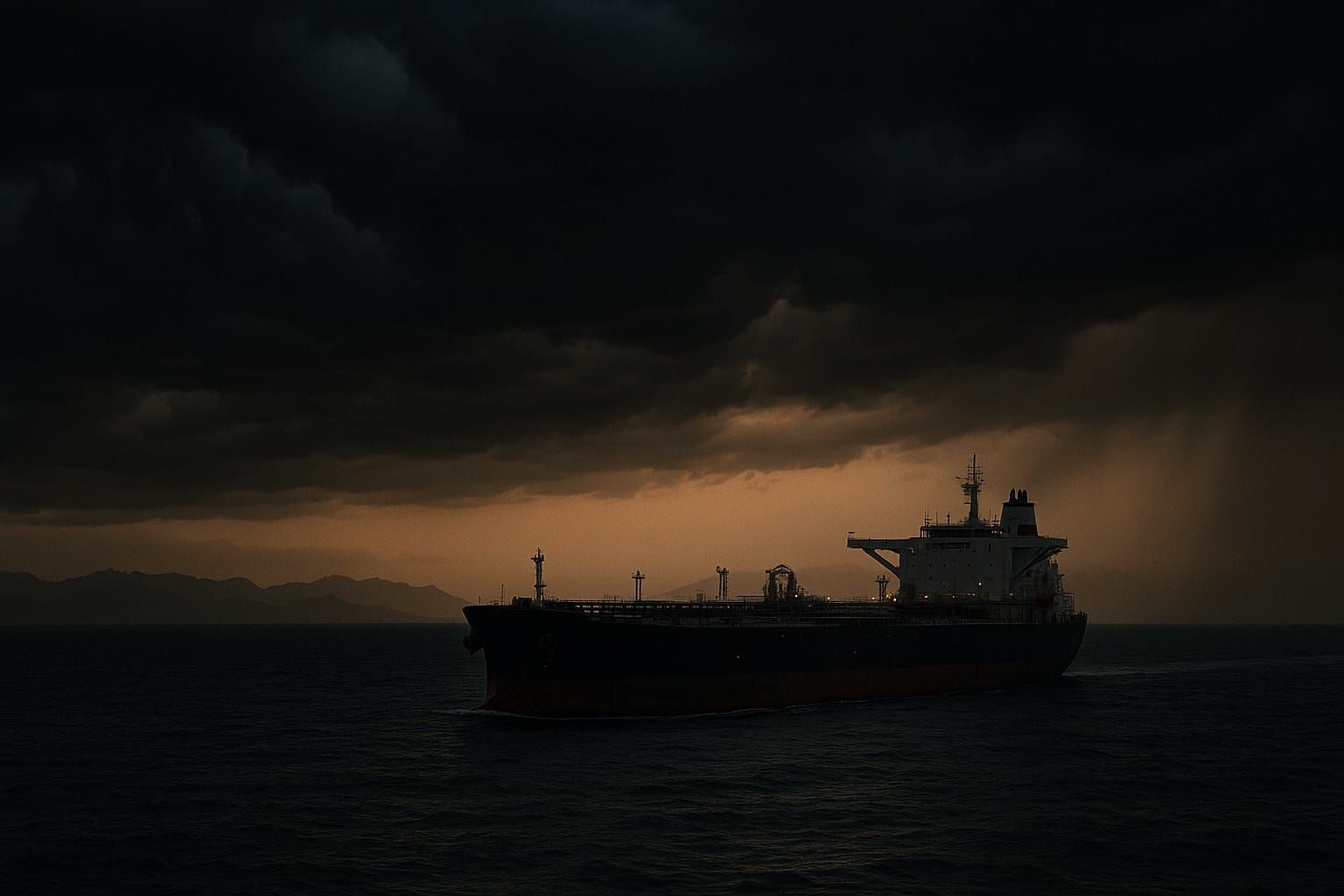
The war that closed the Strait of Hormuz officially paused on June 17, when Washington and Tehran signed a ceasefire memorandum. Five weeks later, the world's most important oil artery is still functionally shut.
On Monday, July 20, sixteen vessels transited the strait. On Tuesday, ten. Before the war began on February 28, the daily count ran between 120 and 140. At the worst of the fighting it fell to two. A ceasefire that was supposed to normalize the waterway has recovered less than 8% of its traffic — and the people who price maritime risk for a living are behaving as if the war never ended.
That behavior shows up in one number: war-risk insurance for a Hormuz transit now runs 7.5% to 10% of a ship's hull value — up from the 1–3% range of just a few weeks ago, and up from roughly 0.25% before the war. For a large crude carrier, that is approximately $21 million in insurance for a single voyage. Not per year. Per transit.
Insurance was designed to price risk. At these levels it has become something else: a privately administered toll gate deciding which ships move and which stay home. As City St George's insurance scholar Simone Krummaker put it this week, "insurance is therefore coming in as a commercial constraint" — the binding one. Tankers aren't staying out of the Gulf because they can't sail. They're staying out because the market has priced sailing like a war zone, ceasefire or not.
The freight market has followed. Shipping a 270,000-tonne crude cargo from the Gulf to China was assessed at $77.96 per tonne on July 22 — more than four times the five-year average of $18.91. It peaked near $140 in March, sagged toward $60 in June as ceasefire optimism built, and has now turned back up. The very largest crude carriers willing to load in the Gulf have earned close to $470,000 per day at the highs — numbers with no precedent outside of brief 2020 storage dislocations.
Briefings like this land in members' inboxes before the market prices them in. Join free →
And this week, the risk premium opened a second front. On Monday, the Houthis declared a naval blockade of Saudi Arabia — a resumption of the campaign that terrorized the Red Sea from November 2023 to October 2025. By Thursday night they had struck the tanker Encelia off Jizan. Southern Red Sea war-risk premiums more than tripled in a week, from 0.3% of vessel value to over 1%, with quotes as high as 3% for voyages to Saudi Arabia's southern ports. Bab al-Mandeb transits dropped 30% in a single day.
Two of the world's four great maritime chokepoints are now toll roads. The question that matters for capital is simple: is this a spike, or a regime?
The rest of this briefing is for paid members: the "reversion risk" downgrades Wall Street just issued on the tanker fleet and why the physical market disagrees, the single charter-market number that says owners are locking in the war premium for years, the three-scenario framework for how this resolves, and the bottom-line positioning across the names still leveraged to the premium.
AlphaBriefing Paid gets you every investment thesis, scenario framework, and catalyst brief we publish — the analysis private intel clients pay four figures for, at a fraction of that.