Why Is the Robotaxi Race Being Decided in Europe?
America banned Chinese robotaxis before they picked up a single passenger. Today's Uber–Pony.ai deal to field 2,000 of them across Europe shows where the autonomy war will actually be fought — and who collects the toll.

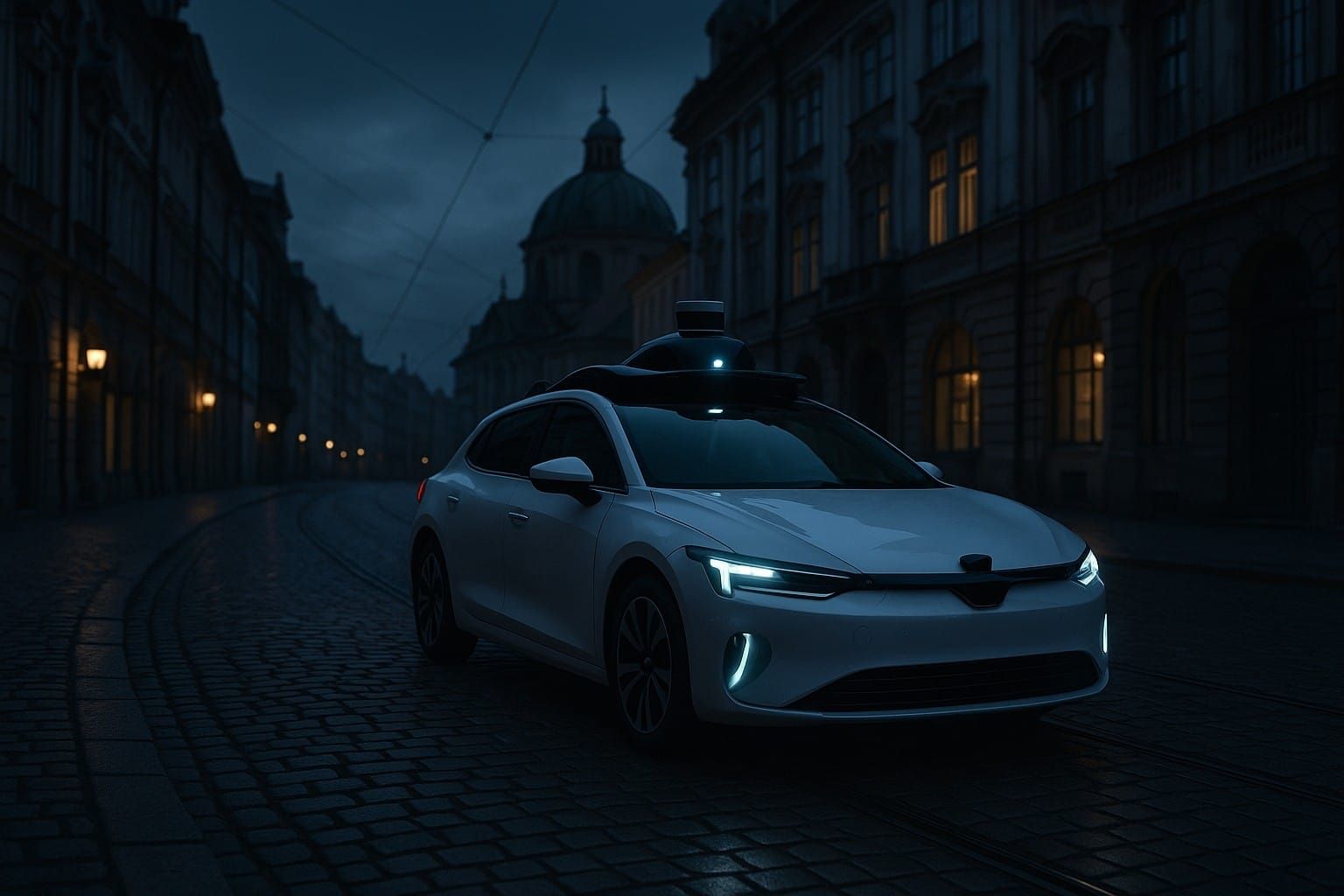
The announcement landed this morning with little fanfare: Uber and Pony.ai will deploy more than 2,000 robotaxis across Europe, expanding from their Zagreb launch to four additional cities, with a Middle East rollout running in parallel. A Chinese autonomous-driving company and an American ride-hailing platform, scaling driverless taxis across European streets.
Read that sentence again, because none of it can happen in the United States.
In January 2025, the Commerce Department finalized a rule that bans Chinese-developed autonomous-driving software from American roads — explicitly including robotaxi and rideshare services. Software restrictions bite with model year 2027; hardware follows by the end of the decade. Pony.ai, WeRide, and Baidu's Apollo Go — companies that collectively operate more driverless vehicles than anyone outside of Waymo — are structurally locked out of the world's most lucrative mobility market. And China, for its part, is effectively closed to Waymo and Tesla's autonomy ambitions.
Which leaves exactly one major market where the world's two autonomous-vehicle ecosystems can compete head-to-head: Europe.
The Land Grab Is Already On
Look at the map that has quietly assembled itself over the past twelve months:
- Pony.ai + Uber launched Europe's first commercial robotaxi service in Zagreb earlier this year, with Croatian mobility company Verne owning and operating the fleet. Today's expansion adds four more cities and 2,000-plus vehicles.
- WeRide + Uber are preparing Madrid — Spain's first robotaxi pilot — and WeRide entered Denmark through shared-mobility operator GreenMobility, the first Chinese AV foothold in the Nordics.
- Baidu's Apollo Go is testing in London with Lyft and its Freenow subsidiary, targeting public rides in 2027, with Germany also on the roadmap.
- Momenta + Uber have a Munich pilot in the works.
- Waymo, the American champion, has announced London — its first market outside the US — but is still in the testing phase there.
Notice the pattern. Four of the five serious robotaxi operators expanding in Europe right now are Chinese. The continent that invented the automobile has no homegrown player at scale — the UK's Wayve, which partners with Uber, is the closest thing — and European regulators have so far shown no appetite for an American-style ban.
That is not because Brussels hasn't noticed. It's because Europe's calculus is different: its auto industry is fighting for survival, its cities want congestion and emissions wins, and its regulators would rather write the rulebook for foreign operators than watch the technology mature elsewhere. The result is the largest open market in the world for autonomy — a proving ground where Chinese cost curves and American platforms are about to collide.
The question for investors is not whether the robotaxis arrive. Zagreb settled that. The question is who makes money as they do — and the answer is less obvious than it looks.
The rest of this briefing is for paid members: the unit economics behind Pony.ai's Gen-7 fleet and why its cost curve is the real weapon, the toll-collector position Uber has quietly built across 30+ AV partnerships, which listed names actually benefit from the European land grab — and the regulatory tripwire that could end it.
AlphaBriefing Paid gets you every investment thesis, scenario framework, and catalyst brief we publish — the analysis private intel clients pay four figures for, at a fraction of that.