A Data Revision Crashed Lithium 22%. China's Biggest Mine Is Still Shut.
Lithium carbonate just hit its 2026 low — not on new supply, but on a stockpile restatement that doubled China's reported inventory overnight. Meanwhile the mine behind the whole rally lost its environmental approval again. One of these moves is temporary.

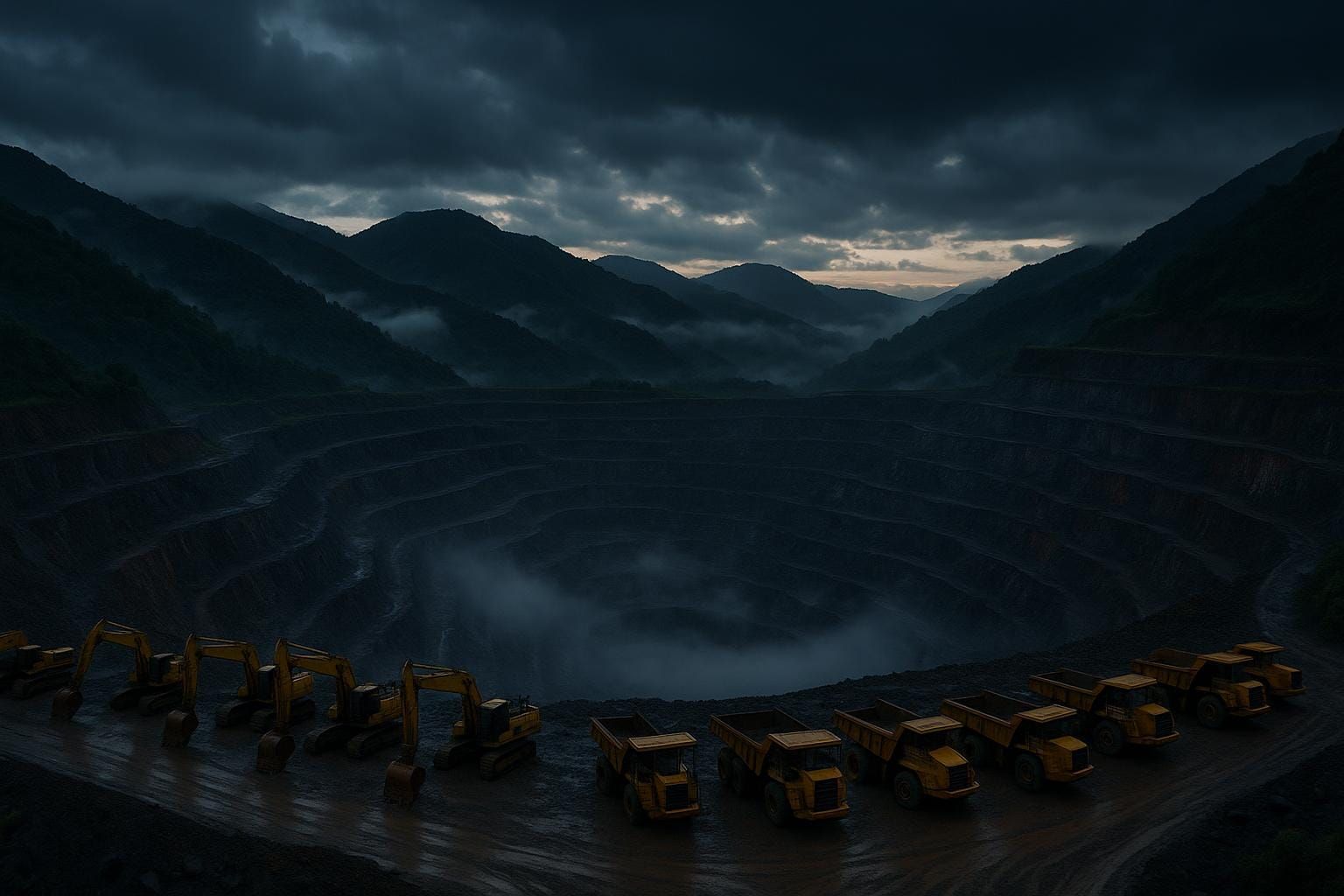
On September 30, battery-grade lithium carbonate in China closed at 122,800 yuan per tonne — roughly $18,300 — its lowest level of 2026. The price has fallen 22.5% in a single month. And yet it remains about 67% higher than a year ago, because a year ago the market hadn't fully absorbed what losing China's biggest lithium mine actually meant.
Here's the part that should bother anyone who trades commodities: the crash wasn't caused by new supply. No mine reopened at scale. No demand forecast was cut. The single biggest driver was a change in how one Shanghai data provider counts inventory.
The Restatement
On September 4, Shanghai Metals Market (SMM) — the industry data provider whose weekly inventory series functions as the de facto benchmark for Chinese lithium stocks — rolled out a revised methodology. The new sample covers more of the market's actual holders of material: more plants, more traders, more downstream cell inventory.
The result: reported Chinese lithium carbonate stockpiles jumped to 175,000 tons, from 78,800 tons the week before. More than double, overnight, with no physical tonne moving anywhere.
Bloomberg reported the restatement "confounded traders and weighed on prices," with some market participants calling on authorities to step in. Futures on the Guangzhou Futures Exchange — where lithium volumes and open interest have surged to records, and where the exchange has repeatedly capped new positions and raised fees to damp speculation — sold off hard through September. By the end of the month, the spot price had hit its year-to-date low.
Read that again: the price of the metal that anchors every EV and grid-storage business case is being set, at the margin, by a sampling methodology. The tonnes were always there. The market just didn't know it — or, alternatively, the new number overstates how much of that inventory is actually available for sale. Nobody can currently say which, and that is the problem.
The Mine That Started All of This
The reason lithium is still up 67% year over year, even after the crash, is a single lepidolite operation in Jiangxi province: CATL's Jianxiawo, the largest lithium mine in China by capacity, with nameplate approaching 150,000 tonnes of lithium carbonate equivalent a year — about 4% of global supply.
Its saga reads like a regulatory thriller:
- August 2025 — Jianxiawo's mining license expires just as China tightens mineral classification rules, subjecting its lithium-bearing clay to stricter standards. The mine shuts. GFEX lithium futures more than double over the following months, topping 200,000 yuan per tonne at one point.
- June 29, 2026 — CATL secures a safety production permit. Restart bets send prices sliding. Satellite imagery reviewed by Benchmark Mineral Intelligence shows activity resuming at the site.
- July 2026 — The restart turns out to be informal: according to Benchmark, it bypassed an unresolved dispute over the mine's tailings pond. Market sources point to more than 70 formal complaints filed against the operation.
- First week of August 2026 — Activity stops again.
- September 2026 — Regulators revoke the mine's environmental impact assessment approval entirely. Jianxiawo goes back into care and maintenance. Any restart is now gated behind a full environmental review that could stretch into 2027.
Benchmark responded by cutting its 2026 output forecast for the mine to 32,000 tonnes of LCE, from 62,500. For perspective: the operation was originally modeled to produce over 110,000 tonnes this year.
So September delivered the strangest combination this market has seen: China's largest lithium mine lost its approval to operate for the second time in just over a year — a supply shock — and the price crashed 22% anyway, because a data revision rewrote the inventory picture in the opposite direction. The backdrop matters: both events land in the middle of Beijing's "anti-involution" campaign against producer overcapacity, which has been pressuring commodity markets broadly all year.
Which leaves the question that actually matters for positioning: when the benchmark data and the physical reality point in opposite directions, which one wins — and who gets paid when they reconverge?
Get the next briefing free in your inbox: Join AlphaBriefing
The rest of this briefing is free — it just requires a free AlphaBriefing account: the supply-demand math that could flip Benchmark's 78,000-tonne surplus into deficit, the live scoreboard of what lithium equities have already priced in, and the five dated catalysts between now and January that decide which side of this trade reconverges first.
Create your free account → — 30 seconds, no card.