Why Is SpaceX Giving Away Space Traffic Control?
SpaceX just launched a free collision-screening service for every satellite operator in low Earth orbit — faster than the government system Washington keeps trying to defund. Whoever runs the screens sets the rules, and the money in space safety just moved.

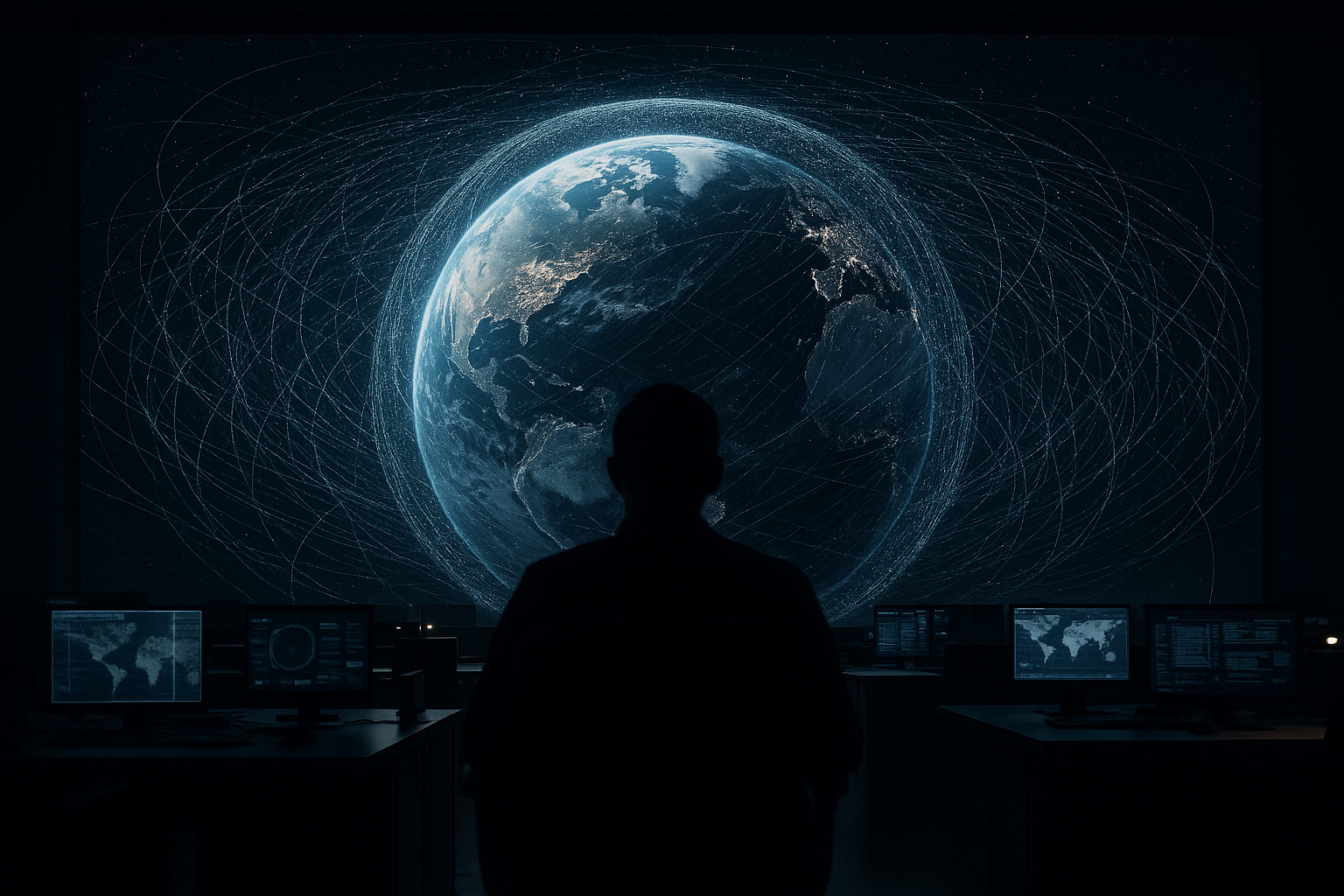
On Sunday, at a side meeting of the Small Satellite Conference in Salt Lake City, SpaceX made a pitch that should have gotten more attention than it did. The company is now offering every satellite operator on Earth a collision-screening service for low Earth orbit — the core function of space traffic control — through a new platform called space-safety.com.
The price is zero.
The numbers behind the offer explain why it matters. The platform runs on Stargaze, the space situational awareness system SpaceX unveiled in January, which repurposes the star-tracker cameras on Starlink satellites into a distributed sensor network. Stargaze currently tracks about 16,500 objects in low Earth orbit — roughly 48% of the entire public catalog maintained by the U.S. Space Force — and can revisit a tracked object up to ten times an hour, updating its orbit within five minutes of a new observation.
The comparison that matters is throughput. Space-Track, the Space Force system that most of the world's satellite operators depend on for collision warnings, screens for potential conjunctions three times a day. SpaceX says its platform screens more than 500,000 ephemeris files daily and generates a conjunction warning within one minute of an operator submitting updated orbital data. In its first week, more than 30 operators shared data on over 700 spacecraft.
"We do satellite internet. We're not trying to make money off SSA," a SpaceX engineer told the conference. That is precisely the point — and precisely the problem for everyone who does.
The Vacuum It Fills
The timing is not incidental. SpaceX is shipping a free, working space traffic system into a vacuum Washington created.
The U.S. government has spent six years trying — and mostly failing — to stand up a civil space traffic coordination system. The Office of Space Commerce's TraCSS program was supposed to take over collision screening for commercial operators from the military. Instead: the administration's FY2026 budget proposed terminating it outright and handing the job to "the private sector." A September 2025 rescission clawed back 40% of the office's budget. Congress pushed back, and the final FY2026 spending bill restored $52.5 million to keep TraCSS alive. The FY2027 request, released this summer, doesn't mention the program by name at all.
While that fight dragged on, the largest satellite operator in history — SpaceX flies more than 11,000 Starlink spacecraft, over half of everything active in orbit — built the capability itself and is now giving it away.
Briefings like this land in members' inboxes before the market prices them in. Join free →
Why "Free" Is the Strategy
SpaceX's stated motivation is genuine as far as it goes: no one has more capital parked in low Earth orbit than SpaceX, and no one loses more from a debris cascade. Starlink is the company's revenue engine, and a single bad collision in a congested shell could poison the orbits it operates in for decades. Keeping LEO clean is balance-sheet defense.
But free products from dominant platforms are never just public services. The company that runs the screening becomes the standard-setter: its data formats, its maneuver-coordination protocols, its thresholds for what counts as a dangerous approach. Every operator that plugs in — and the platform only works for operators willing to share their ephemerides and planned maneuvers — is handing flight data to the company that competes with most of them.
Consider who is being asked to join. Amazon's Leo constellation — the rebranded Project Kuiper — has roughly 390 satellites in orbit on its way to 3,236, every one of them a direct competitor to Starlink. AST SpaceMobile is building satellites explicitly designed to take mobile connectivity revenue SpaceX wants. Planet's imaging fleet, Iridium's network, Eutelsat OneWeb — all now face the same question: accept faster, better, free collision screening from your largest rival, or pay for a slower commercial alternative on principle.
Most will take the free screen. Safety teams don't have budgets for principle, and 500,000 screens a day is not something anyone else offers at any price.
Which raises the question the conference presentation didn't address: what happens to the companies that sell orbital tracking for a living — and what does it mean when the referee of the world's fastest-growing commons is also its biggest player? That's where the money moves.
The rest of this briefing is for paid members: which space-tracking business models just lost their market and which survive, what Anduril's March acquisition of ExoAnalytic reveals about where the value migrated, the player-referee problem for Amazon Leo and AST SpaceMobile, the insurance lock-in mechanism nobody is pricing, and the catalyst calendar through 2027.
AlphaBriefing Paid gets you every investment thesis, scenario framework, and catalyst brief we publish — the analysis private intel clients pay four figures for, at a fraction of that.