Washington's 'Economic D-Day' Has a China Problem
Bessent just announced 'the single greatest financial offensive ever marshaled against an adversary' — and oil fell 2.5%. The market is pricing the only question that matters: will Washington sanction Chinese banks a month before Xi walks into the White House?

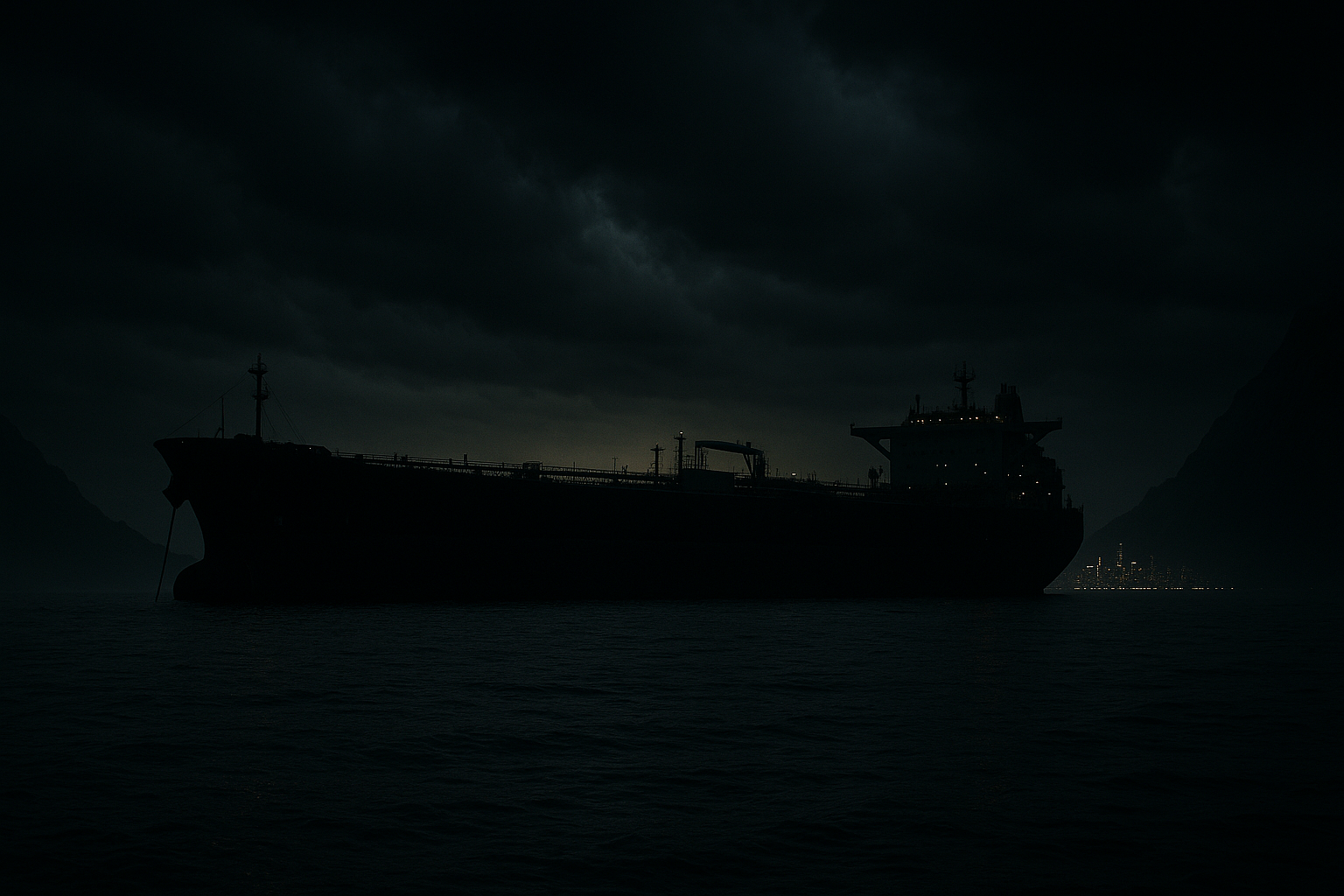
Scott Bessent stood at the Treasury podium on Monday and announced what he called "the single greatest financial offensive ever marshaled against an adversary." Operation Economic Outcast — an "economic D-Day," in his words — threatens secondary sanctions against any country that keeps doing business with Iran, backed by the ultimate penalty: exclusion from the dollar-based financial system.
Oil fell 2.5%.
That is not the reaction you get when markets believe a supply shock is coming. Brent settled at $92.06, WTI at $84.89 — both down on the day the toughest sanctions package in American history was unveiled. Traders booked profits and moved on to Nvidia's earnings. The market, in its cold way, delivered a verdict within hours: the sanctions themselves are not the story. Whether Washington will enforce them against China is.
The Sanctions Are Aimed at a Country That Has Almost Nothing Left to Sanction
Start with what Operation Economic Outcast actually does. It expands the categories of secondary sanctions on entities and countries transacting with Tehran, and layers new designations across digital assets, gold, aviation, technology, and shipping. Every country gets what Bessent called a defined timeline to wind down Iran-related business. Miss the deadline, and you face the choice between the Iranian market and the American one — which is no choice at all.
But look at the target. The rial is trading near two million to the dollar. Inflation is running above 80%. With the Strait of Hormuz effectively closed — a fifth of the world's energy supply rerouted or stranded — Iran's oil shipments have nearly ceased, and with them the government's primary revenue stream. President Trump summarized the situation Monday with characteristic bluntness: "Iran is completely collapsing."
You do not marshal history's greatest financial offensive against an economy that is already in freefall. The sanctions are not really aimed at Iran. They are aimed at the countries still connected to it — Russia, China, India, Turkey, Pakistan, Qatar — and one of them matters far more than the rest.
Briefings like this land in members' inboxes before the market prices them in. Join free →
The UAE Fold Reveals the Playbook
The first proof point arrived before the announcement did. The United Arab Emirates severed trade and financial ties with Iran last week, after Iranian missile and drone attacks made neutrality untenable. Bessent called the Emirati decision "likely causal" to Monday's rollout and said he expects others to follow.
That sequencing is the strategy in miniature: peel off the periphery first, isolate the core buyer last. Dubai has been Iran's financial window to the world for four decades — the re-export hub, the hawala clearinghouse, the sanctions-evasion capital. With the UAE out, Iran's remaining economic lifelines run overwhelmingly in one direction: east, to the Chinese teapot refineries that have absorbed the bulk of Iran's discounted crude for years.
Which brings us to the collision Washington has spent a decade avoiding — and now has thirty days to navigate.
The rest of this briefing is for paid members: the September 24 collision date nobody is pricing, the three enforcement scenarios and what each does to oil, tankers, and gold, the digital-asset designation that puts stablecoin rails in the crosshairs, and the watchlist with specific names and signals.
AlphaBriefing Paid gets you every investment thesis, scenario framework, and catalyst brief we publish — the analysis private intel clients pay four figures for, at a fraction of that.