Why America Can't Build Anything Anymore
The most expensive problem in the American economy doesn't show up in CPI prints. The skilled trades pipeline is broken — and it's the bottleneck under the AI build-out, the CHIPS Act, grid modernization, housing, and defense.

Why America Can't Build Anything Anymore
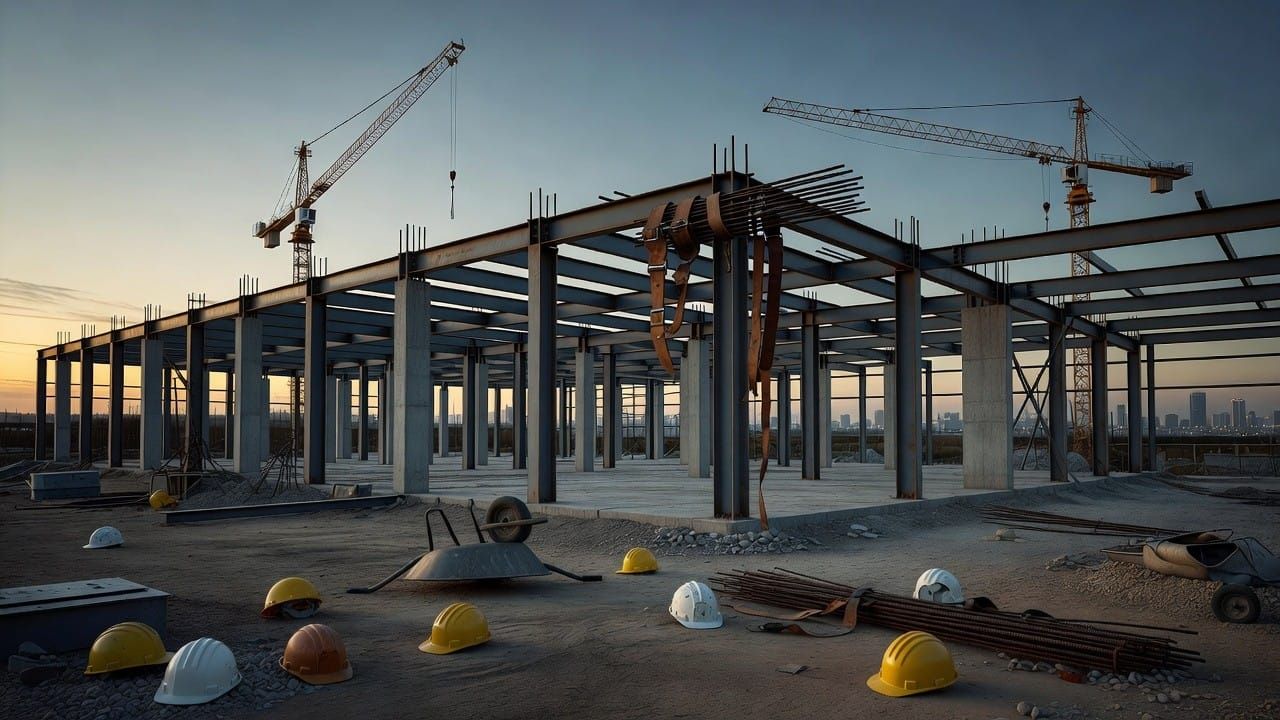
The most expensive problem in the American economy doesn't show up in CPI prints or earnings calls. It's measured in empty toolbelts.
JLL's April research, citing Department of Education projections, put a number on it: the United States is on pace to leave 2.1 million skilled trades jobs unfilled by 2030, at an estimated annual economic cost of $1 trillion. Electricians, HVAC technicians, plumbers, pipefitters, ironworkers, construction equipment operators — the people who actually pour the concrete, pull the wire, and hang the steel — are aging out faster than the country can replace them.
Last year alone, U.S. employers posted nearly 600,000 jobs across the major skilled trades. The apprenticeship system produced about 150,000 new workers. That is not a shortage. That is a structural break.
And it is now colliding with the largest private-sector capital expenditure cycle in modern American history.
The arithmetic doesn't work
The numbers behind the labor gap are not subtle. Roughly half of the nation's licensed plumbers are over 50 years old, according to Bureau of Labor Statistics data. The Bureau projects electrician demand to grow 11% through 2033 — a pace it has not hit since the postwar suburban build-out. By 2027, the U.S. is expected to be 550,000 plumbers short. The construction industry is currently running with about 349,000 unfilled positions, and that figure understates the deficit because it counts only jobs that employers are actively posting. Many small contractors have simply stopped bidding work they know they cannot staff.
The pipeline replacing this workforce is roughly one-quarter the size it needs to be. Vocational training, apprenticeship slots, and union halls have all been hollowed out by 30 years of cultural and policy choices that pushed every American teenager toward a four-year degree. The bill is now arriving with interest.
The AI build-out hits a wall
Meta, Microsoft, Google, Amazon, and OpenAI have collectively committed to tens of billions of dollars in new data center construction over the next 36 months. Each gigawatt of data center capacity requires thousands of skilled tradespeople — primarily electricians, but also pipefitters for cooling systems, HVAC technicians for thermal management, and structural ironworkers for the racks themselves.
The chip supply, as we wrote last week, is not the binding constraint. Neither, ultimately, is the transformer queue. Both can be solved with money and time. The binding constraint is increasingly the human being holding the conduit bender. You cannot 3D-print a journeyman electrician.
Hyperscaler timelines now bake in 18- to 24-month construction windows for facilities that, five years ago, would have come online in 12. The premium that data center developers are paying for available trade labor — in some markets, electricians are commanding $90–$120 an hour on prevailing-wage projects — is quietly migrating into the cost stack of every AI capex announcement. It is also, more importantly, capping how much capacity actually gets built.
It isn't just data centers
The trades shortage is the hidden tax on almost every major theme investors are paying up for right now.
Reshoring and the CHIPS Act build-out. TSMC's Arizona delays, Intel's Ohio slippage, and Micron's New York timeline have all cited skilled labor availability as a primary constraint. Fabs require enormous quantities of clean-room qualified pipefitters and electricians — a niche so thin that contractors have been flying tradespeople in from Taiwan.
Grid modernization. The Inflation Reduction Act's transmission and distribution funding will, in theory, route hundreds of billions of dollars through utilities over the next decade. In practice, every interconnect upgrade requires linemen and substation electricians. Utilities have begun internal training programs because they can no longer poach from competitors who are also short.
Housing. America's housing affordability crisis is, in part, a labor crisis. The National Association of Home Builders has consistently cited skilled trade availability as one of the top three constraints on new starts. Framing crews, drywallers, electricians, and plumbers all command premiums that flow directly into the price of a new home.
Defense and shipbuilding. The Navy's submarine industrial base is short an estimated 100,000 welders, pipefitters, and electricians. Columbia-class delays, frigate program slippage, and the AUKUS commitment all run through the same labor pool. There is no software fix for a missing welder.
The capital is finally moving
The market has begun to notice. In early June, Lowe's, BlackRock, and Google collectively pledged more than $365 million toward training electricians, plumbers, HVAC technicians, and other tradespeople. It is the largest private-sector trades-training commitment in modern memory, and it will not be the last.
More structurally significant: on July 1, a new federal rule takes effect that, for the first time, allows Pell Grants to flow to short-form vocational programs of 8 to 15 weeks. This is a quiet but enormous policy shift. The federal government has spent five decades subsidizing four-year degrees while leaving trade pathways to fend for themselves. That asymmetry is being partially closed at exactly the moment cultural sentiment is also shifting — community college enrollment is up 12% over five years, with trades majors among the fastest-growing categories.
And the underlying labor economics have flipped. A first-year journeyman electrician in a major U.S. metro now out-earns the median college graduate. A licensed master plumber with a small business clears $200,000 or more. AI is hollowing out the bottom rungs of white-collar work — paralegal, junior accountant, entry-level software — at the exact moment that "tradesperson" has become one of the few jobs that is unambiguously safe from automation. You cannot offshore a clogged drain. You cannot prompt-engineer a panel upgrade.
The cultural rotation toward the trades is not a vibe. It is a price signal finally clearing.
What it means
For policymakers, the trades shortage is a slow-burning emergency. Every major American industrial policy of the last five years — CHIPS, IRA, the AI build-out, reshoring, defense modernization — implicitly assumes a workforce that does not exist. The Pell Grant expansion is a start. It is not enough.
For investors, the picture is more interesting. A labor shortage that runs through every major capex theme is the kind of cross-cutting bottleneck that creates durable pricing power for the firms positioned to solve it — vocational training providers, staffing platforms, equipment makers whose tools reduce labor intensity, and the contractors who can actually staff a project. It is also a slow-motion margin compression for any company whose growth story depends on building things in America and assumed labor was a rounding error.
For the country, it is a reminder that the physical economy still runs on hands, not GPUs. The United States has spent a generation telling itself that the future would be coded. It turns out the future also needs to be wired.
The toolbelts are mostly empty. Whoever fills them next will be holding the actual bottleneck of the next decade.
Get this level of intelligence every day. Subscribe to AlphaBriefing — free, member, and paid tiers available.
Sources & Further Reading
- JLL — Critical skilled trades shortage threatens $1T in economic losses
- Fortune — America's 'silent army' of skilled trades workers is vanishing — and it's a $1 trillion crisis
- Fortune — The AI data center boom is creating a dire electrician shortage
- TechTimes — Skilled Trades Shortage Draws $365M in Corporate Pledges as Pell Grants Hit Vocational Programs
- NewsNation — Shortage of US trade workers a national emergency, 'Dirty Jobs' host Mike Rowe says
- The Hill — Labor crisis: Why is there a shortage of plumbers and electricians?
- Facilities Management Advisor — Skilled Trades Labor Shortage Reaches 'Critical Inflection Point'
Disclaimer
AlphaBriefing is an independent intelligence publication. The content in this article is produced for informational and educational purposes only. Nothing published by AlphaBriefing constitutes financial, investment, legal, tax, or regulatory advice, nor should it be construed as a solicitation or recommendation to buy, sell, or hold any security, asset, or financial instrument.
All views expressed are those of the author at the time of writing and are subject to change without notice. Markets are volatile and unpredictable; past performance is not indicative of future results. Any investment involves risk, including the possible loss of principal.
AlphaBriefing and its principals, employees, or contributors may hold positions in securities or assets mentioned in this article. This should be considered a potential conflict of interest. No material relationship with any company referenced exists unless explicitly disclosed. Readers should conduct their own due diligence and consult qualified financial, legal, and tax advisors before making any investment decisions.
Information in this article is drawn from public sources believed to be reliable at the time of publication. AlphaBriefing makes no warranty, express or implied, as to the accuracy, completeness, or timeliness of any information herein. AlphaBriefing accepts no liability for any loss or damage arising from reliance on this content.
© AlphaBriefing. All rights reserved. Unauthorized reproduction or distribution is prohibited.