Europe Froze Russia's Reserves. The Blowback Is Landing in Brussels.
€190 billion of Russian money sits in one Brussels vault. The fight over whether to spend it has quietly become a solvency-and-credibility crisis for Euroclear — and a live repricing of what it costs the world to keep its reserves in the West.

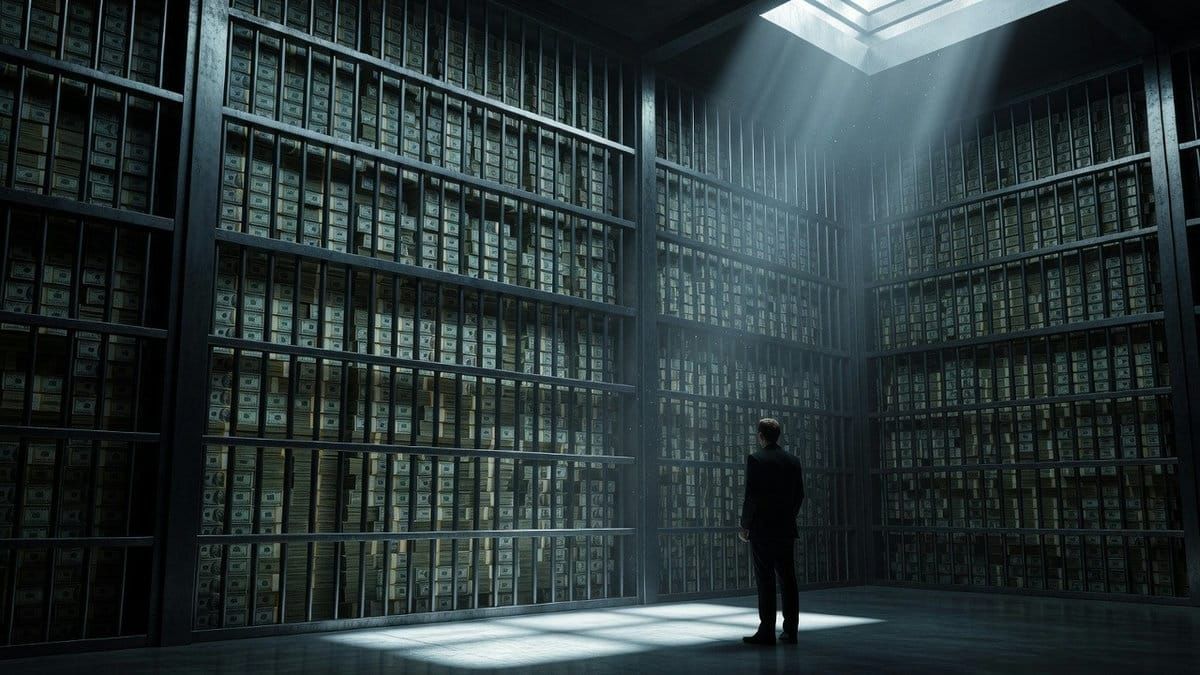
There is a vault in Brussels that holds roughly €190 billion of the Russian central bank's money, and for more than three years the West has known exactly what it wants to do with it and been unable to do it.
Since the full-scale invasion in 2022, Western sanctions have immobilized close to €200 billion in Russian central bank reserves. The overwhelming majority — around €185 billion — sits inside a single institution: Euroclear, the Brussels-based securities depository that functions as one of the central plumbing nodes of the entire European financial system. The money cannot leave. Russia cannot touch it. And, it turns out, neither can Europe — at least not the way its most powerful leaders keep insisting it should.
For a while, everyone found a comfortable middle path. Nobody seized the principal; instead the EU skimmed the windfall profits — the interest the immobilized assets throw off as they sit. In the first half of 2025 alone those assets generated roughly €2.7 billion in interest, of which about €1.6 billion flowed to the EU after Belgian taxes and Euroclear's fees, and got routed straight into weapons and reconstruction for Ukraine. It was elegant precisely because it dodged the hard question: you can spend Russia's interest without ever admitting you have crossed the line into spending Russia's money.
That truce is over. The war's funding math no longer works on interest alone.
The €140 billion question. With Ukraine facing a financing cliff for 2026–27, European Commission President Ursula von der Leyen and German Chancellor Friedrich Merz pushed a far more aggressive idea: a "reparations loan" of up to €140 billion, collateralized by the immobilized Russian principal itself. The structure is legally clever — the assets are not formally confiscated (sovereign immunity makes outright seizure a minefield); they are pledged. Ukraine draws the cash now and only repays once Russia pays war reparations, which is to say: functionally never, unless the war ends on Kyiv's terms.
And then, in December, the EU blinked. Rather than pull the trigger on the reparations loan, EU leaders agreed to fund Ukraine's needs — about €90 billion — by borrowing on the open capital markets instead. The mechanism that would have tapped Russia's principal was left on the table, unresolved. The fight didn't end. It just moved into 2026.
Why Belgium is the one saying no. The blocker is not Hungary or Slovakia this time — the EU already engineered a way around the Moscow-friendly capitals by shifting the freeze to a qualified-majority, indefinite footing. The blocker is Belgium, and Belgium's objection is not sentiment. It is exposure. The assets sit on Belgian soil, inside a Belgian-supervised institution, which means Belgium carries the legal and financial liability if the plan goes wrong. In a late-November letter, Prime Minister Bart De Wever laid out three fears with unusual bluntness: that the sanctions regime underpinning the loan could collapse and trigger a premature repayment Euroclear may not have the cash to cover; that Russia would sue Belgium under a 1989 bilateral investment treaty and win its money back; and that any eventual peace deal might not require Russia to pay full reparations at all — leaving Belgium holding a €140 billion IOU with no one to collect from.
Euroclear itself has been blunter still, warning publicly that the reparations loan is fragile, unpredictable, and risks an investor exodus. Moscow, for its part, is not waiting: Russia's central bank has filed suit in a Moscow court seeking some $230 billion in damages from Euroclear directly.
This is the part the market keeps mislabeling as a Ukraine story. It is not, anymore. It is a story about whether Europe can politicize the custody of foreign money without breaking the institution that sits at the dead center of its own financial system — and about the price every other government in the world will quietly attach to that risk.