Who Insures the Insurer of Last Resort?
On October 15, fire insurance premiums jump 29.1% for the 700,000 Californians the private market already left behind. The FAIR Plan holds $724 billion of exposure against $2 billion of premium — and when it runs dry, the bill lands on every policyholder in the state.

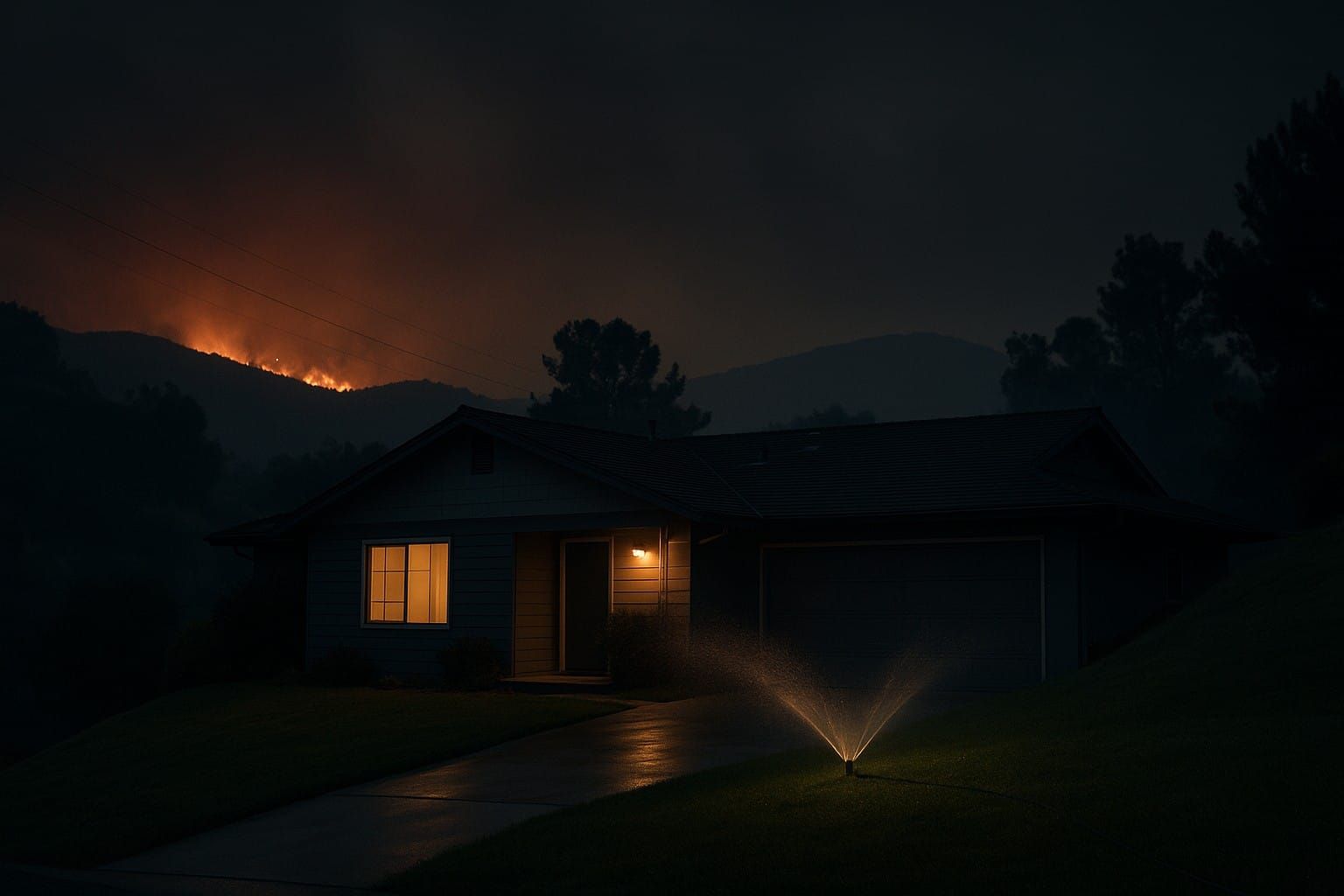
On October 15, in the back half of California's fire season, fire insurance premiums jump an average of 29.1% for roughly 700,000 households — the people the private insurance market has already declined to cover. It is the largest rate increase California's FAIR Plan has taken in at least seven years, and the state's insurance regulator approved it knowing most of the people paying it have nowhere else to go.
That is the visible part of the story. The less visible part is the reason the increase exists at all: the FAIR Plan — a pool designed in 1968 as a temporary shelter for properties nobody would insure — has quietly become the largest fire insurer in California, holding $724 billion of exposure against roughly $2 billion of annual premium. And when the January 2025 Los Angeles fires blew a hole in its finances, the mechanism that filled the hole revealed something most Californians never voted on and many still don't know: wildfire risk in California has been socialized across every insurance policyholder in the state.
The backup that became the default
The FAIR Plan was never meant to be anyone's permanent insurer. Created in 1968, it is not a government agency and takes no taxpayer money. It is a syndicated pool that every licensed property insurer in California is required to participate in, proportional to market share — a place to park uninsurable risk while the market sorted itself out.
For fifty years, that is roughly what it was. Then the market stopped sorting itself out.
Between fiscal 2018 and 2024, FAIR Plan policies grew 276%. Between the fall of 2024 and the end of 2025 alone, homeowner policies jumped 44% — from 464,900 to 668,600 — as major carriers paused new business, tightened underwriting, or left the state outright. Total exposure rose 230% over the same stretch, to $724 billion.
The more telling number is where that growth is happening. According to the plan's own data, 14% of FAIR Plan policies — and 28% of its exposure — now sit in urban, lower-fire-risk neighborhoods: places that were never supposed to need an insurer of last resort. Stanford climate researcher Michael Wara calls it "the infection of the market" spreading into its normal parts. When the backstop is covering downtown, it isn't a backstop anymore. It's the market.
Briefings like this land in members' inboxes before the market prices them in. Join free →
The stress test
The January 2025 Los Angeles fires — Palisades, Eaton, Hurst — destroyed roughly 12,000 homes and produced about $40 billion in insured losses across the market. The FAIR Plan's share came to roughly $4 billion, against a plan that collects about $2 billion in premium a year.
What happened next is the part investors should study, because it is the machinery that will run again after the next big fire.
The plan burned through its cash and reinsurance and then did the thing it exists to do in extremis: it assessed its member companies $1 billion, split by market share — a step it had not taken in decades. Every admitted insurer in California, including ones with minimal wildfire exposure, wrote a check.
But the assessment didn't stop there. Under bulletins issued by Insurance Commissioner Ricardo Lara, insurers were permitted to recoup half of the residential portion of that assessment directly from their policyholders, through temporary surcharges spread over up to two years. The median homeowner's share came to about $28 a year — small enough not to notice, structural enough to matter. Consumer Watchdog sued, arguing the pass-through was an illegal tax on people who had nothing to do with the fires. On July 1, a Los Angeles Superior Court judge rejected the challenge, ruling the commissioner acted within his authority.
So the answer to the question in the headline is now settled law. Who insures the insurer of last resort? Every policyholder in California, whether they live in the fire zone or not. The FAIR Plan is a mutualization machine: concentrated wildfire risk goes in, and a thin statewide levy comes out — assessed first on insurers, then on you.
The math that doesn't close
Hold the two numbers next to each other: $724 billion of exposure, $2 billion of premium. The gap between them is managed with reinsurance and the assessment mechanism — which is to say, the gap is managed by assuming catastrophic years are rare and the pool of assessable policyholders is deep.
The January 2025 fires cost the plan roughly $4 billion and triggered a $1 billion assessment. That was one fire complex, in one county, in one month. The exposure has grown since. A Palisades-scale event in a year when reinsurance renews expensively — or two of them — doesn't produce a $28 surcharge. It produces the kind of assessment that shows up as a visible line item on every property policy in the state, at which point the surcharge stops being an accounting curiosity and becomes a political event.
This is why the October 15 rate increase, unpopular as it is, understates the correction. The plan originally filed for 35.8%; the Department of Insurance approved 29.1%. Under the original request, four in five policyholders would have seen increases between 5% and 60%. The approved version trims the edges without changing the direction. The honest price of insuring fire-exposed California is still being phased in — and each increment moves the FAIR Plan's premium base closer to the risk it actually carries.
The trap nobody designed
Here is the paradox the state is now stuck in. Everyone — the commissioner, the insurers, the consumer groups — agrees the FAIR Plan is supposed to shrink. "Depopulation" is official policy. But the plan's rates, even after October's increase, are frequently cheaper than what a private carrier would charge for the same fire-exposed house, because the plan's rates have lagged the risk for years.
Mark Sektnan of the American Property Casualty Insurance Association put the problem plainly: "You cannot depopulate the FAIR Plan when somebody maintains a FAIR Plan policy for 30 to 40 years because it is cheaper." An underpriced backstop doesn't shrink. It accumulates.
Sacramento's response has been to make the FAIR Plan better, which cuts both ways. The Make It FAIR Act, introduced in February, would turn the plan into something resembling a permanent institution: comprehensive coverage options instead of bare-bones fire policies, strategic planning, formal climate risk reporting, capital and liquidity standards. All defensible. All of it also makes the last-resort product more attractive relative to the private market it is supposed to lose customers to.
The genuine exit route is the one running quietly in parallel: Commissioner Lara's deal with the industry, under which carriers may price with catastrophe models and pass through reinsurance costs — things California uniquely prohibited for decades — in exchange for commitments to write more business in distressed areas. Six major carriers are negotiating rate increases tied to those commitments now. State Farm already took a 17% emergency increase. Translation: private insurance returns to fire country only at meaningfully higher prices. The choice was never between the FAIR Plan and the old premiums. It is between socialized risk at a low visible price and private risk at an honest one.
Florida, for what it's worth, chose honesty first and is now on the other side of the curve: after years of painful rate corrections and reforms, its state-backed Citizens has been shedding policies back to private carriers and cutting rates in 2026. California is running the same experiment several years behind, with a peril that is harder to model and a rate-approval process that is slower to move.
What it means for money
For homeowners, the direction is set. FAIR Plan rates rise 29.1% in October; the carriers being coaxed back will arrive at reinsurance-loaded prices; and the assessment surcharge mechanism is now court-validated, meaning the next catastrophic season lands partly on every policy in the state. Insurance is becoming a visible, volatile line in the cost of owning California property — and in high-fire zip codes it is already functioning as a repricing of the asset itself.
For insurers, California is slowly becoming investable again, which is the quiet bull case buried in an ugly story. The carriers that holstered their pens in 2023–24 did so because they were forced to sell mispriced coverage. Catastrophe modeling, reinsurance pass-through, and a regulator committed to faster rate approvals change that calculus. The ones re-entering early, at reset rates, are buying market share in the nation's largest property market at the best pricing terms it has offered in a generation.
For the system, watch the exposure number. If depopulation works, FAIR Plan exposure — $724 billion and climbing — flattens over the next two years as the private market absorbs risk at honest prices. If it keeps compounding, California is building a single point of failure with a thin capital base and a legally confirmed pipe into every policyholder's wallet, and each fire season is a roll of the dice on when that pipe gets used at scale.
The FAIR Plan was designed to be the place risk waited until the market came back. Right now it is the place the market went to hide from its own prices. October 15 is the first honest installment of the bill.
If this analysis was useful, this is what AlphaBriefing does every day — geopolitics and markets, connected to what it means for your money. Free members get the daily brief in their inbox; paid members get the investment frameworks, scenario pricing, and catalyst calendars behind the paywall.
Sign up free → — upgrade whenever it earns it.
Sources & Further Reading
- California Department of Insurance — Commissioner Lara defeats attempt to undermine California insurance market (July 1, 2026)
- California Department of Insurance — Commissioner Lara and Assemblymember Calderon announce legislation transforming the California FAIR Plan
- InsuranceNewsNet — California FAIR Plan rates going up 29.1% in late 2026
- Insurance Business — "You cannot depopulate the FAIR Plan if it's cheaper"
- Insurance Business — California's FAIR Plan carries growing load as insurers retreat beyond wildfire zones
- Los Angeles Times — FAIR Plan to assess insurers $1 billion for L.A. fires; consumers may be on the hook for nearly half
- Center for Economic and Policy Progress — Mapping the Residential Exposure and Coverage of California's FAIR Plan
Disclaimer
AlphaBriefing is an independent intelligence publication. The content in this article is produced for informational and educational purposes only. Nothing published by AlphaBriefing constitutes financial, investment, legal, tax, or regulatory advice, nor should it be construed as a solicitation or recommendation to buy, sell, or hold any security, asset, or financial instrument.
All views expressed are those of the author at the time of writing and are subject to change without notice. Markets are volatile and unpredictable; past performance is not indicative of future results. Any investment involves risk, including the possible loss of principal.
AlphaBriefing and its principals, employees, or contributors may hold positions in securities or assets mentioned in this article. This should be considered a potential conflict of interest. No material relationship with any company referenced exists unless explicitly disclosed. Readers should conduct their own due diligence and consult qualified financial, legal, and tax advisors before making any investment decisions.
Information in this article is drawn from public sources believed to be reliable at the time of publication. AlphaBriefing makes no warranty, express or implied, as to the accuracy, completeness, or timeliness of any information herein. AlphaBriefing accepts no liability for any loss or damage arising from reliance on this content.
© AlphaBriefing. All rights reserved. Unauthorised reproduction or distribution is prohibited.