Wall Street Is Pricing Middle East Peace at 25 Cents on the Dollar
Israel's deadliest strikes since the June framework hit southern Lebanon on Saturday. The cleanest read on whether the peace survives isn't in any communique -- it's the price of a bond Lebanon stopped paying six years ago.

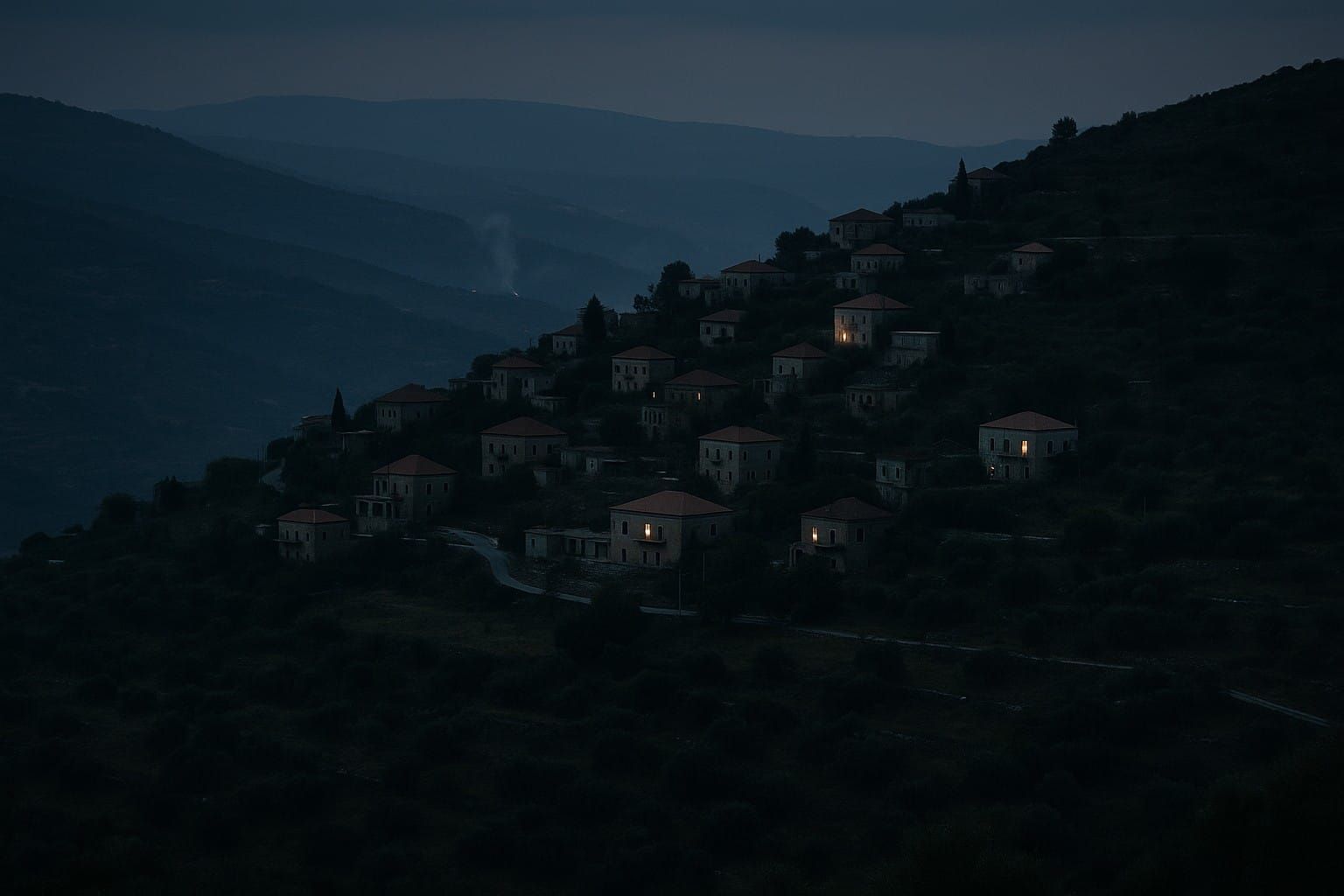
On Saturday morning, Israeli warplanes struck a house in Ansar, a village in southern Lebanon. Seven people were killed, including three children and two women, according to Lebanon's National News Agency. A second strike on Deir El Zahrani killed four more. Nineteen were wounded. The Israeli military said the target was a headquarters of Hezbollah's elite Radwan Force and that the strike killed one of its commanders, Ali Samir Al-Haj Hassan — adding that his family was present inside the compound but was not the target.
It was some of the deadliest violence since Lebanon and Israel signed a US-mediated framework agreement in Washington on June 26. Lebanese President Joseph Aoun called the strikes "a clear message" aimed at the negotiations. Hezbollah said the attacks would be "met with what they deserve." A spokesman for Israel's Prime Minister's Office offered a different reading: the strikes, he told Reuters, should make the talks "more serious and more real."
Diplomats will spend the week arguing about what Saturday means. But there is one place where that argument gets settled in real time, with money: the price of a bond Lebanon stopped paying six years ago.
The war the framework is trying to end
Some context, because this conflict has been running in the shadow of the Iran war. On March 2 — two days after hostilities with Iran began — Hezbollah opened fire on Israel. Israel answered by seizing a swathe of southern Lebanon. Lebanese authorities say more than 4,300 people have been killed since March and over a million displaced.
The June 26 framework was supposed to wind this down. Its core bargain: Israeli forces remain in the occupied south until Hezbollah is disarmed and the Lebanese army takes control. Hezbollah has rejected those terms as surrender — it says it will pull back south of the Litani River, but it will not give up its weapons north of it.
Since June, the two sides have held seven rounds of direct, US-brokered talks — five in Washington, two in Rome — and the process has produced something real: a "pilot zone" mechanism. In the first test, Israel withdrew from the outskirts of Zawtar al-Gharbiyeh; the Lebanese army deployed, and residents returned after clearance work. Lebanon wants the next zone in Khiam or Bint Jbeil. Israel wants Ali Taher Hill, strategic high ground near Nabatieh that it says conceals a Hezbollah command center — and which sits north of the Litani, exactly where Hezbollah says disarmament is off the table. Rome also produced a first: the Israeli delegation stepped back from demanding that disarmament be settled before the border file. A third-party verification role is under discussion, with Italy floated.
Then came Thursday, when Defense Minister Israel Katz, visiting the occupied zone, said Israel would not withdraw until Hezbollah disarms — a position a US State Department official pointedly noted is not consistent with the framework. Two days later, the warplanes hit Ansar. Among Saturday's other targets, per Lebanese media: Ali Taher Hill itself.
The peace trade nobody designed
Here is where the story becomes a market story.
Lebanon defaulted on roughly $31 billion of Eurobonds in March 2020, the terminal event of a financial collapse built on a $72 billion hole in the banking system — depositor money the state had borrowed and spent. The bonds have not paid a coupon since. The state has been shut out of international markets, and for years the paper traded in the single digits: an option on a country that had stopped functioning.
That option started repricing when Lebanon got a president, a reformist government under Prime Minister Nawaf Salam, and — this year — a live diplomatic track with Israel. By late February, according to Beirut's L'Orient Today, Lebanese Eurobonds were changing hands around 30 cents on the dollar. The March war knocked them back. But here is the detail that should catch your eye: through five months of airstrikes, occupation, and a balance of payments that swung from a $300 million surplus in January–February to a $200 million deficit from March through May, the bonds have held around 25 cents.
Think about what that price is. It is not a bet on Lebanon's fiscal arithmetic — there are no coupons, no maturities that matter, no primary market. It is a probability-weighted bet on exactly one question: does the framework hold, does reform follow, and does Lebanon eventually restructure this debt inside an IMF program? Investors holding the paper are explicitly positioned for a peace-and-restructuring scenario that L'Orient Today reports would put recoveries above 30 cents.
There is no cleaner instrument for the question. Israeli equities price a hundred other things. Oil prices Hormuz, not Nabatieh. But a defaulted Lebanese Eurobond has no value at all in the war scenario and a tripling in the peace scenario — which makes its price the market's purest running poll on whether the Middle East's newest peace process is real.
Which is why Saturday matters beyond the horror of it. The strikes on Ansar were the deepest into Lebanon in two months. Hezbollah has promised a response, and Israeli reporting says the group is waiting on Tehran's signal for how far to take it. Parliament Speaker Nabih Berri — a Hezbollah ally and the broker who made the talks possible — is publicly begging the sponsors to "stop the war before it is too late."
So: three paths out of this weekend, and each one has a different number attached to a 25-cent bond.
The rest of this briefing is for paid members: the three-scenario price map for Lebanon's Eurobonds, the restructuring math behind a 30-cents-plus recovery, the New York litigation clock that forces a resolution either way, and the listed proxy for investors who can't touch defaulted sovereign debt.
AlphaBriefing Paid gets you every investment thesis, scenario framework, and catalyst brief we publish — the analysis private intel clients pay four figures for, at a fraction of that.