Vietnam Is Running Its Economy Like China in 2007
Vietnam just posted 9.95% growth and joined FTSE's emerging-market index in the same month — yet the dong is at record lows, inflation is above target, and the Vietnam ETF sold off. The math behind Hanoi's double-digit ambition looks uncomfortably like Beijing's in 2007.

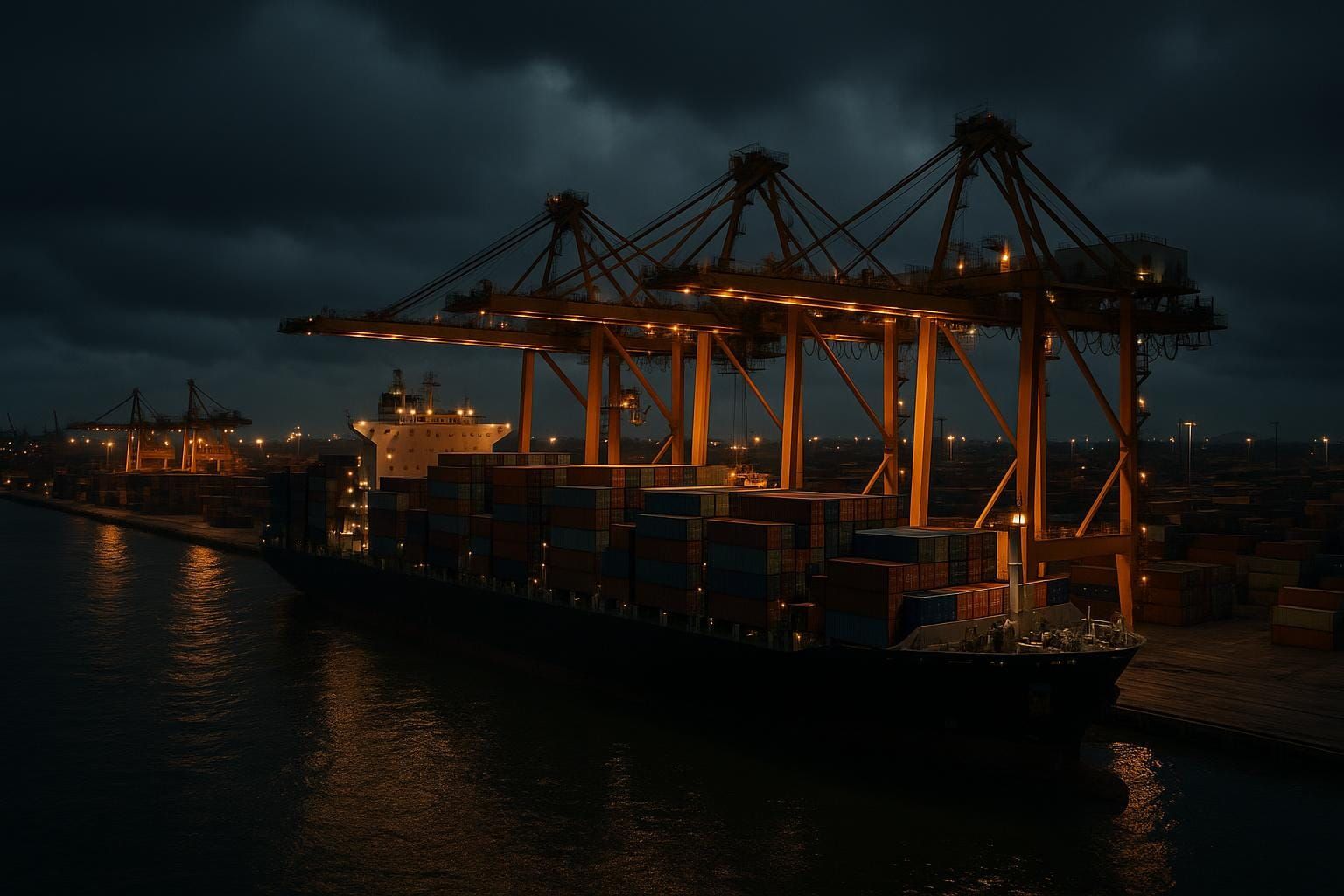
On October 3, Vietnam's National Statistics Office reported that the economy grew 9.95 percent year-over-year in the third quarter — the fastest quarterly expansion in four years, and the third consecutive acceleration this year, after 8.15 percent in the first quarter and 8.81 percent in the second. Nine-month growth now stands at 9.01 percent, the strongest print since 2011.
Consider the backdrop. America has stopped hiring while the Fed keeps hiking. Rising US yields are squeezing emerging-market borrowers from Mumbai to Cairo. Energy prices are still working through the system from the first-quarter shock. In that world, one mid-sized Asian economy is growing at a pace the global economy hasn't seen from a major exporter since China's pre-2008 run.
And here is the detail that should make investors look twice: nobody in Hanoi is celebrating. Within a day of the release, Prime Minister Le Minh Hung told his government that Vietnam needs more than 12.5 percent growth in the fourth quarter to hit its target of a double-digit year — calling it "very significant pressure and a very challenging task."
A 10 percent growth target, declared in advance and pursued as a political mandate, is not the same thing as a 10 percent economy. The difference between the two is the subject of this briefing.
The Machine Is Real
Start with what is genuinely working, because a lot is.
Exports reached $167.85 billion in the third quarter alone, up 30.4 percent year-over-year. The United States remains Vietnam's largest customer, taking $140 billion of goods in the first nine months. Industrial production rose at its strongest nine-month pace since 2019, and twelve of Vietnam's 34 provinces posted double-digit regional growth, led by the northern manufacturing belt — Quang Ninh, Ha Tinh, Haiphong, Bac Ninh — where Samsung, LG, and their supplier ecosystems have built some of the largest electronics clusters on earth.
The capital inflow data is even more striking. Registered foreign direct investment hit $50.36 billion by September 30 — up 76.4 percent from a year earlier. Disbursed FDI, the money actually spent, reached $21.07 billion, the highest nine-month figure since 2022. The China+1 relocation trade is not slowing; it is accelerating into Vietnam specifically.
The institutional milestones followed. In July, the World Bank reclassified Vietnam as an upper-middle-income economy. On September 21, FTSE Russell officially promoted Vietnam's stock market to secondary emerging status — and Vanguard's emerging-market index funds committed to begin deploying capital into Vietnamese stocks from that same day. When the prime minister met FTSE Russell's CEO in mid-September, BlackRock and Vanguard executives were in the room.
Growth near 10 percent, index inclusion, the world's two largest asset managers at the table. On the surface, this is the cleanest emerging-market story of the decade.
Then Look at the Import Line
Every boom has a line item that tells you what kind of boom it is. In Vietnam's third-quarter data, it is imports: $170.33 billion, up 42.2 percent — growing far faster than exports.
For the first nine months, Vietnam ran a goods trade deficit of $19.42 billion. A year earlier, over the same period, it ran a surplus of $16.87 billion. That is a $36 billion negative swing in twelve months, in an economy whose entire model is built on exporting more than it buys.
Where are the imports coming from? China, overwhelmingly — $187.34 billion in the first nine months, making it Vietnam's largest import source by a wide margin. The pattern is familiar: components and materials flow in from China, assembly happens in Vietnamese industrial parks, finished goods ship out to the United States. It is precisely the pattern that Washington's trade negotiators built an entire tariff category to catch — and the reciprocal trade deal between the two countries, reported by Vietnamese media in late September to be close to completion, has not yet been signed.
One more number completes the picture: foreign-invested enterprises account for 80.7 percent of Vietnam's exports. The boom is real, but it is substantially owned by someone else.
An economy can grow 10 percent because demand for what it makes is genuinely exploding. It can also grow 10 percent because its government is force-feeding credit and public investment into the system to hit a political number — and Vietnam's own data contains evidence of both at once. Which force dominates determines whether the index money that started flowing on September 21 is early, or trapped.
Get the next briefing free in your inbox: Join AlphaBriefing
The rest of this briefing is free — it just requires a free AlphaBriefing account: the arithmetic gap between Hanoi's target and what AMRO says the economy can actually sustain, the overheating dashboard (the dong, the price controls, the credit squeeze), the transshipment screen Washington is about to run on that $36 billion trade swing, and what the Vietnam ETF's quiet selloff is pricing.
Create your free account → — 30 seconds, no card.