After Maduro: The $300 Billion Venezuela Bet Wall Street Is Quietly Making

After Maduro: The $300 Billion Venezuela Bet Wall Street Is Quietly Making
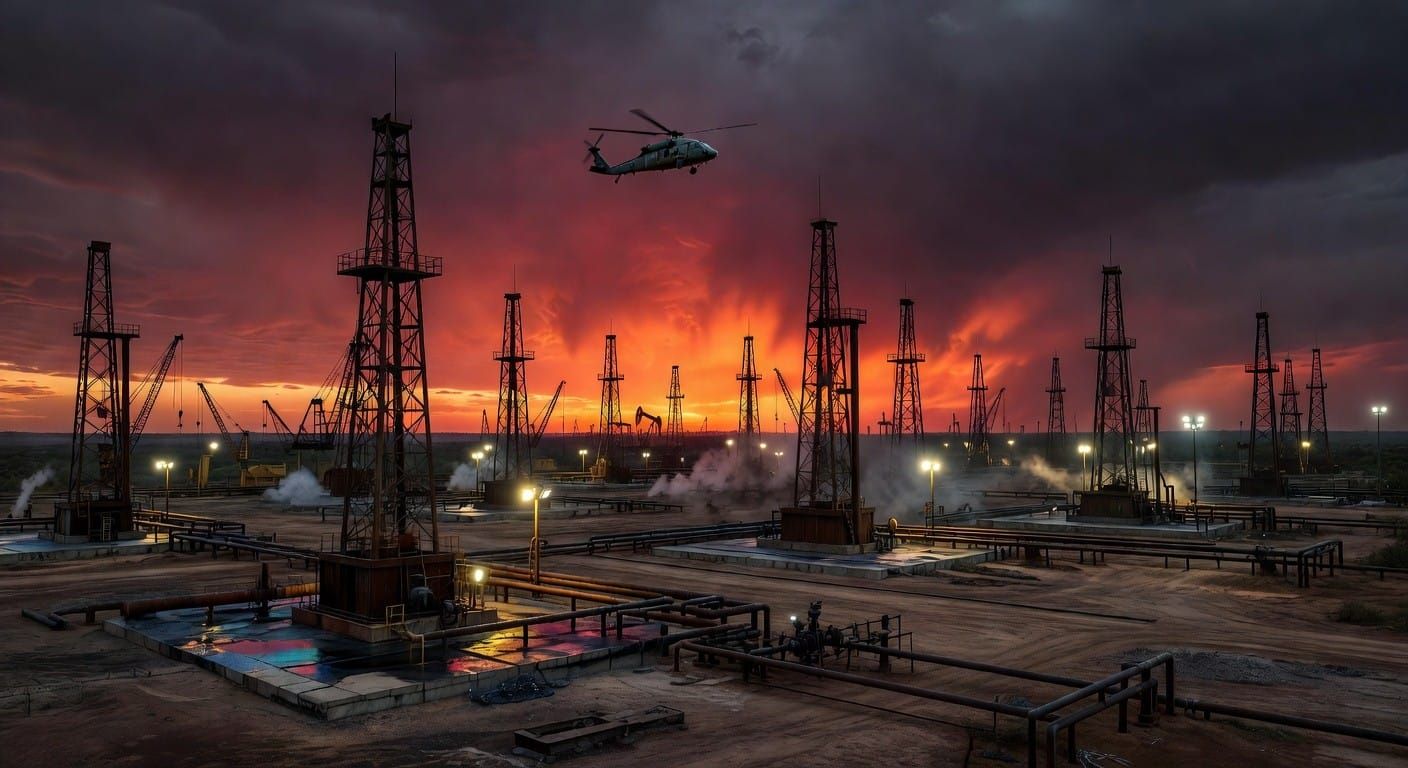
It started with a helicopter in the predawn hours of January 3rd.
U.S. special operations forces descended on Caracas, capturing Nicolás Maduro — the man who had ruled Venezuela with an iron fist for over a decade — and his wife, Cilia Flores. Both were extradited to the United States to face charges of narco-terrorism, drug trafficking, and weapons violations. Within hours, Vice President Delcy Rodríguez was sworn in as acting president. A country frozen in time for a generation suddenly thawed.
Three months later, the world is only beginning to grasp what this means.
Venezuela sits atop the world's largest proven oil reserves — over 300 billion barrels, more than Saudi Arabia. It holds vast deposits of gold, coltan, bauxite, and rare earth elements critical to everything from electric vehicles to defense systems. And for the first time in a quarter century, the doors are open to foreign capital.
Wall Street, quietly, is already moving in.
The Biggest Distressed Asset Play in a Generation
Venezuelan sovereign bonds — which had been trading at pennies on the dollar for years — surged immediately after Maduro's capture. For the holdouts who never sold, it was vindication. For the traders who bought into the distressed paper, it was a windfall.
But the bond trade is just the beginning.
The Trump administration moved swiftly. Sanctions on oil, gas, and mining were eased. The U.S. embassy in Caracas reopened. Secretary of the Interior Doug Burgum flew to Venezuela in March, securing security guarantees for investors and arranging for $100 million in Venezuelan gold to flow to U.S. refiners. The Treasury Department issued a license authorizing dealings with Minerven, Venezuela's state gold mining company — triggering what analysts are already calling a "gold rush."
PDVSA, the Venezuelan national oil company that once pumped 3 million barrels per day before collapsing to under a million under Maduro, is now undergoing a privatization process. Chevron — which had maintained a toehold in Venezuela throughout the sanctions era — is positioned to expand rapidly. Smaller U.S. energy firms are already queuing for licenses.
Reuters reports that U.S. companies are projected to invest $1.4 billion in Venezuela's energy sector in 2026 alone, up from $900 million prior to the transition. That number is expected to climb sharply as infrastructure is rebuilt.
The Resource Prize
Venezuela is not just an oil story.
The country's mineral wealth has been largely untapped, obscured by decades of mismanagement and the chaos of Maduro-era "illegal mining" operations run by armed groups in the Orinoco Mining Arc. The U.S. is now actively working to formalize that frontier.
- Coltan: A critical mineral used in capacitors for smartphones, EVs, and military electronics. Venezuela holds significant deposits.
- Gold: Estimated reserves of over 7,000 tonnes — one of the largest concentrations in Latin America.
- Bauxite: Essential for aluminum production, a strategic material for aerospace and defense.
- Rare earth elements: Deposits are still largely unmapped — but early assessments suggest meaningful quantities.
The U.S.-Venezuela pacts announced in late 2025 and early 2026 list 44 investment projects totaling over $30 billion in financing. Critically, these aren't just energy projects — they include mining, logistics, and refining infrastructure. The pitch to investors: get in early on the largest emerging market reopening in at least a decade, possibly since the fall of the Soviet Union.
The Risk Stack
This is not a clean story. Anyone claiming otherwise is selling something.
Political continuity is fragile. Delcy Rodríguez is not a democrat — she is a chavist technocrat who has moved carefully to consolidate power while releasing political prisoners and projecting stability for foreign investors. There is no clear election timeline. The underlying political culture that produced Maduro has not disappeared. Pro-Maduro factions and armed groups still operate in parts of the country. The risk of factional violence or a reversal of the transition is real.
Legal certainty is weak. Venezuela has expropriated foreign assets before, most famously under Hugo Chávez when ExxonMobil, ConocoPhillips, and others lost billions. Any investment regime that can't guarantee property rights is structurally risky. Early investors will need to price in the possibility of future renegotiation.
Infrastructure is destroyed. Rebuilding Venezuelan oil production from under 1 million barrels per day to anywhere near its 3 million bpd potential will take years and billions of dollars. The power grid is broken. Roads and pipelines are in disrepair. Even optimistic scenarios project a 2–7 year runway before significant production gains.
China's position is complicated. Beijing had deep ties to the Maduro government — energy deals, loans, and political alignment. The new Rodríguez government has not explicitly broken with China, but is clearly realigning toward Washington. How Beijing responds — whether through economic pressure, support for opposition factions, or quiet obstruction — is an open and serious question.
Colombia is watching. Venezuela's neighbor holds its own presidential election on May 31st. A leftist win in Colombia — currently the frontrunner scenario — could complicate regional coordination and add a new source of cross-border political risk.
Who's Moving
- Chevron (CVX): Already inside Venezuela. Positioned to expand production rapidly if legal and political stability holds.
- U.S. small-cap energy producers: The "picks and shovels" players who can move fast in frontier environments without major shareholder scrutiny.
- Commodities traders: Glencore, Trafigura, and their peers are circling gold and mineral offtake deals.
- Venezuelan sovereign bonds: Already repriced significantly, but still offer meaningful upside if a formal debt restructuring and IMF program materializes.
- Specialty mining firms: Small-cap gold, coltan, and bauxite operators with Latin America experience. Watch for announcements of Venezuelan licenses.
The IMF and World Bank have both recognized the Rodríguez interim government — a critical signal for multilateral financing. If Venezuela proceeds to a formal IMF program, that would be a major catalyst for bond repricing and broader institutional investment.
The Geopolitical Scorecard
America's intervention in Venezuela has shifted the strategic map in ways that go beyond the country's borders.
Russia's sphere of influence in Latin America has contracted significantly. Cuba — which had been kept economically afloat partly through Venezuelan oil subsidies — faces a new fiscal crisis. Bolivia and Nicaragua, both ideological allies of the Maduro government, are now more isolated.
Meanwhile, the U.S. has demonstrated its willingness to use hard power in its own hemisphere in pursuit of resource access — a message that will not be missed in Caracas, but also in Bogotá, Lima, and beyond.
For investors, the strategic calculus is this: Washington is now directly invested in Venezuela's success. That is not a guarantee — but it is the closest thing to a backstop you can get in an emerging market.
The Bottom Line
Venezuela is the largest high-risk/high-reward emerging market reopening since the fall of the Soviet Union. The resource prize is enormous. The political risk is real. The window for early movers is open — but it is not unlimited.
The serious investors aren't waiting for certainty. They're pricing in the risk and moving early, because in situations like this, certainty comes after the gains are already made.
Watch the bond market. Watch the mining license announcements. Watch the Colombia election. And watch whether the Rodríguez government can hold the line long enough for investment to compound into stability.
Get this level of intelligence every day. Subscribe to AlphaBriefing — free, member, and paid tiers available.
Sources & Further Reading
- Reuters — Venezuela hopes to lure back international miners, but it's risky business
- WSJ — U.S. Looks to Tap Venezuela's Lawless Mineral Frontier
- NPR — Venezuela, Maduro, Big Oil, and Wall Street
- Americas Quarterly — Venezuela: The Post-Maduro Oil, Gas, and Mining Outlook
- WOLA — Two Months Without Maduro: Democratic Transition or Authoritarian Adaptation?
- Carnegie Endowment — Venezuela: Economy, Oil, and Democracy in Transition
- BNN Bloomberg — US Issues License Authorizing Sales of Venezuelan Gold
- AP News — Venezuela Critical Minerals: Trump, Rodríguez, Mining, Burgum
Disclaimer
AlphaBriefing is an independent intelligence publication. The content in this article is produced for informational and educational purposes only. Nothing published by AlphaBriefing constitutes financial, investment, legal, tax, or regulatory advice, nor should it be construed as a solicitation or recommendation to buy, sell, or hold any security, asset, or financial instrument.
All views expressed are those of the author at the time of writing and are subject to change without notice. Markets are volatile and unpredictable; past performance is not indicative of future results. Any investment involves risk, including the possible loss of principal.
AlphaBriefing and its principals, employees, or contributors may hold positions in securities or assets mentioned in this article. This should be considered a potential conflict of interest. No material relationship with any company referenced exists unless explicitly disclosed. Readers should conduct their own due diligence and consult qualified financial, legal, and tax advisors before making any investment decisions.
Information in this article is drawn from public sources believed to be reliable at the time of publication. AlphaBriefing makes no warranty, express or implied, as to the accuracy, completeness, or timeliness of any information herein. AlphaBriefing accepts no liability for any loss or damage arising from reliance on this content.
© AlphaBriefing. All rights reserved. Unauthorised reproduction or distribution is prohibited.