The $12.7 Billion AI Pilot: How Shield AI Is Quietly Winning the Future of Air Combat

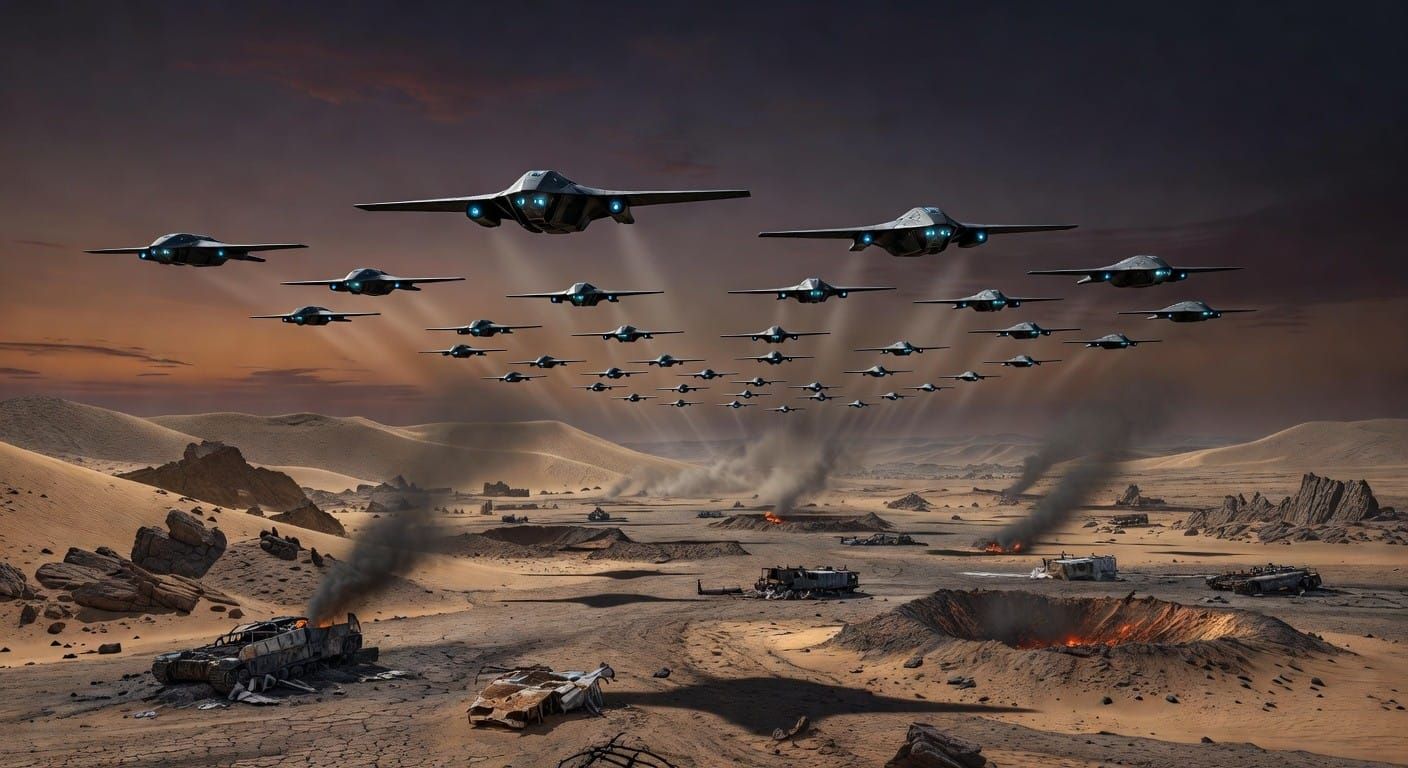
The AI wars aren't just being fought in data centers. They're being fought in the sky — and a San Diego startup just turned the air combat establishment on its head.
In February 2026, the U.S. Air Force selected Shield AI as one of only two mission autonomy providers for its Collaborative Combat Aircraft (CCA) program — the Pentagon's most consequential aviation procurement in a generation. Within two weeks, Shield AI's Hivemind AI pilot was already flying combat air patrols aboard Anduril's YFQ-44A Fury drone prototype, engaging simulated targets and transitioning seamlessly between AI systems. No human hand on the stick.
This is not a science project. It is not a demo. It is the U.S. military betting that the future of airpower is software — and Shield AI just won the contract to prove it.
The Company Nobody Has Heard Of (But Should)
Shield AI was founded in 2015 by Brandon Tseng, a former Navy SEAL, and his brother Ryan Tseng. The premise was brutally simple: in GPS-denied, communications-disrupted environments — the exact conditions adversaries like China and Russia train to create — autonomous systems could survive where human-guided ones cannot.
The flagship product is Hivemind, an edge AI "pilot" that runs locally on the aircraft hardware, requiring no uplink, no GPS lock, and no orders from a human on the ground. It senses, plans, and executes — in real time, under fire.
A year ago, Shield AI was valued at $5.3 billion after raising $240 million in Series F funding. Three weeks ago, that number exploded to $12.7 billion following a $2 billion Series G round led by Advent International and co-led by JPMorgan Chase's Strategic Investment Group — a 140% valuation jump in 12 months. Total funding now exceeds $3 billion. Projected 2026 revenue: more than $540 million, up roughly 80% year-over-year.
The investors — Blackstone, JPMorgan, Advent — are not known for speculative bets.
Why Hivemind Changes Everything
The key insight is portability. Hivemind is not tied to a specific airframe. It is software — a mission autonomy layer that the Air Force's open-architecture A-GRA (Autonomy Ground Reference Architecture) framework allows to run across any CCA platform from any vendor. Collins Aerospace was the only other provider selected alongside Shield AI, out of a competitive field. That's it. Two companies. One problem.
The implications are staggering. In the CCA program's vision, hundreds of unmanned loyal wingmen fly alongside manned fighters like the F-35 and the forthcoming F-47 NGAD. These attritable drones absorb air defenses, extend radar reach, carry weapons, and create tactical mass that no adversary force structure can simply shoot down. The unit economics invert: instead of $80 million jets versus $80 million jets, you get $80 million jets protected by clouds of $3–5 million autonomous wingmen running shared AI.
Shield AI already proved the concept under DARPA's Air Combat Evolution program, where Hivemind controlled a modified F-16 testbed (the X-62A VISTA) and achieved over a 90% kill rate in simulated dogfights against a manned F-16 — with near-zero safety violations. Not just competitive with human pilots. Better.
This is where the analysis gets actionable. AlphaBriefing members get the full investment framework — scenarios, positioning, and the bottom line.
Subscribe to AlphaBriefing — Free, Member, and Paid tiers available.