The West Is Running Out of Water — and Washington Just Took the Wheel
The federal government is about to seize control of the Colorado River after seven states failed to strike a deal. The cuts hit agriculture first — and they will quietly redraw the West's economic map.

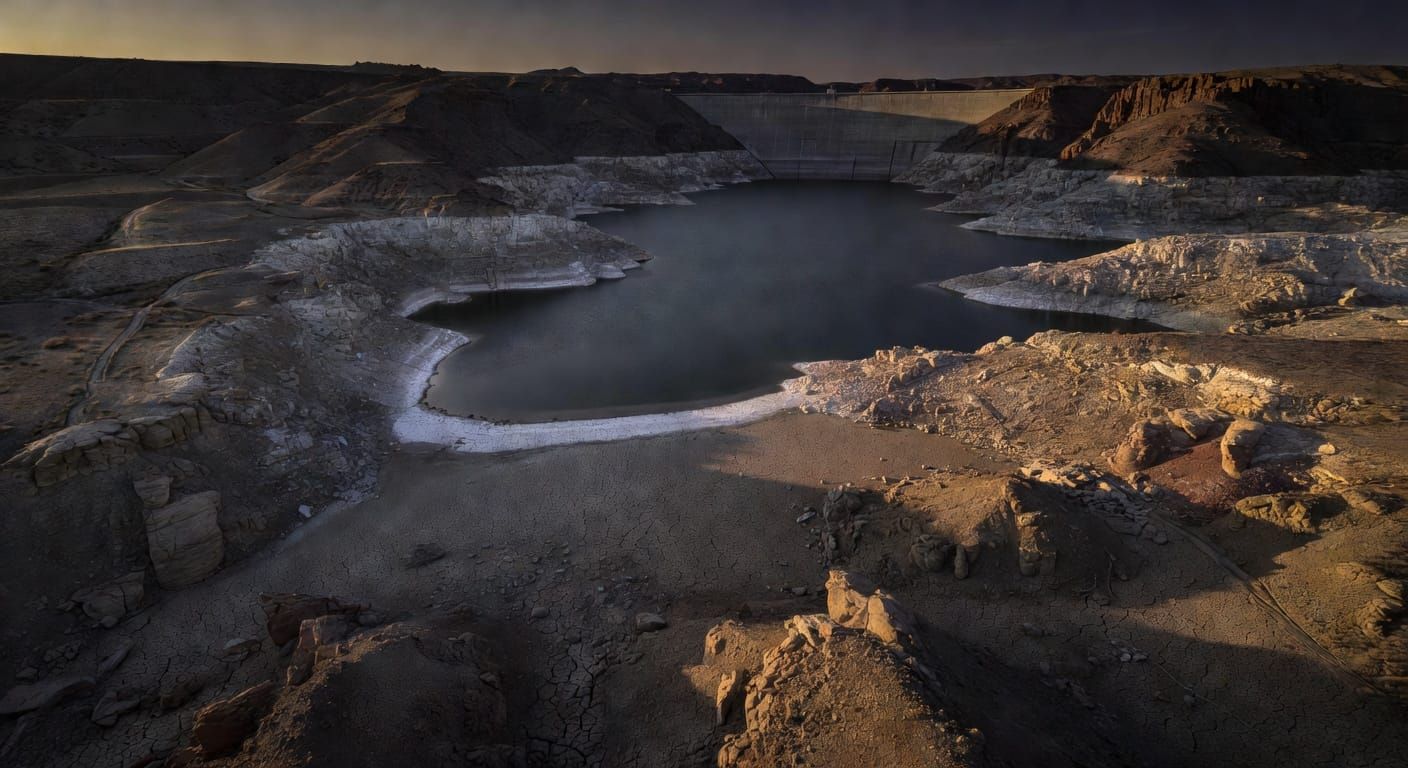
For a century, the American Southwest has run on a promise written into law in 1922: that the Colorado River would always deliver. Phoenix and Las Vegas rose out of the desert on it. The lettuce in your winter salad and the beef on your grill trace back to it. Forty million people across seven states and Mexico drink from it.
That promise is now broken — and as of this month, the federal government has stopped waiting for the states to fix it themselves.
The River That Built the West
The 1922 Colorado River Compact divided the river's water between an Upper Basin (Colorado, Wyoming, Utah, New Mexico) and a Lower Basin (Arizona, California, Nevada), with a later treaty allotting a share to Mexico. The problem, understood for decades but ignored for just as long, is that the compact divided up more water than the river actually carries. It was negotiated during one of the wettest stretches in the region's recorded history. The math never worked. A 25-year megadrought has simply forced the reckoning.
The two reservoirs that store the West's water — Lake Powell behind Glen Canyon Dam and Lake Mead behind Hoover Dam — are the scoreboard. Both sit at historic lows. As of April 2026, Lake Powell is barely above 3,500 feet of elevation, the threshold below which damage to Glen Canyon Dam's lower outlets begins to physically impede water releases downstream. Lake Mead is projected to drop another 20 feet, a decline severe enough to cut Hoover Dam's hydropower output by roughly 40%.
This is no longer an abstract climate story. It is an infrastructure story with a hard floor, and the West is approaching it.
A Deadline Missed, a Federal Hand Forced
The legal architecture governing the river — the 2007 Interim Guidelines and the 2019 Drought Contingency Plans — expires at the end of 2026. For years, the seven basin states have been negotiating a replacement and getting nowhere. Upper Basin and Lower Basin dug into incompatible positions over who should absorb the cuts.
The federal government set a deadline of February 14, 2026, for the states to produce a long-term deal, warning that if they failed, Washington would impose its own. They failed. The deadline passed with no seven-state agreement.
What came next reshaped the politics of Western water. On May 1, 2026, the three Lower Basin states — Arizona, California, and Nevada — broke ranks and submitted a joint proposal to the Bureau of Reclamation laying out how the lower river should operate through 2028. The plan commits the Lower Basin to cut its Colorado River use by at least 3.2 million acre-feet through 2028. Arizona shoulders the heaviest blow: a 27% mandatory reduction of its river supply, equal to more than 10% of the state's entire annual water consumption.
Reclamation is now drafting a federal preferred alternative — effectively a 10-year operating plan, reassessed every two years — and aims to name it this summer. For the first time in the river's modern history, the federal government is poised to dictate terms rather than referee them.
Why This Is a Money Story, Not Just a Water Story
Water scarcity does not announce itself as a market event. It arrives as zoning fights, crop switches, utility rate cases, and quietly repriced farmland. But make no mistake: when you ration the single input that underwrites an entire region's economy, capital moves. Agriculture, real estate, municipal credit, hydropower, and an entire investable class of water infrastructure all sit downstream of the decisions being made in Washington right now.
The West has spent a century treating water as free and infinite. The next decade will treat it as what it has quietly become — one of the most valuable and contested assets in North America.
This is where the analysis gets actionable. AlphaBriefing members get the full investment framework — scenarios, positioning, and the bottom line.
Subscribe to AlphaBriefing — Free, Member, and Paid tiers available.