Every Country Suddenly Wants Its Own Iron Dome
Greece just bought a $4 billion Israeli sky shield, India tested its S-400 rival, and Washington agreed to license Patriot production to Ukraine — all in one week. Air defense is now the fastest-compounding franchise in the arms market, and the orders aren't going where you'd think.

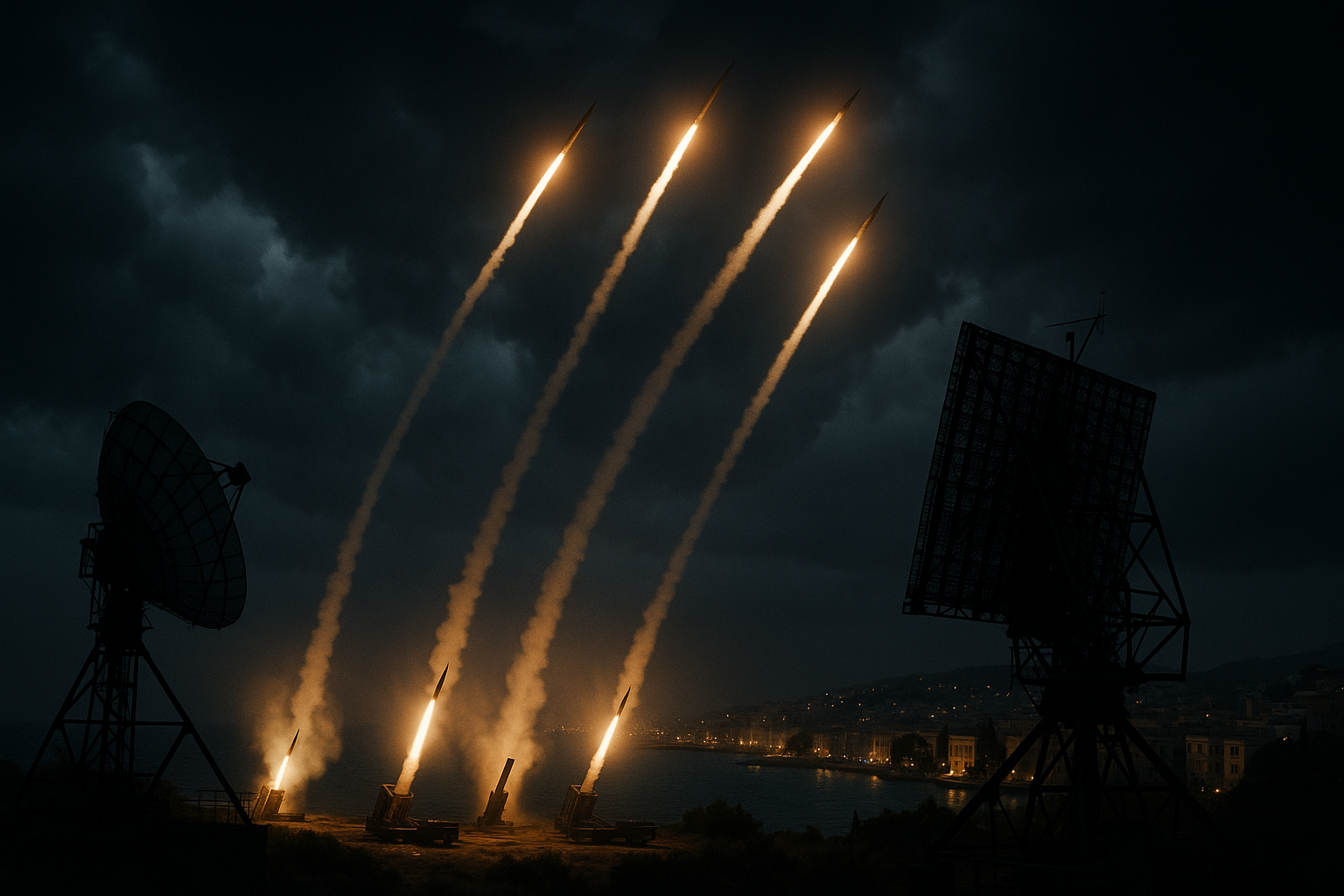
In the space of one week:
- On Thursday, Greece's national security council approved "Achilles Shield" — a multi-layer air defense system worth up to €3.5 billion ($4 billion), built around Israeli radars and interceptors from Rafael and IAI, and designed to stop everything from ballistic missiles to cheap drones. Athens wants it fully operational in 35 months.
- The same day, half a world away, India flew the maiden test of Kusha, its homegrown long-range interceptor — the opening move in a program with variants planned out to 400 kilometers, aimed squarely at replacing the Russian S-400s it still depends on.
- On Monday, Finland closed airspace and restricted maritime traffic near its Russian border over drone incursions.
- And on Tuesday, in the Oval Office, President Trump reaffirmed a promise most of the market missed when it was made at this month's NATO summit: the United States will license Ukraine to manufacture Patriot interceptors on its own soil. Zelenskyy, afterward: "The real problem is anti-ballistic systems and anti-ballistic missiles."
Four stories, one signal. The defining defense purchase of this decade is no longer the fighter jet. It is the national air-defense shield — bought as a system, branded like a political product, and funded on timelines that stretch across the 2030s.
The War That Settled the Argument
For three decades, missile defense was an argument. Skeptics called it a money pit; the math of hitting a bullet with a bullet never quite closed. June's Twelve-Day War ended the debate in the most public way possible: layered interceptor networks visibly worked, and the cities that sat under them stayed open for business.
But the same war exposed the catch. As we covered in June, it drained American interceptor stocks roughly a hundred times faster than the factories that build them can refill the magazines. Ukraine lives that arithmetic daily — the Patriot is the only weapon in its arsenal that reliably downs ballistic missiles, and Kyiv is chronically short of them.
Proof that defense works, plus proof that nobody has enough of it, is the most bullish demand setup a product category can have.
The Threat Got Cheap. The Coverage Can't.
The second driver is at the bottom of the threat stack, not the top. Drones have democratized air attack: a state that once needed a missile program to threaten a capital now needs a shipping container. Finland just closed airspace over exactly that risk. Greece's shield is explicitly anti-drone. India's $5.4 billion procurement package this month included counter-drone and layered air-defense systems as a priority line.
The asymmetry is brutal — the attacker picks one target; the defender must cover all of them: power plants, ports, parliaments, refineries. Once a government accepts that logic, air defense stops being a discretionary purchase and becomes standing infrastructure — recurring, decade-scale, and politically untouchable. No minister cuts the program that keeps missiles off the capital.
The Golden Dome Effect
The third driver is political. Washington's $185 billion Golden Dome program did something subtler than fund missile defense: it turned the national shield into a product a head of state can point at. Now every mid-sized power wants its own — smaller, cheaper, and named. Greece didn't buy "surface-to-air missile batteries." It bought Achilles Shield. The branding is the tell: this is the F-35 moment for air defense, where procurement, national prestige, and alliance politics fuse into a single unstoppable budget line.
Which brings us to the problem hiding inside the week's least-noticed story. This demand wave is landing on an American production base that is already sold out — so sold out that Washington is now licensing its crown-jewel interceptor to a country at war, because franchising the design is faster than expanding the line. An ally with a 35-month deadline cannot stand in the American queue.
So the orders are going somewhere else — and the order book that captures them is compounding in plain sight.
The rest of this briefing is for paid members: the one publicly traded company that is the cleanest expression of the air-defense export cycle — record $30.2 billion backlog, hard catalyst on August 11; the three-tier map of who supplies each layer of a national shield; the European and Korean second-order winners; and the two risks that would break the trade.
AlphaBriefing Paid gets you every investment thesis, scenario framework, and catalyst brief we publish — the analysis private intel clients pay four figures for, at a fraction of that.