The Water Wars Are Here: Why the World's Most Precious Resource Is Becoming Its Most Dangerous

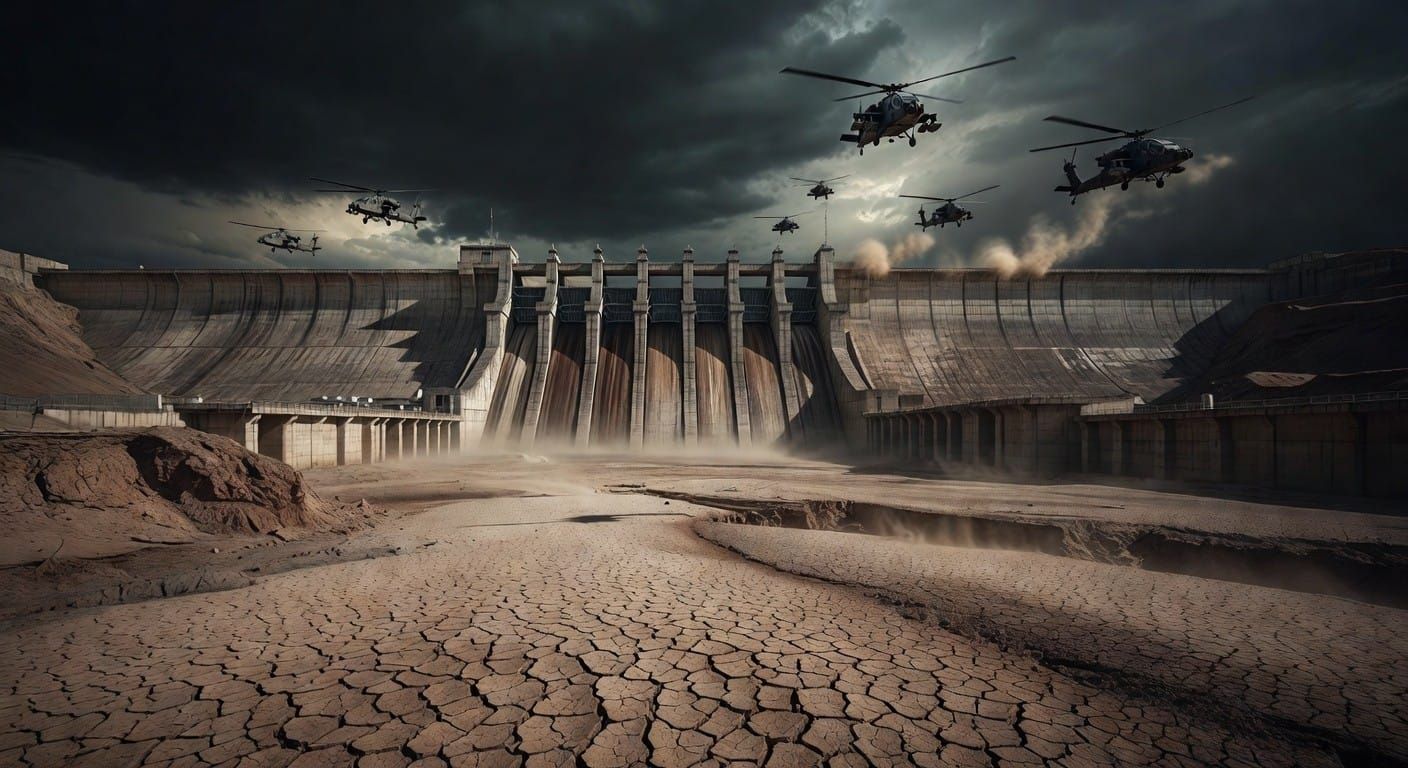
The world is running out of water — and the fight over who controls what's left is becoming one of the most consequential geopolitical contests of the decade.
In January 2026, the United Nations released its flagship water report with an unprecedented warning: the planet has entered an era of "global water bankruptcy," where human demand for freshwater now exceeds nature's ability to replenish it. Three-quarters of the global population faces water stress. And the violence is escalating — water-related conflicts nearly doubled to 419 incidents in 2024 alone.
This isn't a climate story. It's a security story. And increasingly, it's a money story.
The Weapon Nobody Sees Coming
The Eurasia Group — the world's leading political risk consultancy — ranked water as a top-10 global risk for 2026, calling it "The Water Weapon." The Munich Security Conference echoed the assessment. So did EY's Geostrategic Outlook.
The framing matters. Water has crossed the threshold from environmental concern to active geopolitical lever — a tool of coercion, a target of sabotage, and a trigger for interstate confrontation.
Consider the current map:
The Indus Basin — India suspended the 1960 Indus Waters Treaty with Pakistan in April 2025, following the deadly Pahalgam terror attack. A year later, the suspension holds. India reiterated on March 20, 2026, that the treaty "will remain in abeyance until Pakistan ends its support to terrorism." Pakistan — which depends on the Indus system for roughly 80% of its agricultural water — calls it "the weaponization of water" and is preparing legal challenges through the UN and World Bank. Three hundred million people depend on these rivers. The treaty survived three wars. It may not survive this peace.
The Nile — Ethiopia's Grand Ethiopian Renaissance Dam (GERD) now controls roughly 90% of Egypt's freshwater supply. Cairo has called GERD an existential threat. Negotiations have stalled for years. Egypt has one of the world's largest militaries and a population of 110 million that cannot survive without the Nile. This is a crisis with a fuse.
The Middle East — The Iran-US war has added a new dimension. The US has been accused of striking Iran's Qeshm Island desalination plant (denied by Washington). Iran reportedly hit Bahrain's desalination infrastructure in response. Gulf states rely on desalination for 99% of their freshwater — making every desal plant a strategic target. Iran itself faces a 45% rainfall deficit and depleted aquifers, compounding the human toll of the conflict.
The Colorado River — America's own water crisis. Post-2026 operating guidelines for Lakes Powell and Mead expire this year. Seven US states and Mexico have missed deadlines to agree on new allocation rules. If they don't, the courts decide — and the American Southwest faces the prospect of mandated cutbacks to agriculture, cities, and industry. The Bureau of Reclamation released a draft environmental impact statement in January. There is no consensus.
Why This Is an Investment Story
The global water infrastructure bill is staggering. The United States alone needs an estimated $630 billion just for wastewater system upgrades. Developing nations lose 20-50% of their treated water to leaking pipes. And a new demand driver has emerged that few investors have priced in: data centers.
The explosion of AI compute is creating enormous demand for cooling water. A single large data center can consume millions of gallons per day. In water-stressed regions — from Arizona to the Middle East — this is already creating friction between tech companies, communities, and regulators.
Meanwhile, desalination technology is hitting an inflection point. Costs have fallen dramatically over the past decade, and capacity is expanding globally. The market is projected to double in the coming years as governments scramble to secure alternative freshwater sources.
American Water Works (AWK), the largest US water utility, recently announced plans to invest up to $48 billion in infrastructure upgrades over the next decade. Deutsche Bank named Xylem (XYL) a top water technology pick for 2026, citing its exposure to both traditional infrastructure and data center cooling.
In the desalination space, Consolidated Water Co. (CWCO) — a pure-play desalination operator running plants across the Caribbean — has emerged as a high-growth name. Energy Recovery (ERII), which makes energy-efficient technology for desalination plants, is another name drawing institutional attention.
For investors seeking diversified exposure, the Invesco Water Resources ETF (PHO) and First Trust Water ETF (FIW) offer broad access to the sector. Both have outperformed broader indices over the past 12 months as the water thesis has gained traction.
The Convergence Nobody Is Pricing
Here's what makes this moment different from previous water scarcity discussions: everything is happening at once.
The Indus Treaty is suspended. The Nile is contested. The Middle East's desalination infrastructure is under military attack. America's own water allocation framework is expiring. Data centers are consuming water at unprecedented rates. And the UN is warning that the planet has crossed a point of no return on freshwater depletion.
The December 2026 UN Water Conference in the UAE is expected to be the most consequential water diplomacy event in a generation. It will attempt to mobilize funding, establish monitoring frameworks, and advance progress toward Sustainable Development Goal 6 (clean water and sanitation for all). But the political headwinds are fierce — what the UN calls "water nationalism" is rising, and cooperation frameworks are fraying faster than new ones can be built.
For investors, the signal is clear: water is no longer a niche ESG theme. It is becoming a core infrastructure and security play — one that intersects with defense, energy, agriculture, technology, and geopolitics.
The companies that build, treat, desalinate, and distribute water are positioned at the center of one of the decade's most important megatrends. And unlike many geopolitical risks, this one has a clear and growing addressable market.
The world's most precious resource is becoming its most contested. The smart money is already paying attention.
Get this level of intelligence every day. Subscribe to AlphaBriefing — free, member, and paid tiers available.
Sources & Further Reading
- Council on Foreign Relations — Water Stress: A Global Problem That's Getting Worse
- Eurasia Group — Top Risks 2026: The Water Weapon
- Chatham House — India and Pakistan Still Cannot Agree to Restore the Indus Waters Treaty
- Reuters — India-Pakistan Water Treaty Remains Suspended Despite Ceasefire
- Circle of Blue — Water Scarcity Among Major Global Political Risks for 2026
- US Bureau of Reclamation — Colorado River Post-2026 Operations
- DW — How Will the Indus Water Treaty Freeze Affect South Asia?
Disclaimer
AlphaBriefing is an independent intelligence publication. The content in this article is produced for informational and educational purposes only. Nothing published by AlphaBriefing constitutes financial, investment, legal, tax, or regulatory advice, nor should it be construed as a solicitation or recommendation to buy, sell, or hold any security, asset, or financial instrument.
All views expressed are those of the author at the time of writing and are subject to change without notice. Markets are volatile and unpredictable; past performance is not indicative of future results. Any investment involves risk, including the possible loss of principal.
AlphaBriefing and its principals, employees, or contributors may hold positions in securities or assets mentioned in this article. This should be considered a potential conflict of interest. No material relationship with any company referenced exists unless explicitly disclosed. Readers should conduct their own due diligence and consult qualified financial, legal, and tax advisors before making any investment decisions.
Information in this article is drawn from public sources believed to be reliable at the time of publication. AlphaBriefing makes no warranty, express or implied, as to the accuracy, completeness, or timeliness of any information herein. AlphaBriefing accepts no liability for any loss or damage arising from reliance on this content.
© AlphaBriefing. All rights reserved. Unauthorized reproduction or distribution is prohibited.