The Election Powder Keg: Latin America's 2026 Super-Cycle Is the Biggest Political Risk Trade in Emerging Markets
Five presidential elections, a cartel war, and a critical trade review — all in six months. Latin America's political calendar is about to reshape the investment landscape for an entire hemisphere.

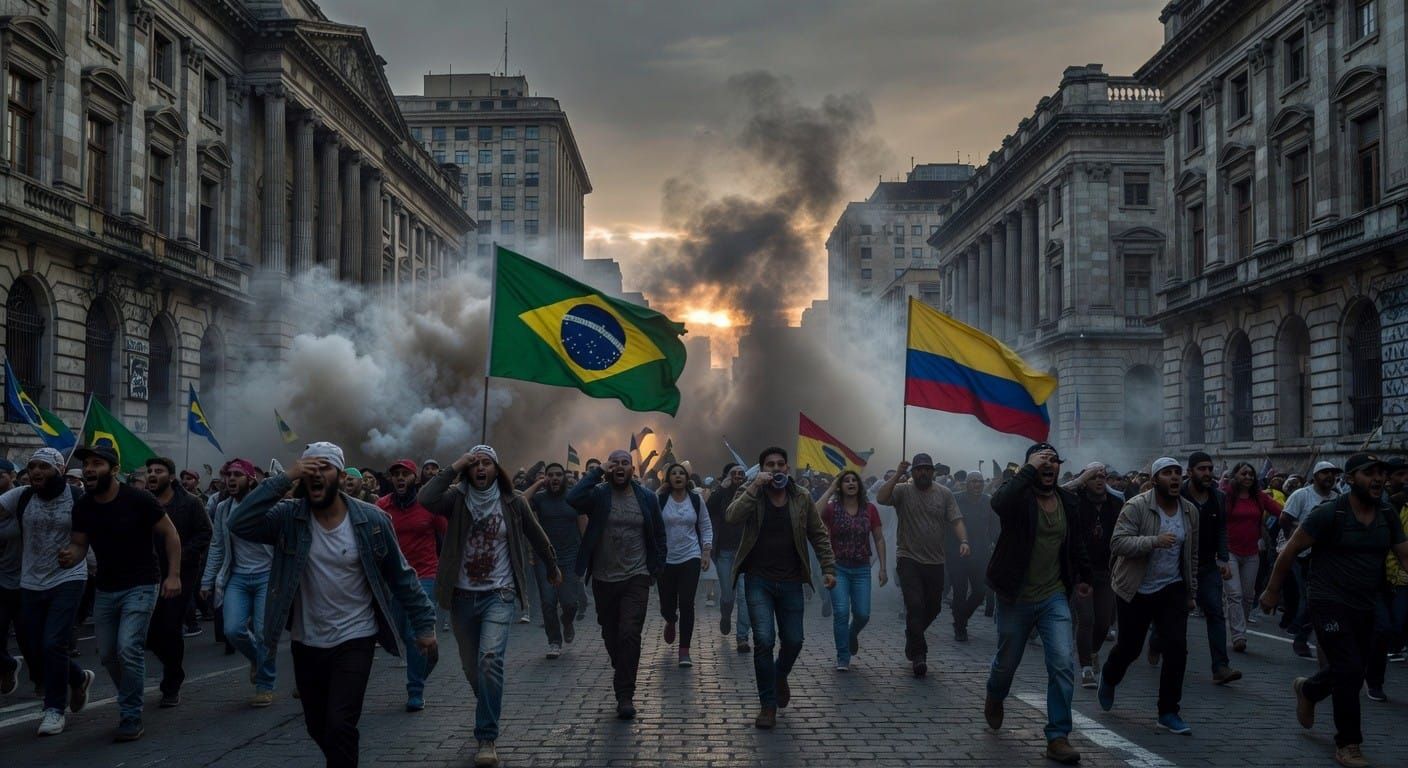
Latin America is heading into its most consequential political season in a decade. By the time 2026 ends, the region's three largest economies — Brazil, Colombia, and Mexico — will have either held presidential elections, navigated explosive security crises, or stress-tested critical trade relationships with Washington. Peru just completed a first-round vote that could send the country lurching left or right. Chile's new hard-right president is pushing through sweeping pro-business reforms.
For investors with exposure to Latin American equities, commodities, or trade-dependent supply chains, the next six months will determine whether the region's recent rally has legs — or whether political risk reprices everything.
Here's what's happening, what it means, and where the smart money is positioning.
The Super-Cycle: Five Elections, One Region, Maximum Uncertainty
Latin America has always been politically volatile. But 2026 is different in scale.
Colombia votes May 31 in a presidential first round that could produce a runoff in June. Brazil holds its presidential election October 4. Peru just held its first round April 12-13, with a runoff set for June 7. Costa Rica and several smaller nations round out a calendar that touches nearly every major market in the hemisphere.
The common thread: each race pits populist or leftist incumbents against a resurgent right, with investors caught in between.
Regional GDP growth sits at a modest 2-2.5%, constrained by political noise, fiscal deficits, and exposure to global trade disruptions. But Morgan Stanley has turned bullish on the region, citing lower rates and rightward political shifts as potential catalysts. LatAm equities posted 55% regional gains in late 2025 and early 2026.
The question is whether the political dust settles cleanly — or buries the rally.
Colombia: The Election Nobody in Washington Is Watching
Colombia's presidential race deserves far more attention than it's getting.
Leftist Senator Iván Cepeda, running as the successor to President Gustavo Petro's Pacto Histórico coalition, leads the latest Atlas Intel poll with 40.8% — an 11-point margin over his nearest challenger, right-wing firebrand Abelardo de la Espriella at 29.4%. Center-right candidate Paloma Valencia sits third at 24.8%.
If no candidate clears 50%, a runoff follows in June. And the shape of that runoff will determine the investment climate for Latin America's fourth-largest economy.
What investors should know:
- Petro's legacy is polarizing. His administration deepened ties with Beijing through the Belt & Road Initiative, alarming Washington and creating friction in Colombia's traditionally strong U.S. alignment. A Cepeda victory would likely continue this trajectory.
- Violence is escalating. The March 8 congressional elections were marred by assassinations, kidnappings, and threats against candidates. Colombia's GBU investment rating improved 13% since 2024 on commodity tailwinds, but security risk remains the dominant variable.
- Fiscal space is tight. Years of expanded social spending have constrained the government's ability to respond to shocks. The next president inherits a narrowing fiscal runway.
The market-preferred outcome — a Valencia or Espriella victory — would signal a return to orthodox economic management and closer U.S. alignment. But Cepeda's double-digit lead makes that an uphill bet.
Brazil: Lula's Last Stand
The October 4 presidential election is shaping up as a referendum on Luiz Inácio Lula da Silva's economic management — and the verdict is not looking good.
The latest Datafolha poll (April 7-9) shows Lula at 39% in the first round against Flávio Bolsonaro at 35%. In a hypothetical runoff, Bolsonaro leads 46% to 45%. This is a coin flip for the hemisphere's largest economy.
The fiscal picture is deteriorating:
- Brazil ran a 0.4% GDP primary deficit in 2025, with debt-to-GDP climbing. Goldman Sachs has warned that a surplus exceeding 2.5% of GDP is needed to stabilize the trajectory — a politically impossible target in an election year.
- Lula's signature dividend tax, projected to raise 30 billion reais annually, collected just 157 million in its first two months. The revenue shortfall threatens the government's fiscal neutrality pledge and has shaken investor confidence.
- The central bank has paused rate cuts at 15%, citing fiscal slippage and sticky inflation. High real rates support the Real but choke growth.
The Bolsonaro factor: Flávio Bolsonaro (Jair's son) has surged in polls despite offering few policy specifics. Markets are pricing a right-wing victory as positive — Latin Finance reports Brazilian investors are already "anticipating the end of the Lula era." But a contested result or populist policy surprise from either side could trigger a Real selloff.
Key metrics to watch: Monthly fiscal data, central bank guidance, and June polling. If Bolsonaro consolidates a runoff lead, expect Brazilian equities to rally. If Lula narrows the gap through fiscal giveaways, watch for currency pressure.
Mexico: Cartels, USMCA, and the Nearshoring Mirage
Mexico isn't holding a presidential election in 2026, but it may face a more consequential test: the July USMCA review and an escalating security crisis that's threatening the nearshoring thesis.
On February 22, 2026, Mexican security forces killed Nemesio "El Mencho" Oseguera Cervantes, leader of the Jalisco New Generation Cartel. The result wasn't celebration — it was chaos. CJNG retaliation spread across 20 states. Affiliates set fire to trucks and gas stations, erected over 250 roadblocks, shut down Manzanillo port (Mexico's largest Pacific-coast container terminal), grounded flights, and paralyzed Guadalajara.
The damage to the nearshoring narrative is real:
- Cartels control approximately one-third of Mexican territory and ports handling 40% of container traffic.
- Mexico accounts for 28% of global cargo hijackings — 73% of which involve violence.
- 75% of large firms operating in Mexico reported ransomware attacks amid the nearshoring digitization push.
- Domestic investment dropped 10% in 2025 as security costs soared.
The USMCA review adds another layer of risk. The July assessment will focus on economic security, supply chain resilience, and countering Chinese circumvention through Mexico. Washington is expected to push for stricter enforcement on judicial reforms, energy policies, and security cooperation. If talks stall, conditional market access or side agreements could follow — a direct threat to the $34.3 billion FDI pipeline.
Some companies are already hedging. H&M has begun shifting sourcing to Central America. Others are demanding step-in rights and hardened logistics before committing capital.
This is where the analysis gets actionable. AlphaBriefing members get the full investment framework — scenarios, positioning, and the bottom line.
Subscribe to AlphaBriefing — Free, Member, and Paid tiers available.