The ISS Comes Down in 2030. The Race to Replace It Just Got a Deadline.
NASA's final solicitation for commercial space stations is out and bids are due December 8. Four companies are in, the crew-transport math is unsolved, and only one public stock carries direct exposure to the April award.

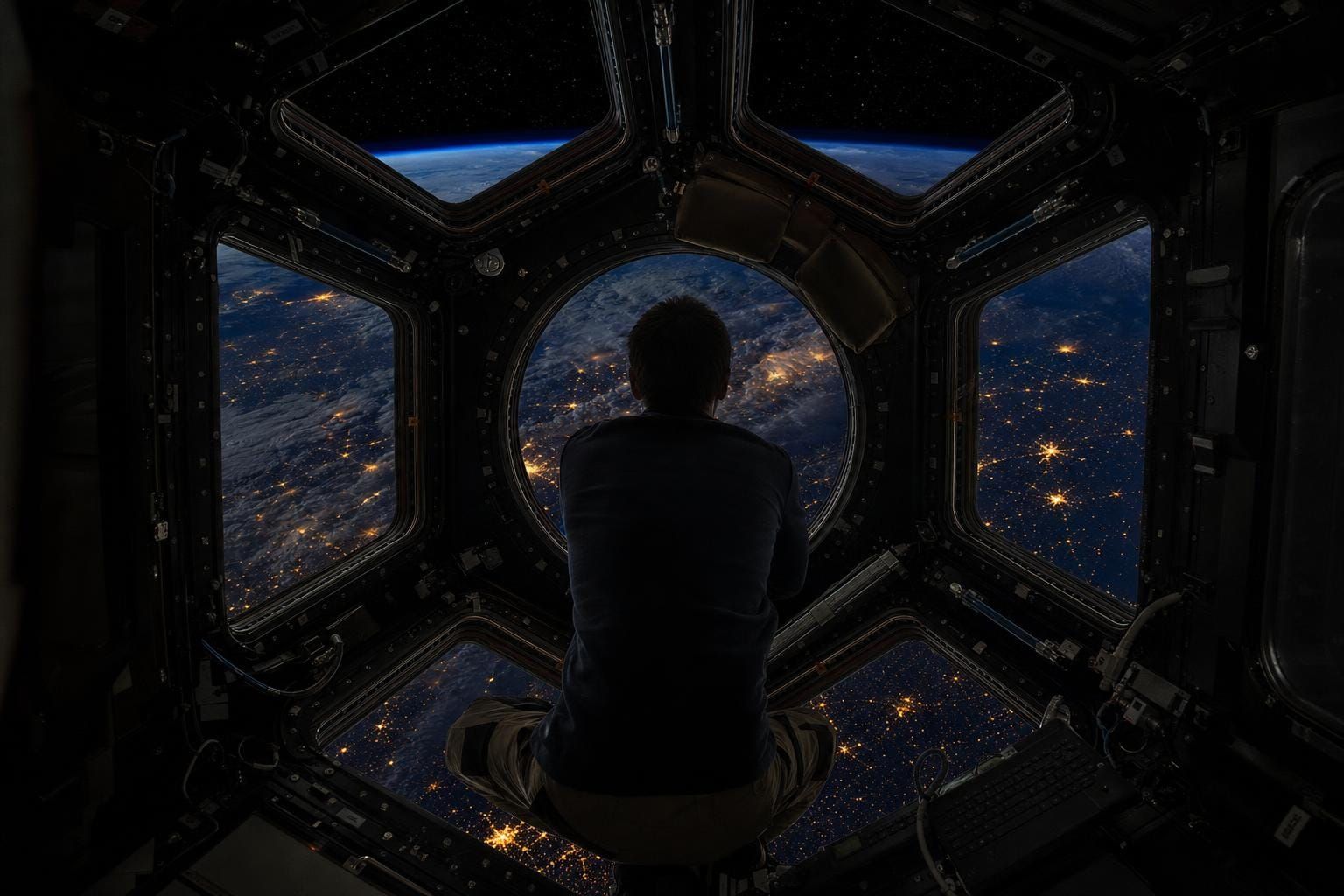
For twenty-six years, there has always been someone living off the planet. Since November 2000, the International Space Station has never once been empty — through two recessions, a pandemic, and every geopolitical rupture of the century so far. NASA now plans to end that run on a schedule: the agency intends to retire the ISS at the end of 2030, and it has already hired SpaceX to build the vehicle that will drag the station out of orbit and scatter it over the Pacific.
What nobody has settled is what replaces it. On October 9, NASA finally released the long-delayed final solicitation for the next phase of its Commercial LEO Destinations program — the competition to build privately owned space stations that NASA would rent instead of own. Proposals are due December 8, thirty days from now. The agency says it will pick at least two companies for initial awards by next April, with at least one eventually selected for full development.
Four companies are expected to bid: Vast, Axiom Space, Starlab Space, and Blue Origin. Between them they span the full range of the modern space economy — a hardware-rich startup bankrolled by a crypto fortune, the only firm that has actually flown private crews to orbit, a joint venture anchored by a publicly traded company, and Jeff Bezos's deliberately quiet giant. Exactly one of them offers public-market investors a direct way to own the outcome, and that stock has lost more than half its value from its high even as its order book sets records.
A program that kept changing its mind
The reason this competition is only now starting in earnest — five years after the first study contracts — is that NASA has repeatedly redesigned it mid-flight.
The original 2019 strategy called for commercial modules attached to the ISS and free-flying private stations. In 2021, NASA handed out funded agreements to three teams — Blue Origin's Orbital Reef, the Nanoracks-led station that became Starlab, and a Northrop Grumman concept that later folded into Starlab — on top of a 2020 deal giving Axiom Space a docking port on the ISS. Then came the whiplash. In 2025, NASA scrapped a planned single contract in favor of multiple Space Act Agreements, delaying the procurement. In March 2026, it unveiled a strategy called Ignition that proposed something radically different: a NASA-owned "core module" bolted to the ISS, to which commercial modules would attach. The companies that had spent years designing free-flying stations objected, loudly. By June, NASA had backed off and returned to roughly the original architecture.
A year of redesign produced a solicitation that, per reporting from the International Astronautical Congress in October, most of the bidders say they can live with. But the detour cost the program something it does not have: time. The ISS comes down in roughly four years regardless.
The math that haunts the program
The Center for Strategic and International Studies published a pointed analysis of the program this spring, and the numbers in it explain most of the drama. The ISS cost more than $150 billion to build, over two-thirds of it paid by NASA. Against that, NASA has committed less than $600 million to commercial station developers since 2020. In 2024 congressional testimony, one industry executive said NASA was covering roughly 5 percent of her company's station development costs — versus the 80 to 90 percent share NASA carried when it seeded SpaceX's and Boeing's crew capsules.
Private capital has filled some of the gap: more than $3 billion invested across the station developers, roughly five private dollars for every NASA dollar. But NASA's own inspector general put the structural problem plainly years ago — future low Earth orbit platforms "will likely not be viable without continued significant Government support." There is no mystery about who the anchor customer is. NASA is the market, the way the Post Office was the market for early commercial aviation. The December 8 deadline is the moment that market finally posts its terms.
What happens next decides more than one contract. It decides whether the United States has an address in orbit after 2030 — and the gated section below gets specific: how each of the four bidders stacks up, the crew-transport problem that quietly became the biggest risk in the program, the one public stock with direct exposure and the dates that will reprice it.
Reading this without an account? A free AlphaBriefing membership gets you access to every free article at AlphaBriefing.com: Join AlphaBriefing
The rest of this briefing is free — it just requires a free AlphaBriefing account: the four-bidder scorecard with each station's real schedule, the Crew Dragon problem NASA just papered over with $359 million, and the catalyst calendar running from December 3 to the April award decision.
Create your free account → — 30 seconds, no card.