$FLY Hit an All-Time Low 24 Hours Before Landing a $1.3 Billion Engine Deal: What the Headline Number Is Really Made Of, the Burn Clock It Resets, and the Zones From $14.44 to $26.86 Into Tuesday's Earnings
Firefly Aerospace fell to $14.44 Wednesday, then jumped 36.8% Friday on a $1.3B AST SpaceMobile engine deal and a NASA CLPS 2 seat, with Q3 earnings due Tuesday after the close. The $400M cash vs locked-stock split, the $106M quarterly burn it lands on, and scenario zones from $14.44 to $26.86.

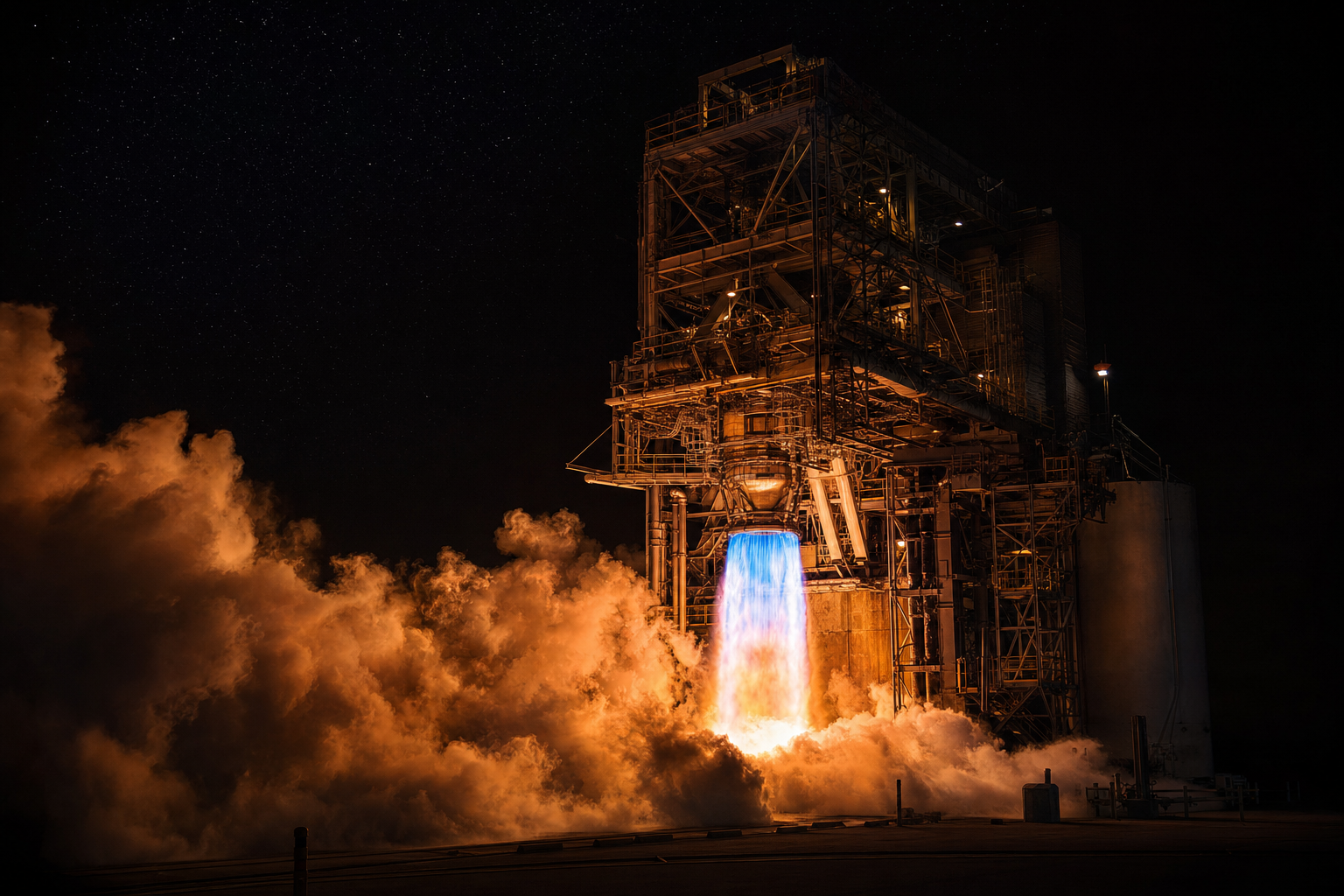
On Thursday, November 5, Firefly Aerospace (NASDAQ: FLY) traded down to $14.44, the lowest print since the company came public in August 2025. A day later it had a rocket engine deal worth more than $1.3 billion, a seat at the table for NASA's $10 billion lunar delivery program, and a 36.8% single-day gain on more than four times its recent daily volume. The stock closed Friday at $20.76. Tomorrow, Tuesday, November 10, after the close, it reports third-quarter earnings.
That sequence is why $FLY is at the top of the trending feeds this morning, and it is worth being precise about what actually happened, because the three headlines land very differently once you take them apart.
The deal that moved the stock
On Friday morning Firefly announced an agreement with AST SpaceMobile (NASDAQ: ASTS), the Texas company building a satellite network designed to connect ordinary smartphones from space. AST wants to rely less on outside launch providers like SpaceX to get its school-bus-sized BlueBird satellites into orbit, so it is building its own reusable rocket, called Blacklift, designed to carry up to five BlueBirds per launch. Firefly will supply the muscle: 27 of its Miranda engines and 9 Vira engines (the vacuum-rated variant) for the first three Blacklift vehicles, a license to the engine intellectual property so AST can eventually manufacture them itself, and three years of engineering support.
The headline number is more than $1.3 billion over three years. Per AST SpaceMobile's 8-K, the structure matters as much as the size: roughly $800 million is upfront consideration for the license, paid as $400 million in cash plus 10 to 14 million shares of AST Class A common stock determined by a forward VWAP calculation and subject to lock-up periods. Approximately $250 million covers the 36 engines and roughly $250 million covers the engineering support. Firefly keeps full ownership of the Miranda IP and remains free to sell launches and engines to anyone else.
Then, after Friday's close, a second headline: NASA onboarded Firefly as one of eight vendors on the Commercial Lunar Payload Services 2 contract, a $10 billion indefinite-delivery vehicle with a 10-year ordering period. Firefly is the first commercial company to have achieved a fully successful Moon landing, which it did on its first attempt with Blue Ghost Mission 1 in March 2025. Being a vendor guarantees nothing; every mission still has to be won task order by task order against Blue Origin, Intuitive Machines, SpaceX, Lockheed Martin, Northrop Grumman, ispace-U.S., and Voyager. But you cannot win orders from a vehicle you are not on.
Why it was at an all-time low in the first place
The uncomfortable half of the story is the chart. Firefly priced its IPO at $45 in August 2025 and traded as high as $62.17. By last Thursday it had lost roughly two-thirds of that, closing at $15.18 after B. Riley cut its price target from $50 to $40, the latest hit in a stretch where the whole high-multiple space trade deflated through October. The 200-day moving average sits at $26.86; the stock spent the last month trading in the teens, far below it. Short interest stands at about 13.5 million shares, roughly 8% of the company and a meaningful slice of the 107 million share float, which is part of why Friday's move was as violent as it was.
Meanwhile the operating business kept growing. Second-quarter revenue was $117.7 million, up 659% year over year, with backlog at a record $1.5 billion. Management guided full-year 2026 revenue to $420 to $450 million with 95% of it already booked. For scale, Firefly did $159.9 million of revenue in all of 2025. Few companies this size are compounding that fast, and the market spent October selling it anyway, because of the number we deal with behind the paywall: the burn.
Tomorrow's print lands in the middle of all of this. Analyst projections compiled ahead of the report point to roughly $103 million in Q3 revenue, and the call at 5:00 p.m. ET will be the first chance management gets to put numbers and timing on the AST agreement.
A free membership gets you every free article we publish at AlphaBriefing.com: Join AlphaBriefing.
The rest of this briefing is for paid members: what the $1.3 billion is actually made of once you separate cash from stock, the quarterly burn rate that was quietly becoming the whole story before Friday, the share-count history every holder should know, and scenario zones from $14.44 to $26.86 into tomorrow's earnings.
AlphaBriefing Paid gets you every investment thesis, scenario framework, and catalyst brief we publish, the analysis private intel clients pay four figures for, at a fraction of that.