The Invisible Front: Planes Keep Losing GPS Over the Baltic. Someone Is Building the Fix.
Roughly 1,500 flights a day are now being fed false GPS positions, and aviation is shrugging it off. That's exactly why the repricing of satellite navigation from free utility to paid service is still early.

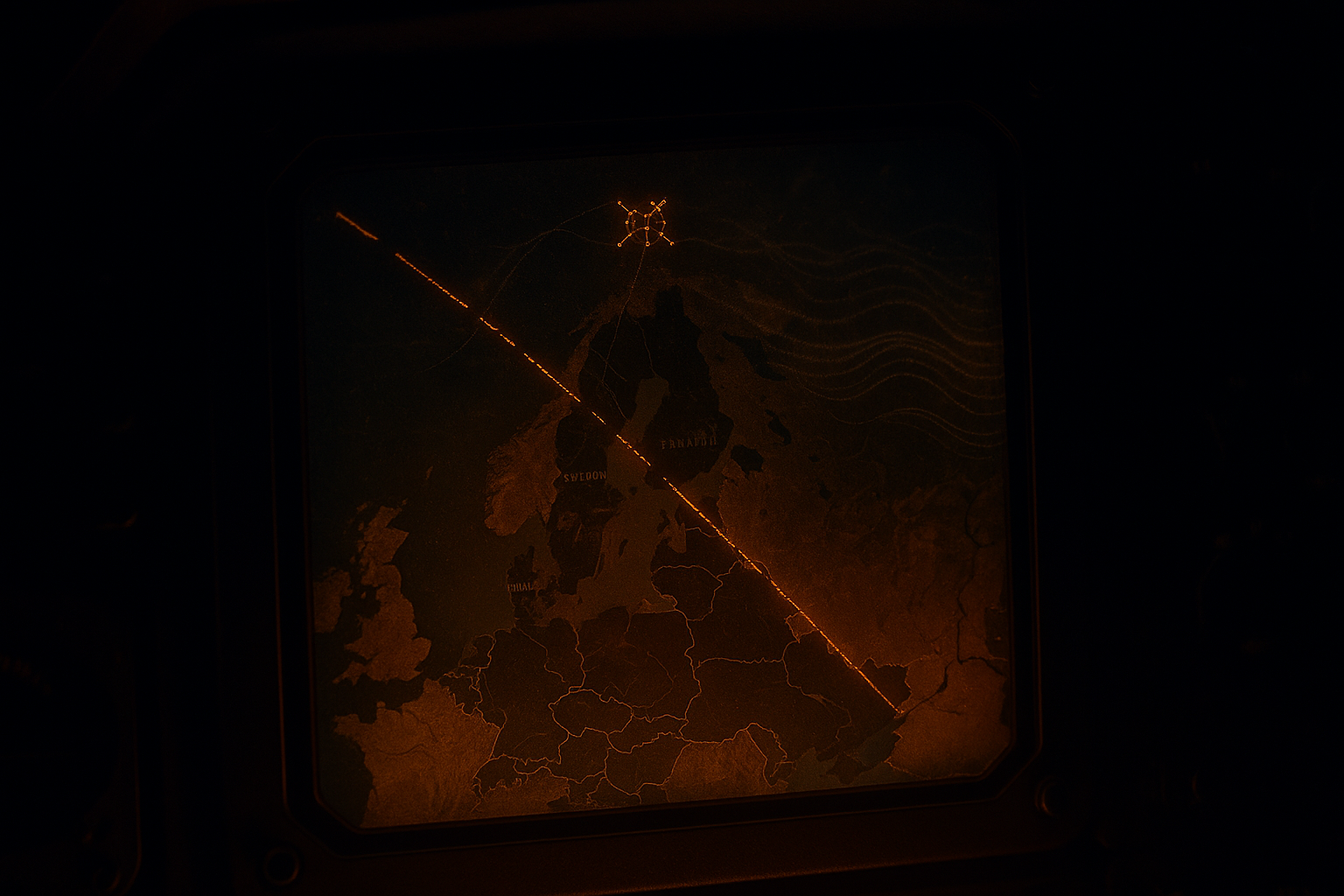
On the evening of September 17, a KLM flight from Amsterdam to Helsinki was cruising over southern Sweden, near the islands of Gotland and Öland, when its GPS quietly stopped telling the truth. The crew asked for an avionics reset. The next day, an Air Canada flight from Delhi to Toronto lost satellite navigation over the same corridor. Neither aircraft was in danger. Both finished the trip on backup systems, the way pilots did before GPS existed.
That is the point people miss about this story. Nothing crashed. Nothing made the evening news. And that is exactly why it has become one of the most under-priced operational risks in the sky.
The interference over the Baltic is not an occasional glitch. According to industry monitoring cited by aviation safety groups, roughly 1,500 flights a day are now being spoofed — fed deliberately false satellite positions — up from around 300 a day in the first half of 2024. Jamming, the cruder cousin that simply drowns the signal out, is layered on top. Six Nordic and Baltic governments jointly filed with the International Civil Aviation Organization this year arguing the interference originates from Russian territory, pointing at transmitter sites near Kaliningrad, St. Petersburg, Smolensk and Rostov. Moscow denies it. Attribution at the level of a specific transmitter remains a governmental claim rather than an independently confirmed fact — but the disruption itself is measured, logged and rising.
Sweden's transport agency alone had logged 142 satellite-navigation interference reports by late May 2026, against roughly 336 across the whole of 2025. The trend line only points one way.
Why "nobody got hurt" is the wrong takeaway
The reason aviation has absorbed this so far is redundancy. Commercial jets still carry inertial navigation systems, ground-based radio beacons and ATC radar. When GPS lies, the aircraft has other ways to know where it is. Pilots are trained for it. The system degrades gracefully.
But two things are changing that comfort.
First, spoofing is worse than jamming, and it is the part that is growing fastest. Jamming announces itself — the signal drops, a warning flags, the crew switches to backup. Spoofing hands the aircraft a plausible lie with no failure flag. The European Union Aviation Safety Agency has repeatedly rated spoofing the higher safety risk for exactly this reason, and updated its safety bulletin on GNSS interference again in July 2026. A crew survey run by an industry workgroup found around 70% of respondents rated their concern about spoofing as "very high" or "extreme." That is not a fringe worry inside the cockpit.
Second, the whole modern economy has quietly wired itself to the same satellite signals — and most of that infrastructure has none of aviation's backups. GPS is not just a map. It is the clock. Power grids, financial exchanges, mobile networks, data centers and port logistics all pull precise timing from the same constellation. An airliner over Gotland can shrug off a spoofed position. A timing system with no fallback cannot shrug off a spoofed nanosecond.
Briefings like this land in members' inboxes before the market prices them in. Join free →
The market has treated GPS as free, infinite, and reliable for thirty years. The Baltic is the live demonstration that it is none of those things — and a small set of companies have spent the last few years building the answer.
Get the next briefing free in your inbox: Join AlphaBriefing