The IMF's Star Pupil Is a Marxist. The Training Wheels Come Off in March.
Sri Lanka's $3 billion IMF bailout ends in March. The budget that replaces it was just delivered by a Marxist — and graded fiscally disciplined. What the post-program math, and the macro-linked bonds, now pay.

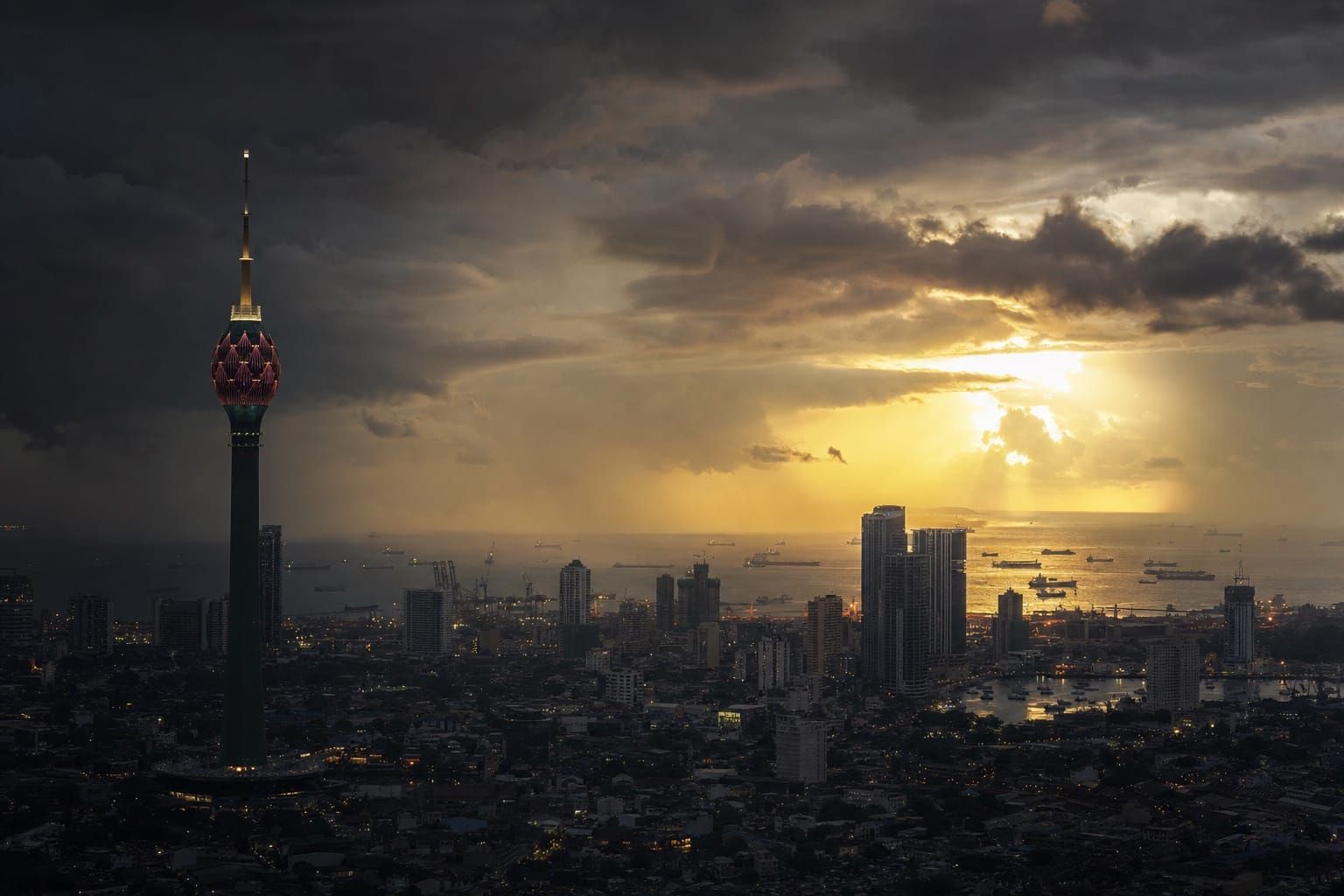
On November 12, Sri Lanka's President Anura Kumara Dissanayake stood before Parliament in his second role — Minister of Finance — and presented the 2027 budget. The five institutional research desks that graded it within days, from HNB Stockbrokers to First Capital, reached roughly the same verdict: fiscally disciplined, broadly in line with the IMF framework, no major tax surprises.
Read that sentence again with some history attached. Dissanayake leads the National People's Power coalition, anchored by the JVP — a party that launched two armed Marxist insurrections against the Sri Lankan state, in 1971 and 1987. He won the presidency in September 2024 campaigning against the austerity terms of the country's $3 billion IMF bailout. Two years later, his government's signature economic document is being praised by stockbrokers for toeing the Fund's line, and the IMF has agreed — contingent on exactly this budget — to release another $345 million.
That is not the story anyone would have written in 2022. And the next chapter is the one that matters for investors: the IMF program ends in March 2027, and this budget is Sri Lanka's audition for borrowing without a chaperone.
The Deepest Hole in Asia
Recall how deep the hole was. In 2022, Sri Lanka ran out of foreign currency in the most literal sense: fuel queues stretched for days, hospitals postponed surgeries for lack of supplies, and rolling blackouts hit the grid. In May 2022 the country defaulted on its external debt for the first time in its history. Inflation peaked near 70 percent. Protesters stormed the presidential residence that July, and President Gotabaya Rajapaksa fled the country. Central government debt hit 114 percent of GDP.
The rescue came in March 2023: a four-year, roughly $3 billion IMF Extended Fund Facility, conditioned on the usual bitter medicine — tax hikes, cost-reflective utility pricing, central bank independence, state enterprise reform.
What makes Sri Lanka unusual is not the medicine. It is that the patient took it, kept taking it through a change of government to the political party most ideologically hostile to it, and the numbers now show it working:
- The default is cured. In December 2024, Sri Lanka completed the restructuring of $12.55 billion in international sovereign bonds with roughly 98 percent bondholder participation — swapping defaulted paper for new instruments, including novel "macro-linked" bonds whose payouts adjust with economic performance.
- The rating is climbing. On September 22, Fitch upgraded Sri Lanka to B- from CCC+ with a Stable outlook, citing macro-stabilization and easing external financing risks.
- The Fund is satisfied. On October 4, IMF staff and Colombo reached agreement on the program's seventh review. The IMF's own language: Sri Lanka's economy has proved "remarkably resilient." Board approval unlocks the next $345 million and brings total disbursements to roughly $2.7 billion.
- Debt is falling. Central government debt is down from 114 percent of GDP in 2022 to 95 percent in 2025, per First Capital Research, with the IMF projecting 87 percent by 2032.
- Growth is real. The economy grew 4.2 percent in the June quarter, per Reuters, and the World Bank expects around 4.4 percent growth for 2026 — slower than 2025, with elevated energy prices from the Gulf conflict biting, but far from crisis territory.
Briefings like this are free to read with a free AlphaBriefing membership. Join free →
Why the Marxist Blinked
Dissanayake's conversion from bailout critic to bailout executor was not ideological. It was arithmetic. By the time he took office, Sri Lanka had no alternative lender of consequence — China's appetite for new lending had cooled, reserves were thin, and the restructuring deal with bondholders was contingent on staying inside the IMF's fiscal parameters. Tearing up the program would have meant re-defaulting on freshly restructured debt. So the revolutionary became the accountant.
The 2027 budget shows both the discipline and its limits. Revenue is budgeted at Rs 6.18 trillion, up 3.3 percent. Spending rises faster — 8.5 percent, to Rs 7.93 trillion — including Rs 260 billion in supplementary reconstruction spending after Cyclone Ditwah. The overall deficit widens from 3.7 to 4.5 percent of GDP. The primary surplus — the number the IMF actually polices — narrows from 3.6 to 2.3 percent of GDP, which HNB Stockbrokers notes just meets the Fund's target. No margin for error.
And the scar tissue is still visible in one line item: interest. Sri Lanka has budgeted Rs 2.64 trillion for interest payments in 2027 — a third of all government spending, absorbing about 43 percent of revenue. That is down from a staggering 79 percent of revenue in 2022, but still roughly three times the peer average, per HNB Stockbrokers. And Reuters notes poverty remains high despite the headline growth. This is a recovery, not a restoration.
Which raises the question the budget itself cannot answer: in four months, the IMF program that has anchored every one of these numbers expires. What happens when a B- rated, Marxist-led government has to roll one of the heaviest debt loads in Asia on the open market, with no Fund review to hide behind — and what do the strange new bonds it issued in the restructuring pay if it succeeds?
The rest of this briefing is free — it just requires a free AlphaBriefing account: the 2028 maturity wall and the gross-financing math, where Budget 2027 quietly diverges from the IMF's own projections, how the macro-linked bonds pay if the recovery holds, and the five-signal watchlist into March.
Create your free account → — 30 seconds, no card.