Nobody Told the Central Banks Gold Was Correcting
Gold has fallen 28% from its January high and retail is calling the top. The buyers who set the floor — central banks — are accumulating at record intent. The correction is an entry, not an exit.

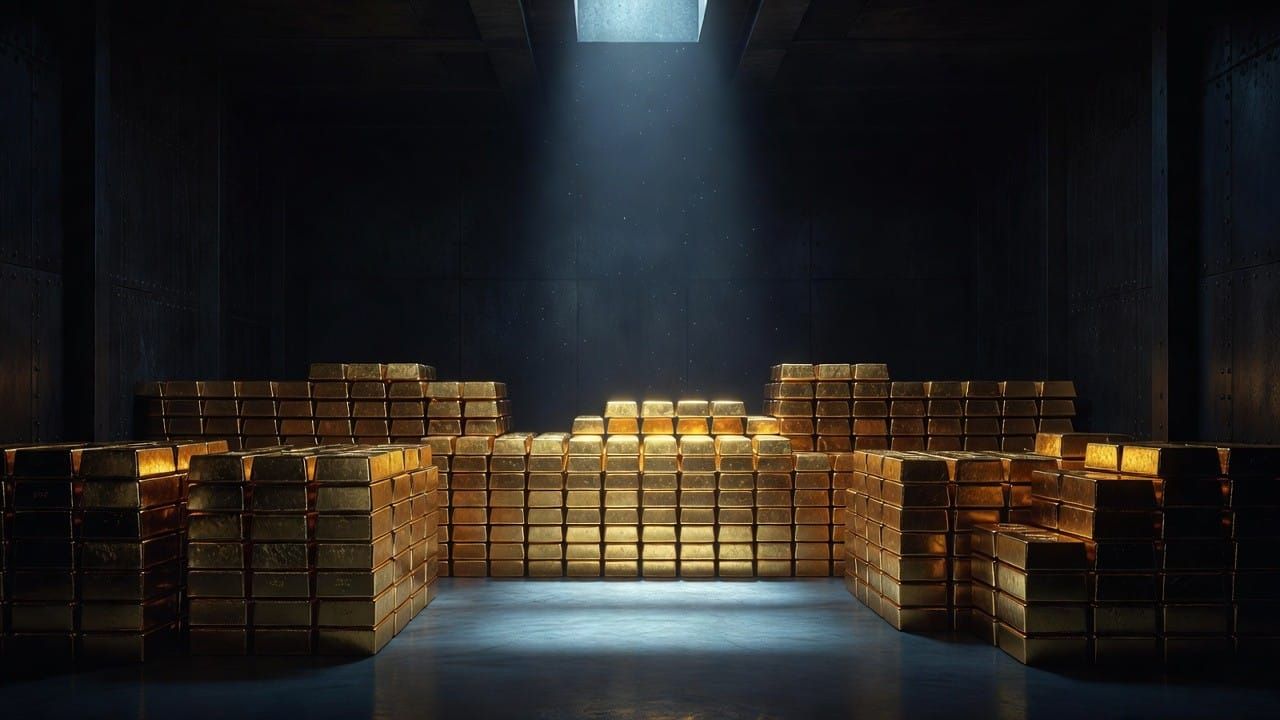
Gold spent the first half of 2026 doing something it almost never does in a bull market: falling, hard, for months. After touching an all-time high near $5,595 an ounce in January, the metal has bled roughly 28% to trade around $4,050 by mid-July — its worst stretch of the cycle. Retail investors are heading for the exits. ETF holdings have leaked. The financial press has quietly retired the "gold to the moon" headlines and replaced them with obituaries.
There is only one problem with the "gold topped" narrative. The buyers who actually matter never got the memo.
Two Markets Wearing One Price
Gold trades as if it were a single asset, but it is really two markets stapled together — and they are pulling in opposite directions right now.
The first market is the one you see on your screen. It is Western, financialized, and fast: futures desks, ETF flows, macro tourists rotating in and out based on the next Fed dot plot and the direction of real yields. This is the marginal price-setter. When real yields tick up or risk appetite returns, this cohort sells first and asks questions later. It is this market that has driven the 28% drawdown — a positioning unwind, not a demand collapse.
The second market is slower, quieter, and almost entirely price-insensitive: the official sector. Central banks do not chart gold. They do not care about a 28% pullback except insofar as it lets them buy the same tonnage for fewer dollars. And on June 16, the World Gold Council put a number on their intent.
The Survey That Contradicts the Chart
The WGC's 2026 Central Bank Gold Reserves Survey — a record 76 responding institutions — landed while the price chart was pointing straight down. Its findings pointed the other way:
- A record 45% of central banks expect to increase their own gold holdings over the next 12 months, up from 43% a year earlier. Only 1% expect to cut.
- 89% expect global official reserves to keep rising.
- 74% expect their US dollar holdings to fall over the next five years — the structural bid behind the buying.
This is not a group reacting to a correction. It is a group that has bought an average of roughly 1,000 tonnes of gold a year for four straight years — double the pace of the previous decade — and just told the world it intends to keep going. The price fell 28%. Their conviction rose.
Briefings like this land in members' inboxes before the market prices them in. Join free →
Why the Divergence Matters
When the people setting the daily price and the people accumulating the physical metal disagree this sharply, the disagreement itself is the signal. A correction driven by ETF and futures selling is a liquidity event. A structural bid from institutions that buy off-market, for reasons that have nothing to do with the next CPI print, is a floor.
The question every investor should be asking is not "did gold top?" It is: what happens to the price when the marginal seller is exhausted and the price-insensitive buyer is still standing there with a shopping list — and what does that mean for the one part of the gold complex that is quietly minting cash even at "corrected" prices?