Florida's Insurance Market Is Collapsing. The Whole Country Will Pay.
Hurricane season just opened on the most fragile state-backed property insurance market in U.S. history. A single Cat 4 strike on Tampa or Miami ricochets through reinsurance, real estate, and muni bonds.

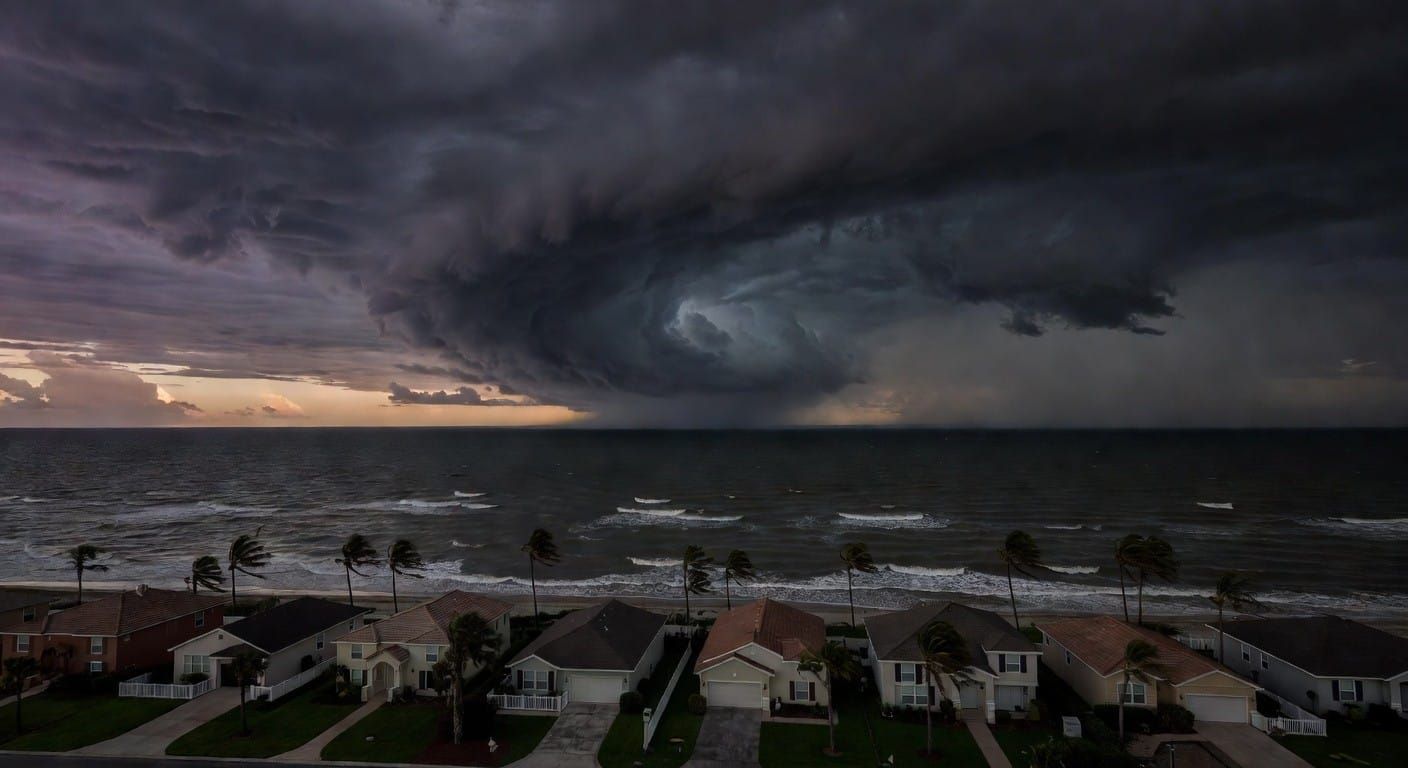
Hurricane season opened June 1 with the most fragile state-backed property insurance market in U.S. history. A single Cat 4 strike on Tampa or Miami this season would trigger a multi-billion-dollar assessment that ricochets through reinsurance, real estate, and the municipal bond market — and the bill will not stop at Florida's border.
The slow-motion collapse the market is not pricing
Florida's property insurance market is in worse structural shape today than it was before Hurricane Ian. Private carriers have spent the past four years exiting the state in waves. Citizens Property Insurance Corporation — the state-backed "insurer of last resort" — now writes more policies than any private insurer in Florida, with its book having ballooned past 1.4 million policies. That is not a market of last resort. That is the market.
Citizens is supposed to be a backstop. Instead it has become the largest single-state catastrophe exposure in the country. When the next major storm hits, the math gets ugly quickly. Citizens funds claims it cannot cover through assessments — surcharges levied on virtually every insurance policy in Florida, including auto, business, and homeowners written by private carriers. After Ian, those assessments topped out modestly. Modeled assessments after the next mid-tier catastrophe climb well into the double digits.
That means Floridians who do not even hold a Citizens policy — who may not own property at all — pay the bill. So do their landlords, their employers, their auto insurers, and ultimately the renters and customers they serve. It is, in effect, a balance-sheet tax disguised as insurance.
Why 2026 is different from prior hurricane seasons
Three structural shifts make this season meaningfully more dangerous to portfolios than 2022, 2023, or 2024.
1. Reinsurance is still on the back foot. The January 1, 2026 reinsurance renewal cycle saw Florida-exposed catastrophe layers price up again, even after two relatively benign hurricane seasons. Berkshire Hathaway's National Indemnity has trimmed its Florida wind appetite. Munich Re and Swiss Re have publicly disclosed reduced Gulf basin exposure. The capital available to absorb a Florida tail event is the thinnest it has been in over a decade.
2. State-backed insurers are everywhere now. The model is no longer a Florida quirk. Louisiana Citizens, California's FAIR Plan, North Carolina's IUA, and Texas's TWIA have all swelled into primary markets in their states. The California FAIR Plan alone now insures hundreds of billions of dollars of exposure, up nearly tenfold over the past decade. These pools were never designed to handle structural, climate-driven demand at this scale. They are operating well outside their original mandate.
3. The NFIP is structurally insolvent — and reauthorization lands in storm season. The National Flood Insurance Program is roughly $20 billion in debt to the U.S. Treasury and runs a structural deficit even in quiet years. Congress has reauthorized the program on short-term continuing resolutions more than two dozen times since 2017. The next deadline lands at the end of September 2026 — the peak of hurricane season. Any political disruption to NFIP renewal during an active storm would freeze flood claim payments at exactly the wrong moment.
This is the macro setup. What it means for capital allocators is more pointed.
This is where the analysis gets actionable. AlphaBriefing members get the full investment framework — scenarios, positioning, and the bottom line.
Subscribe to AlphaBriefing — Free, Member, and Paid tiers available.