The First Rate Hike of the War Economy
The Fed just raised rates for the first time since 2023 — days after the second-worst consumer sentiment reading on record. What a tightening cycle in a war economy means for inflation, mortgages, and markets.

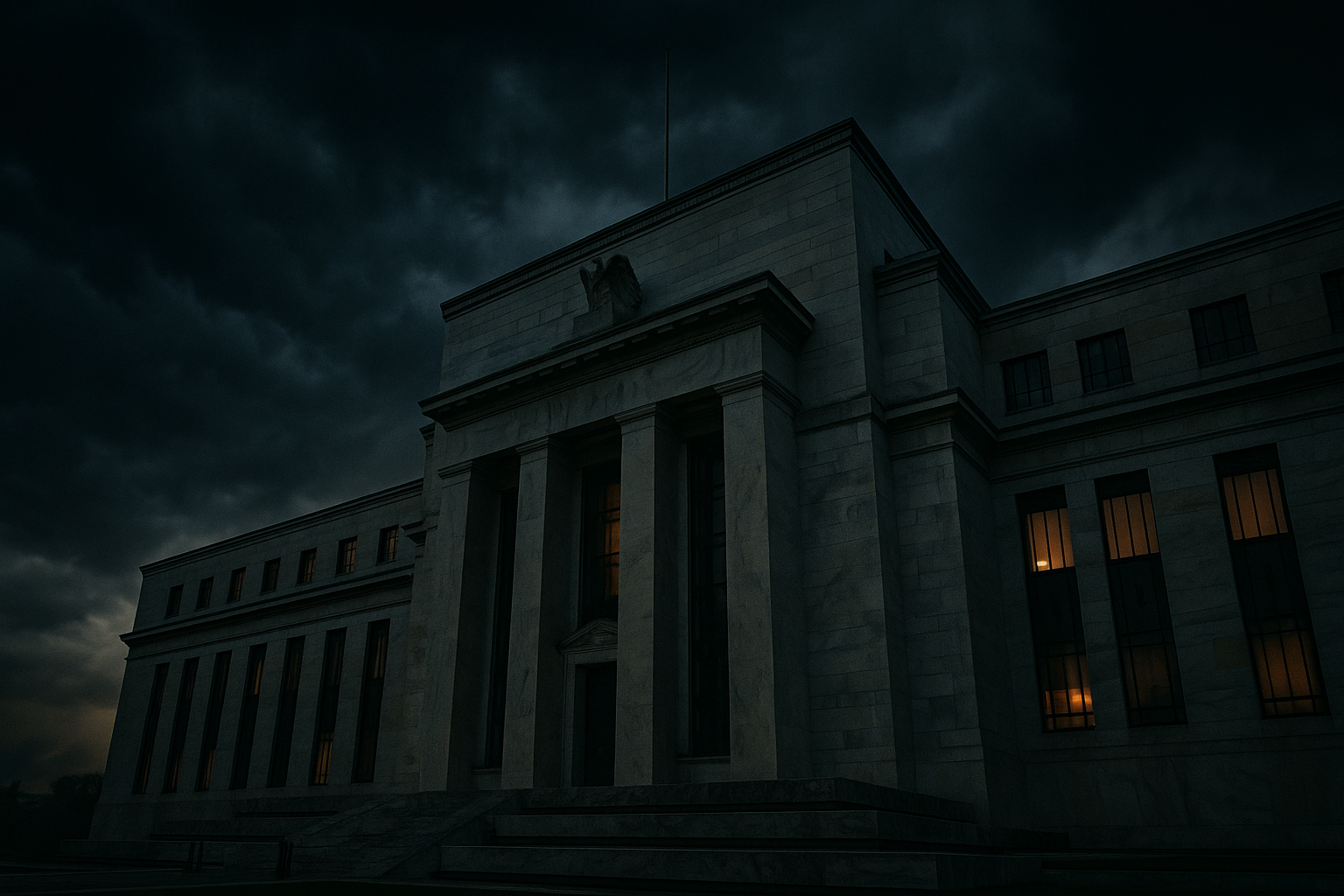
On Wednesday, the Federal Reserve did something it hadn't done since the summer of 2023: it raised interest rates. The quarter-point increase takes the federal funds target to a range of 3.75%–4.00%, and the vote was unanimous — 12 to 0, after a week of speculation that Chair Kevin Warsh might face multiple dissents.
Two days earlier, the University of Michigan's consumer sentiment index printed 47.8 — the second-lowest reading in the survey's history, worse than anything recorded during the 2008 financial crisis.
Hold those two facts next to each other, because the gap between them is the entire story. The central bank looked at an economy where households feel worse than they did when Lehman Brothers collapsed, and concluded that the bigger danger is inflation. Understanding why — and what happens next — matters for anyone with a mortgage, a credit card, a savings account, or a portfolio.
What the Fed actually did
The mechanics are simple: a 25-basis-point increase, the first of a new tightening cycle. The framing is what deserves attention.
"The plain fact is that inflation is too high and has been for too long," Warsh said. He described the move as "removing a dose of accommodation" and added that he was "hard pressed to describe financial conditions as restrictive." Translation: the Fed does not consider 4% a tight policy setting, and it is not treating this as a one-and-done gesture.
The projections back that up. Sixteen of nineteen Federal Open Market Committee members expect at least one more hike before the end of the year, and the median year-end projection moved to 4.1% from 3.8% in June. Futures markets are more aggressive still, pricing three or more additional increases by mid-2027. The committee raised its growth forecasts for 2026 and 2027, lowered its unemployment outlook to 4.1% through 2028 — and pushed its own timeline for returning inflation to the 2% target all the way out to 2029.
Read that last projection again. The Fed's own forecast says the inflation fight lasts three more years.
Why now
Three forces converged.
The inflation data stopped cooperating. August CPI came in at 0.4% month over month and 3.4% year over year, with core running 0.3% monthly. That is not runaway inflation, but it is moving in the wrong direction, and it has been sticky enough for long enough that "looking through it" stopped being tenable.
The war made energy inflation structural. The Iran conflict has kept fuel costs elevated for months — Brent still trades above $100 a barrel even after Saudi Arabia began restoring pipeline capacity damaged by drone strikes. Central banks traditionally treat supply-driven energy shocks as temporary and look through them. The Fed just signaled it no longer believes this one is temporary — or that it can afford to keep assuming so while tariff effects layer on top.
The consumer kept spending anyway. August retail sales rose 1.2%, the strongest monthly gain in five months. Whatever households tell survey-takers, their card statements describe an economy that can absorb tighter policy. A stabilizing labor market closed the argument: as Warsh put it, a firm economy, elevated inflation, and geopolitical pressure all "lend themselves to a firm unanimous decision."
Briefings like this land in members' inboxes before the market prices them in. Join free →
The mood the Fed is hiking into
Here is the uncomfortable part. The Michigan survey's 47.8 reading was not just weak — it missed expectations of 51.0, fell for a second straight month, and sits 16% below February, just before the Iran conflict began. Year-ahead inflation expectations jumped to 4.6%, the highest since June; five-year expectations ticked up to 3.4%. The decline cut across party lines — Democrats and Republicans posted similar drops.
The gap between what consumers say (despair) and what they do (spend at the fastest clip in five months) is one of the strangest features of this economy. But for the Fed, the survey's inflation-expectations component is the part that matters. Once households start believing 4–5% inflation is normal, they behave in ways that make it normal — demanding higher wages, accepting higher prices, pulling purchases forward. That un-anchoring is precisely what turned the 1970s from an oil shock into a decade of stagflation, and it is the strongest argument for why the Fed hiked into a sentiment collapse rather than waiting it out.
The historical echo is hard to miss: a supply-driven energy shock, tariffs raising import costs, inflation expectations drifting loose, and a central bank tightening into visible household pain. The 1970s Fed waited too long and needed 20% rates to fix its mistake. Warsh — a longtime critic of easy money — is making the opposite bet: pay a smaller price now to avoid a catastrophic one later.
How markets took it
The reaction was a hawkish-surprise pattern, not a panic. The S&P 500 slipped 0.5%, the Dow fell 1.2%, and the Nasdaq 100 finished roughly flat. The dollar rallied hard — the euro dropped to $1.1456 and the yen weakened past 156. Two-year Treasury yields rose seven basis points to 4.74%, and the 10-year held above 5%.
That last number is the one to watch. The 10-year yield above 5% — not the funds rate — is what prices mortgages, corporate borrowing, and equity valuations. Gold's behavior was equally telling: after swinging between $4,240 and $4,366, it settled around $4,300, near record territory. A market that fully trusted the Fed to restore 2% inflation would not keep gold there. Investors are hedging the scenario where the war economy outlasts the tightening cycle.
What it means for your money
Credit cards and variable-rate debt reprice fast — most track the prime rate, which follows the funds rate within about a month. Carrying a balance just got more expensive, with more increases likely coming.
Fixed mortgages answer to the bond market, not the Fed, and the bond market moved months ago — the 10-year above 5% already pushed 30-year mortgage rates to levels that have frozen the housing market. The deeper effect is lock-in: nearly half of outstanding US mortgages carry rates of 4% or lower. Every hike widens the gap between the rate homeowners have and the rate they'd get by moving, keeping inventory scarce even as demand weakens.
Savers finally get paid. Yields on high-yield savings accounts and CDs follow the funds rate up, and a Fed projecting hikes into 2027 means those yields have room to run. Locking in longer-dated CDs before any pause is the textbook move.
Investors should take the Fed's 2029 timeline seriously. A multi-year tightening cycle with the 10-year above 5% is a fundamentally different valuation regime than the one that powered the last two years of equity gains. Duration-heavy growth stocks carry the most repricing risk; cash and short-duration fixed income are no longer dead weight.
The bottom line
The September hike is not really about a quarter point. It is a regime declaration: the Fed has concluded that war-driven energy costs and tariff-driven goods costs have stopped being shocks to look through and started being conditions to fight. Its own projections commit it to years, not months, of restraint — against a consumer who already feels worse than at any point in the modern record except one.
The bet is that the spending data is telling the truth and the sentiment data is noise. If that's right, this cycle ends with inflation expectations re-anchored at a tolerable cost. If it's wrong — if the mood is the leading indicator and the spending is the lagging one — the Fed will be tightening into a consumer retrenchment it refused to see coming. Either way, the era of assuming the next Fed move is a cut is over.
If this analysis was useful, this is what AlphaBriefing does every day — geopolitics and markets, connected to what it means for your money. Free members get the daily brief in their inbox; paid members get the investment frameworks, scenario pricing, and catalyst calendars behind the paywall.
Get the next briefing free in your inbox: Join AlphaBriefing
Get this level of intelligence every day. Subscribe to AlphaBriefing — free, member, and paid tiers available.
Sources & Further Reading
- CNBC — Fed rate decision September 2026: Rates rise to 3.75%-4%
- Charles Schwab — Fed Hikes in 12-0 Vote, Commits to Inflation Fight
- TheStreet — Fed raises rates, signals another 2026 hike could follow
- Saxo — Market Quick Take: First Fed hike since 2023 lifts the dollar
- CNBC — Consumer outlook plunges in September as inflation outlook worsens
- US News — Fed Rate Hike Likely Means More Expensive Credit Cards and Mortgages, but Savers May Rejoice
- CNBC — Fed raises rates: What it means for your credit cards, mortgages, savings accounts and auto loans
- FRED — University of Michigan: Consumer Sentiment
Disclaimer
AlphaBriefing is an independent intelligence publication. The content in this article is produced for informational and educational purposes only. Nothing published by AlphaBriefing constitutes financial, investment, legal, tax, or regulatory advice, nor should it be construed as a solicitation or recommendation to buy, sell, or hold any security, asset, or financial instrument.
All views expressed are those of the author at the time of writing and are subject to change without notice. Markets are volatile and unpredictable; past performance is not indicative of future results. Any investment involves risk, including the possible loss of principal.
AlphaBriefing and its principals, employees, or contributors may hold positions in securities or assets mentioned in this article. This should be considered a potential conflict of interest. No material relationship with any company referenced exists unless explicitly disclosed. Readers should conduct their own due diligence and consult qualified financial, legal, and tax advisors before making any investment decisions.
Information in this article is drawn from public sources believed to be reliable at the time of publication. AlphaBriefing makes no warranty, express or implied, as to the accuracy, completeness, or timeliness of any information herein. AlphaBriefing accepts no liability for any loss or damage arising from reliance on this content.
© AlphaBriefing. All rights reserved. Unauthorised reproduction or distribution is prohibited.