Copper Hit a Record. Now Its Biggest Customers Are Designing It Out.
Record copper prices were supposed to reward the shortage trade. Instead they crossed the line where automakers and utilities re-engineer the metal out — while the smelters in the middle collapse on zero-dollar fees. The consensus is long the thing that ends the move.

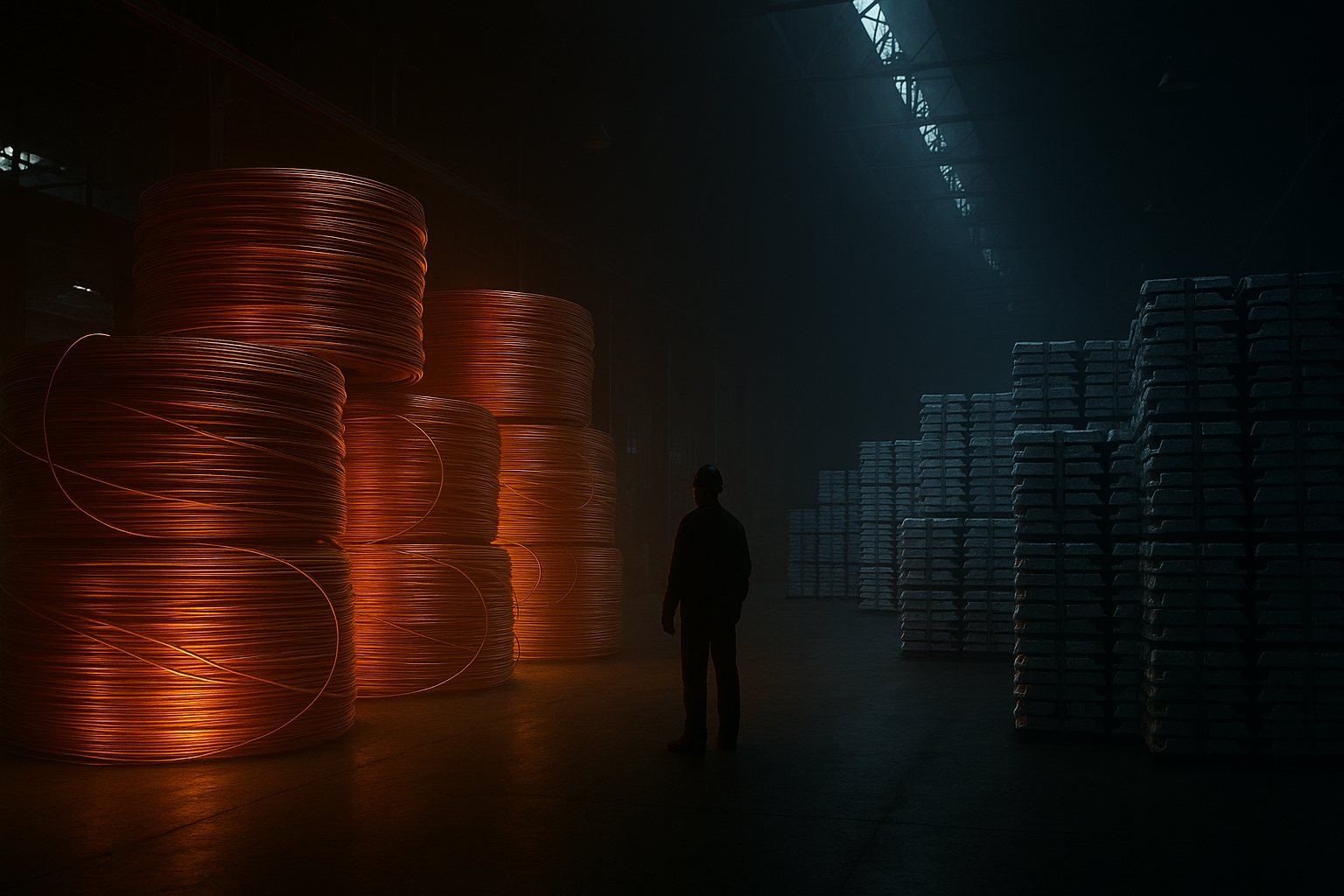
The consensus copper trade is one of the most crowded in commodities. A structural deficit, an AI-driven electrification boom, mine depletion, and a decade of underinvestment all point the same way: buy the shortage, own the miners, wait for the squeeze. It is a clean story, and for two years it has been mostly right. Copper crossed $12,000 a tonne in December 2025 and briefly touched an intraday $14,500 in January 2026 — records, on paper, for the metal that wires the modern economy.
Here is the part the shortage story leaves out. Prices this high do not just reward the people who own copper. They quietly punish the people who have to use it — and those people have started to do something about it.
In the last six months the world's largest copper consumers stopped treating the price as a cost to absorb and began treating it as a design problem to solve. Ferrari and BMW joined Tesla and a wave of Chinese EV makers in moving wiring harnesses from copper to aluminum. Daikin and other air-conditioning manufacturers are doing the same in heat exchangers. This is not a boycott or a forecast. It is engineering already on the production line, and it changes the shape of the trade.
The metal is getting designed out
The mechanism is simple and, once it starts, hard to reverse. A wiring harness is one of the most copper-intensive parts of a modern vehicle. Switch it to aluminum and you cut the cost of that harness by 30% to 40%, and you shave weight — which, in an EV, buys back range. The trade-off is conductivity: aluminum carries only about 61% of copper's current, so you need thicker gauge to move the same electricity. For decades that penalty made copper the default. At $6-plus a pound, the math flips.
You can watch it flip in the numbers. The copper-to-aluminum price ratio now sits around 4.3, against a long-run average near 3.7. UBS's framing is dry but pointed: an elevated ratio "rarely remains that way for long," because a gap that wide is precisely what pulls engineers toward the cheaper metal. JPMorgan estimates aluminum substitution will erase roughly 2% of global copper demand in 2026 — and as much as 6% by 2030. Two percent sounds small until you remember the entire bull case rests on a projected deficit of about 520,000 tonnes, well under 3% of the market. Substitution at that scale doesn't end the deficit. It caps how far the price can run before demand quietly walks away.
Briefings like this land in members' inboxes before the market prices them in. Join free →
There is also a policy accelerant the consensus underweights. In March 2025 Beijing issued a paper explicitly recommending that automakers substitute aluminum for copper in wiring to cut cost and import dependence. This is a state that controls roughly half the world's copper smelting telling its industrial base to use less of the thing it has to import — and the base is listening. One Chinese EV parts supplier now books about 30% of sales from aluminum wiring, up from 20% in 2023.
The break nobody is pricing is in the middle
The substitution story is the demand-side crack. The supply chain has a second one, and it sits in the least glamorous link: the smelters that turn concentrate into metal.
Smelters are paid through treatment and refining charges — TC/RCs — the fee miners pay them to process ore. It is the midstream's entire margin. In January 2026 the annual benchmark settled at zero dollars a tonne, the lowest level ever agreed. Spot charges have been negative since 2024, meaning smelters are effectively paying for the privilege of processing copper. The record price at the top of the chain is starving the middle of it.
That is the tension the headline number hides. Copper the metal has never been more valuable. Copper the business — mining it, smelting it, selling it into an economy that is actively re-engineering around it — is a far more divided picture than a single record price implies. Which raises the question the consensus trade never asks: if the highest price in history is the thing triggering demand destruction and gutting the midstream, what exactly are you long when you buy "copper"?
The rest of this briefing is for paid members: the two positioning frameworks that come out of the split (the substitution trade and the midstream repricing), the specific names on each side, the copper-price zones where substitution stops being a talking point and starts hitting order books, and why the crowded miner trade is priced for a deficit that has quietly grown a ceiling.
AlphaBriefing Paid gets you every investment thesis, scenario framework, and catalyst brief we publish — the analysis private intel clients pay four figures for, at a fraction of that.