Can Raytheon Build 1,000 Tomahawks a Year?
Raytheon builds roughly 60 Tomahawks a year. A $22.9 billion, seven-year Pentagon contract just ordered more than 1,000 — and quietly rewrote the business model of the American munitions industry. Who gets paid for the buildout.

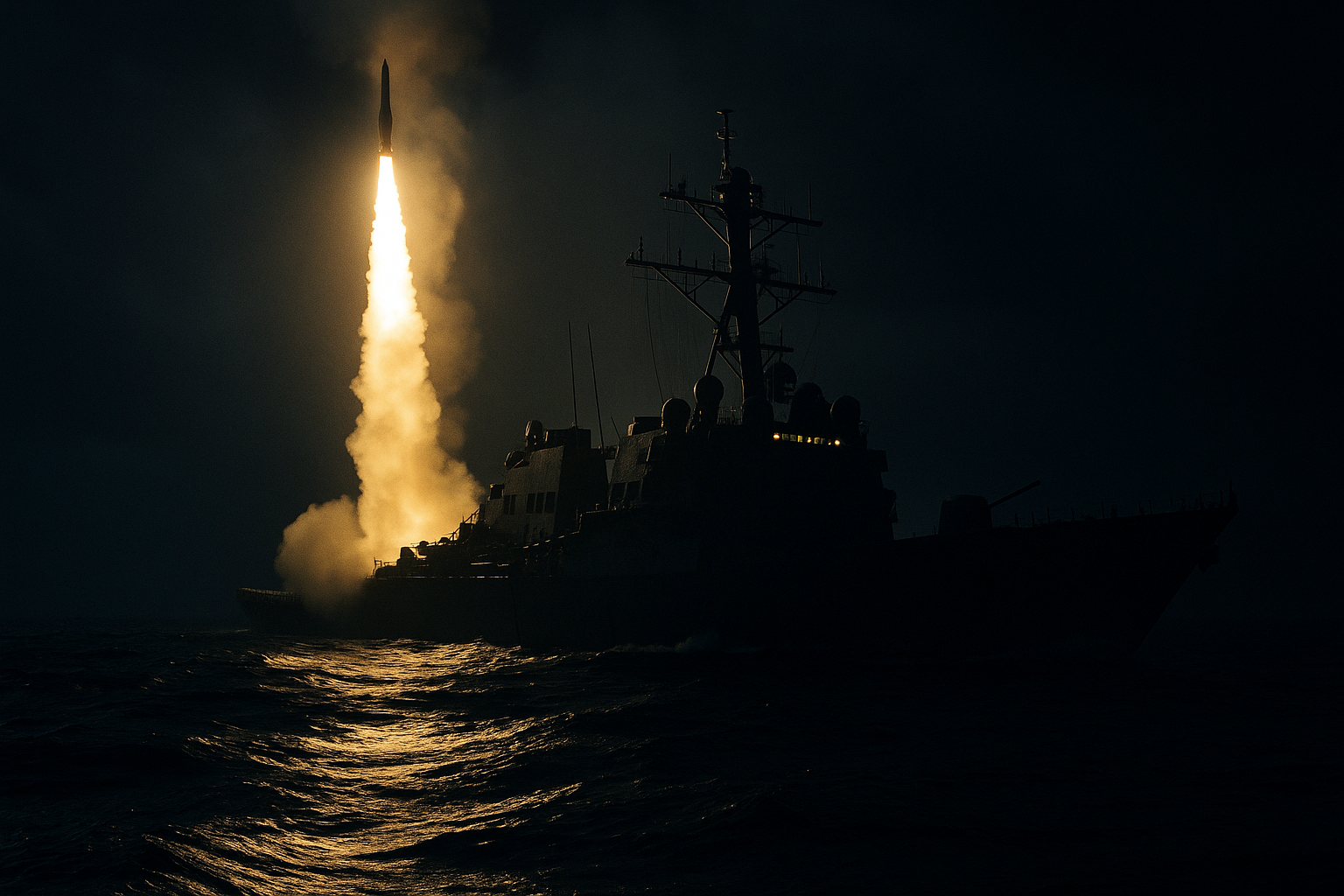
The photograph the Navy released in February shows the USS Delbert D. Black lit by its own missile: a Tomahawk climbing off the destroyer's deck in the opening nights of Operation Epic Fury. Six months later, the bill for all of those launches arrived — and it is shaped like nothing the munitions business has seen in decades.
On August 17, the Navy awarded RTX's Raytheon unit a $22.9 billion, seven-year contract to expand Tomahawk production from today's roughly 60 missiles a year to more than 1,000. Not a stockpile top-up. A sixteen-fold industrial scale-up, contracted in a single award — the formalization of a framework agreement Raytheon and the Pentagon signed back in February, when the war was days old and the drawdown math was already obvious.
"We called on industry to rapidly scale up munitions output, and RTX is delivering," Acting Navy Secretary Hung Cao said in announcing the deal.
The third ramp deal in three weeks
The Tomahawk award is not an isolated purchase. It is the largest piece of a pattern that has been assembling all month:
- August 3: The Pentagon signed a more than $3 billion framework deal with Lockheed Martin and Northrop Grumman to ramp production of Patriot and THAAD interceptor components.
- August 17: The $22.9 billion Tomahawk award to Raytheon.
- Behind both sits an explicit administration policy of brokering multi-year deals with the major primes — long-dated, guaranteed demand designed to give contractors the confidence to pour billions into new plants and tooling.
The trigger is no mystery. The Iran war consumed precision-guided munitions at rates the Pentagon's own planners had war-gamed but never budgeted for, while transfers to allies drained what the war didn't. Ukraine's ballistic-missile interceptor stocks have fallen to their lowest levels in years just as Russia scales its production toward combined salvos of up to 200 missiles. Every magazine in the Western arsenal is being emptied faster than it refills.
We wrote in June that missile defense had proven it works and that the constraint had moved to the factory floor. What's new — and what most coverage of this award is missing — is that the Pentagon has now changed what kind of customer it is. For fifty years, munitions were the boring end of defense: bought in annual increments, subject to congressional whim, the first line item cut in a tight year. No rational CEO built capacity against a customer like that, which is exactly why America entered a two-front munitions crisis with a 60-missile-a-year Tomahawk line.
A seven-year, $22.9 billion committed order is a different species of contract. It converts missiles from a lumpy annual sale into something closer to contracted infrastructure — backlog with the visibility of a utility, funded up front by the customer.
Which raises the question the market now has to price: sixteen-fold in seven years, through a supply chain that atrophied for three decades. Can Raytheon actually build it — and who gets paid along the way?
Briefings like this land in members' inboxes before the market prices them in. Join free →
The rest of this briefing is for paid members: what $3.3 billion a year of contracted Tomahawk revenue does to RTX's defense P&L, the three chokepoints in the missile supply chain where the ramp can stall (and the companies that own them), the four names positioned to capture the buildout, the execution risks that could turn a landmark award into a margin trap, and the bottom-line positioning framework.
AlphaBriefing Paid gets you every investment thesis, scenario framework, and catalyst brief we publish — the analysis private intel clients pay four figures for, at a fraction of that.