Blood Gold: How Russia and China Are Winning the War for Africa's Mines
Russia is financing its Ukraine war with Sahel gold. China is buying up the mines. The West is losing — and investors haven't priced the implications.

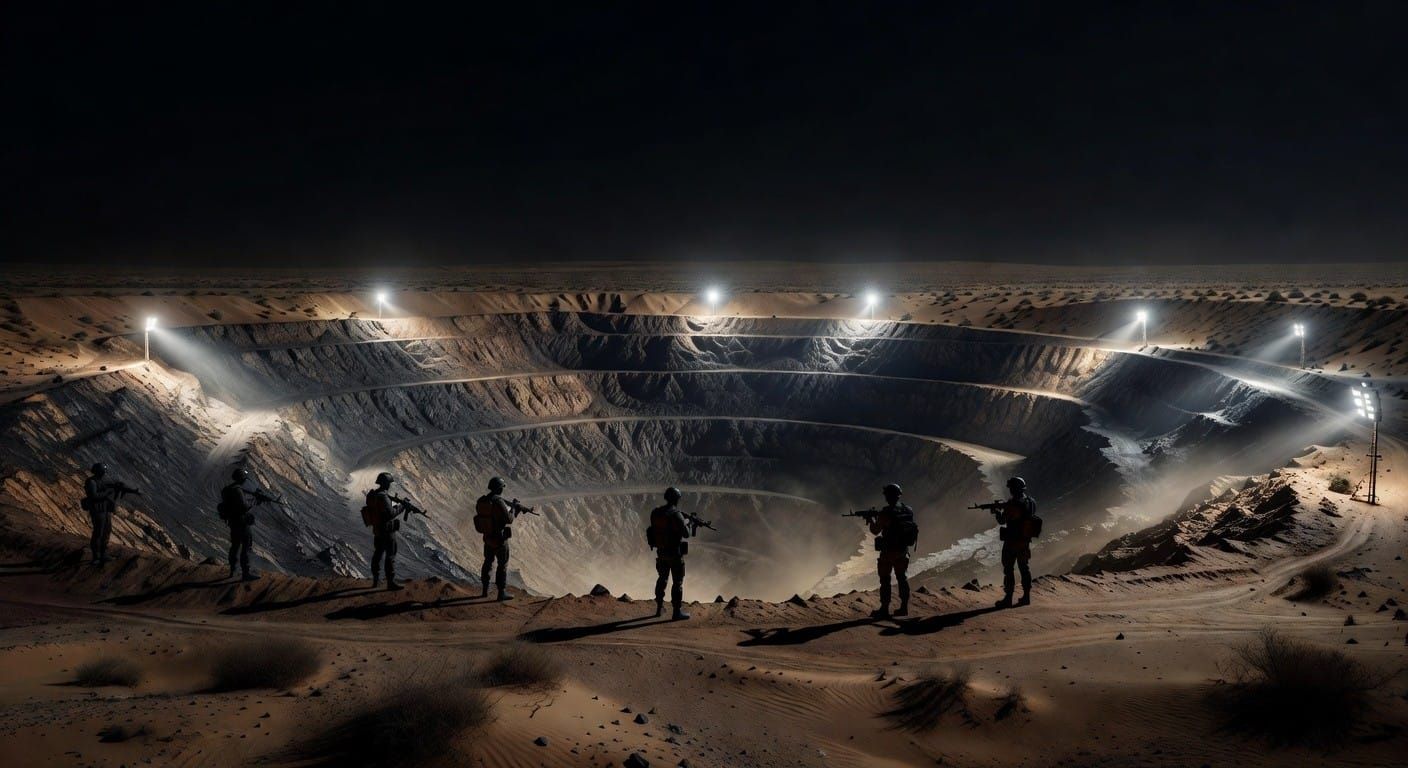
Africa is sitting on top of the world's most valuable gold deposits. Two great powers are fighting over them — and neither plays by the rules.
While Western investors pour capital into AI stocks and US Treasuries, a quieter war is being waged across Sub-Saharan Africa. Russia and China are systematically securing control of the continent's gold wealth — through military force, corporate acquisitions, and brazen sanctions evasion. The scale of what's happening is staggering, and the market implications haven't fully registered yet.
The Numbers That Should Have Everyone's Attention
Africa produces more than 25% of the world's gold — over 1,000 metric tons annually. With gold trading above $2,500 per ounce and central banks globally in full accumulation mode, that makes the continent's mines among the most strategically valuable assets on earth.
Gold prices have surged on the back of geopolitical uncertainty, US dollar credibility concerns, and a synchronized shift by central banks away from dollar-denominated reserves. Demand isn't slowing. Supply, however, is increasingly concentrated in politically volatile jurisdictions — and two revisionist powers have figured out how to exploit that.
Russia's Playbook: Guns, Gold, and Sanctions Evasion
When France's military was expelled from Mali, Burkina Faso, and Niger between 2022 and 2023, Russia's Africa Corps (the successor to the Wagner Group, now formally under the Russian Ministry of Defense) moved in. They didn't come just to provide security. They came to extract wealth.
In Mali — one of Africa's top five gold producers — Russian-linked forces seized the Intahaka mine, one of the continent's largest artisanal gold operations, in 2024. They are reportedly collecting fees of over $10 million per month while helping the junta rewrite its mining code to guarantee long-term Russian revenue shares.
In Sudan, the picture is even darker. Russian-linked firms, including Meroe Gold (traced to former Wagner networks), operate mines in active conflict zones. Sudan's civil war — which has killed tens of thousands and triggered one of the world's worst humanitarian disasters — is being partly financed and prolonged by gold revenues. Estimates put illicit gold flows routed through the UAE at over $1.9 billion annually, much of it helping Russia fund its war in Ukraine while evading Western sanctions.
This is what "blood gold" looks like at scale: conflict as a revenue stream, artisanal miners as labor proxies, and a commodity supply chain deliberately structured to undermine Western financial enforcement mechanisms.
China's Playbook: Checkbooks and Market Dominance
China's approach is subtler but equally aggressive. Beijing's state-linked mining companies have gone on a buying spree across West and Central Africa.
Zijin Mining — China's largest gold producer and one of its most geopolitically strategic companies — announced a $4 billion acquisition of Canada-listed Allied Gold in January 2026, gaining significant assets in Côte d'Ivoire and Mali. Weeks later, it followed with a $2.6 billion acquisition of Chifeng Jilong, with assets focused on West Africa. Two deals. $6.6 billion. In the space of three months.
Chinese foreign direct investment in Sub-Saharan African mining hit $8.1 billion in 2025 alone. That capital is accompanied by BRI infrastructure financing, diplomatic pressure, and a willingness to operate in jurisdictions that Western firms won't touch due to ESG constraints or political risk.
The result: China is positioning itself to control a disproportionate share of Africa's gold output at precisely the moment that gold's strategic value — as a reserve asset, as a sanctions-evasion vehicle, as a real-asset hedge — is rising globally.
The West Is Playing Catch-Up
Washington's response has been fragmented. The US issued an Africa Gold Advisory warning about Russian illicit flows. The Mineral Security Partnership — a 50-nation coalition aimed at securing critical mineral supply chains — held its 2026 ministerial. Diplomats have been dispatched to the Democratic Republic of Congo, Zambia, and Tanzania to offer alternative financing deals.
But gold isn't officially classified as a "critical mineral" in US policy frameworks — a categorization focused on lithium, cobalt, and rare earths. That bureaucratic gap has left Western governments behind the curve. While Washington deliberated, Beijing and Moscow moved. The assets are being locked up.
Western mining majors like Barrick Gold and AngloGold Ashanti remain operational in more stable jurisdictions — Ghana, Tanzania, South Africa — but face rising resource nationalism, higher royalty demands, and escalating competition from Chinese firms willing to accept lower returns in exchange for strategic positioning.
The Investment Landscape: Where the Money Is Flowing
Understanding the geopolitical dynamic reshapes how you think about exposure to the gold sector.
The structural case for gold remains intact. Central banks globally accumulated record amounts in 2024 and 2025, and the trend shows no signs of reversing. US fiscal credibility concerns — a debt-to-GDP ratio approaching 130%, persistently wide deficits, and political dysfunction around the debt ceiling — are structurally positive for the gold price. So is any erosion of dollar dominance, however gradual.
The supply story is getting complicated. A meaningful share of African production is increasingly controlled by actors operating outside the formal global trading system. As Russian and Chinese-linked mines route output through opaque channels — UAE gold refiners have been flagged repeatedly by Western intelligence agencies — the "available supply" visible to Western markets may be understating real production while disrupting price discovery.
Jurisdiction matters more than ever. The bifurcation between stable gold-producing states (Ghana, Tanzania, South Africa) and conflict-affected ones (Mali, Sudan, Burkina Faso) is widening. Investors with exposure to juniors or mid-tiers operating in Sahel states face not just operational risk, but reputational and regulatory risk as Western governments crack down on illicit gold flows.
Chinese acquirers are signaling undervaluation. When Zijin pays $6.6 billion for African gold assets in a single quarter, it suggests that sophisticated state-linked capital sees value that Western markets haven't fully priced. That's worth paying attention to — even if directly partnering with Chinese state capital isn't an option for many Western institutions.
The Story Nobody Is Covering
Here's what gets lost in the noise: the Africa gold war isn't just a mining story. It's a sanctions architecture story. It's a dollar dominance story. It's a story about whether the rules-based international order can actually enforce the financial penalties it levies on revisionist powers.
Russia is financing its invasion of Ukraine, in part, with gold mined by artisanal workers in the Sahel under armed compulsion, routed through Dubai, refined into London Good Delivery bars, and sold into the global market. That's not an abstraction. That's a functioning system that Western governments have spent three years trying — and largely failing — to disrupt.
The IMF, the FATF, and Western intelligence agencies have all flagged the problem. But fixing it requires either imposing secondary sanctions on UAE financial institutions (a step Washington has been reluctant to take given the strategic relationship with Abu Dhabi) or developing alternative market infrastructure that doesn't touch the opaque refining networks.
Neither is imminent. Which means the blood gold trade continues — and the geopolitical contest for Africa's mines intensifies.
Sources & Further Reading
- Mining Review Africa — African Gold Production Forecast 2026
- Bloomberg — China's Zijin Gold Jumps After $4 Billion Africa Mine Deal
- ADF Magazine — Russia Tightens Control of Malian Gold
- Transparency International Russia — Gold and Crossbows: How Russian Mercenaries Enable Dirty Business in Africa
- Reuters — World Bank: South Asia Growth to Slow Amid Middle East Conflict
- Reuters — South Africa's Gold Producers Stay Shallow as Prices Surge
- Control Risks — Ten Global Issues to Shape Mining and Metals Markets in 2026
Get this level of intelligence every day. Subscribe to AlphaBriefing — free, member, and paid tiers available.
Disclaimer
AlphaBriefing is an independent intelligence publication. The content in this article is produced for informational and educational purposes only. Nothing published by AlphaBriefing constitutes financial, investment, legal, tax, or regulatory advice, nor should it be construed as a solicitation or recommendation to buy, sell, or hold any security, asset, or financial instrument.
All views expressed are those of the author at the time of writing and are subject to change without notice. Markets are volatile and unpredictable; past performance is not indicative of future results. Any investment involves risk, including the possible loss of principal.
AlphaBriefing and its principals, employees, or contributors may hold positions in securities or assets mentioned in this article. This should be considered a potential conflict of interest. No material relationship with any company referenced exists unless explicitly disclosed. Readers should conduct their own due diligence and consult qualified financial, legal, and tax advisors before making any investment decisions.
Information in this article is drawn from public sources believed to be reliable at the time of publication. AlphaBriefing makes no warranty, express or implied, as to the accuracy, completeness, or timeliness of any information herein. AlphaBriefing accepts no liability for any loss or damage arising from reliance on this content.
© AlphaBriefing. All rights reserved. Unauthorized reproduction or distribution is prohibited.