America's Nuclear Rebuild Is Massively Over Budget. That's the Bull Case.
The market reads Sentinel's 80% cost overrun as a warning. It's the opposite: proof of a $1.7 trillion rebuild Washington can't cancel. The sharpest trade isn't the primes — it's the sole-source supplier underneath them, and the bottleneck nobody's watching.

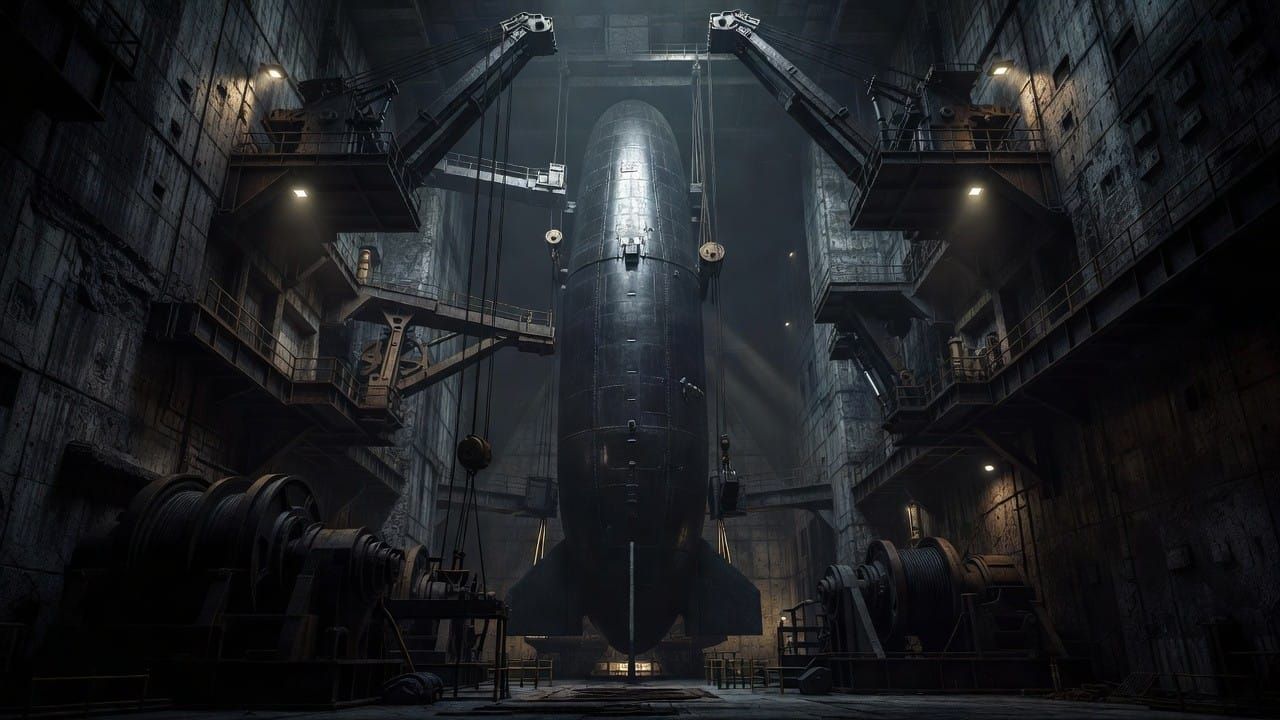
In January 2024, the U.S. Air Force sent Congress a notice that, in any normal procurement, is a death warrant. The new Sentinel intercontinental ballistic missile — the land-based leg of America's nuclear triad — had blown through its cost baseline so badly it triggered a "critical" Nunn-McCurdy breach, the statutory tripwire that forces the Pentagon to justify a program's existence or kill it. The original price tag of $77.7 billion had ballooned past $140 billion, an overrun of more than 80%.
The program was not killed. Six months later, the Pentagon certified it to continue. By mid-2025, total projected costs had touched $160 billion before restructuring pulled the figure back toward $141 billion. The missile still has not had its first test flight — that is now slated for 2027 — and it will not reach initial operational capability until the early 2030s.
Here is the part the market keeps misreading: the overrun is not the risk. The overrun is the tell.
A Program You Cannot Cancel
In commercial aerospace, an 80% cost breach ends careers and kills products. In strategic nuclear weapons, it does almost nothing. The land leg of the triad is treaty-anchored, bipartisan, and treated by both parties as non-negotiable to deterrence. The Pentagon looked at a doubled bill and concluded there was no acceptable alternative to paying it. That is the single most important fact for an investor to internalize: this is a customer with almost no price sensitivity and almost no exit.
And Sentinel is just one program inside the largest nuclear rebuild since the early Cold War. For the first time in generations, the United States is replacing or modernizing nearly every component of its strategic arsenal at once — missiles, bombers, submarines, warheads, and the command-and-control systems that tie them together.
The numbers are staggering and still climbing:
- The Congressional Budget Office now projects $946 billion in nuclear-forces spending over 2025–2034 — about $95 billion a year, and 25% (roughly $190 billion) higher than its estimate just two years earlier.
- Over a 30-year horizon, the foreseeable bill runs to at least $1.7 trillion.
- The three new strategic delivery systems alone — the Sentinel ICBM, the Columbia-class submarine, and the B-21 Raider bomber — carry acquisition costs north of $500 billion, before decades of operating expense on top.
Three Legs, Three Annuities
Strip away the geopolitics and what's left is one of the most predictable, schedule-immune revenue streams in the entire industrial economy:
- Sentinel ICBM (land) — Northrop Grumman's program to replace 400-plus Minuteman III missiles and rebuild the silos, launch control centers, and infrastructure across the Great Plains. The cost growth is concentrated in that ground infrastructure — exactly the kind of multi-decade civil-and-systems work that doesn't get cancelled mid-stream.
- Columbia-class submarine (sea) — built by General Dynamics' Electric Boat with Huntington Ingalls, replacing the Ohio-class boomers that carry the most survivable leg of the triad. The lead boat is already running two years behind, pushing delivery to 2029 — which, perversely, extends and deepens the backlog.
- B-21 Raider (air) — Northrop Grumman's stealth bomber, with at least 100 aircraft planned and a 30-year program cost estimated around $203 billion.
Every one of these is late. Every one is over budget. And every overrun and every slipped schedule does the same thing to the contractors building them: it lengthens the revenue runway and raises the dollar value of a backlog the government has no realistic way to walk away from.
The obvious move is to buy the primes. That's not wrong — but it's only half the trade, and it misses both the cleanest pure-play and the single bottleneck the entire $1.7 trillion arsenal quietly depends on.
This is where the analysis gets actionable. AlphaBriefing members get the full investment framework — scenarios, positioning, and the bottom line.
Subscribe to AlphaBriefing — Free, Member, and Paid tiers available.