America Is Running Out of Electricians
A 20-year training deficit just collided with the AI data center buildout. The skilled-trades shortage is now a structural income story for workers — and a pricing-power story for the contractors who control the scarcest input in a trillion-dollar construction wave.

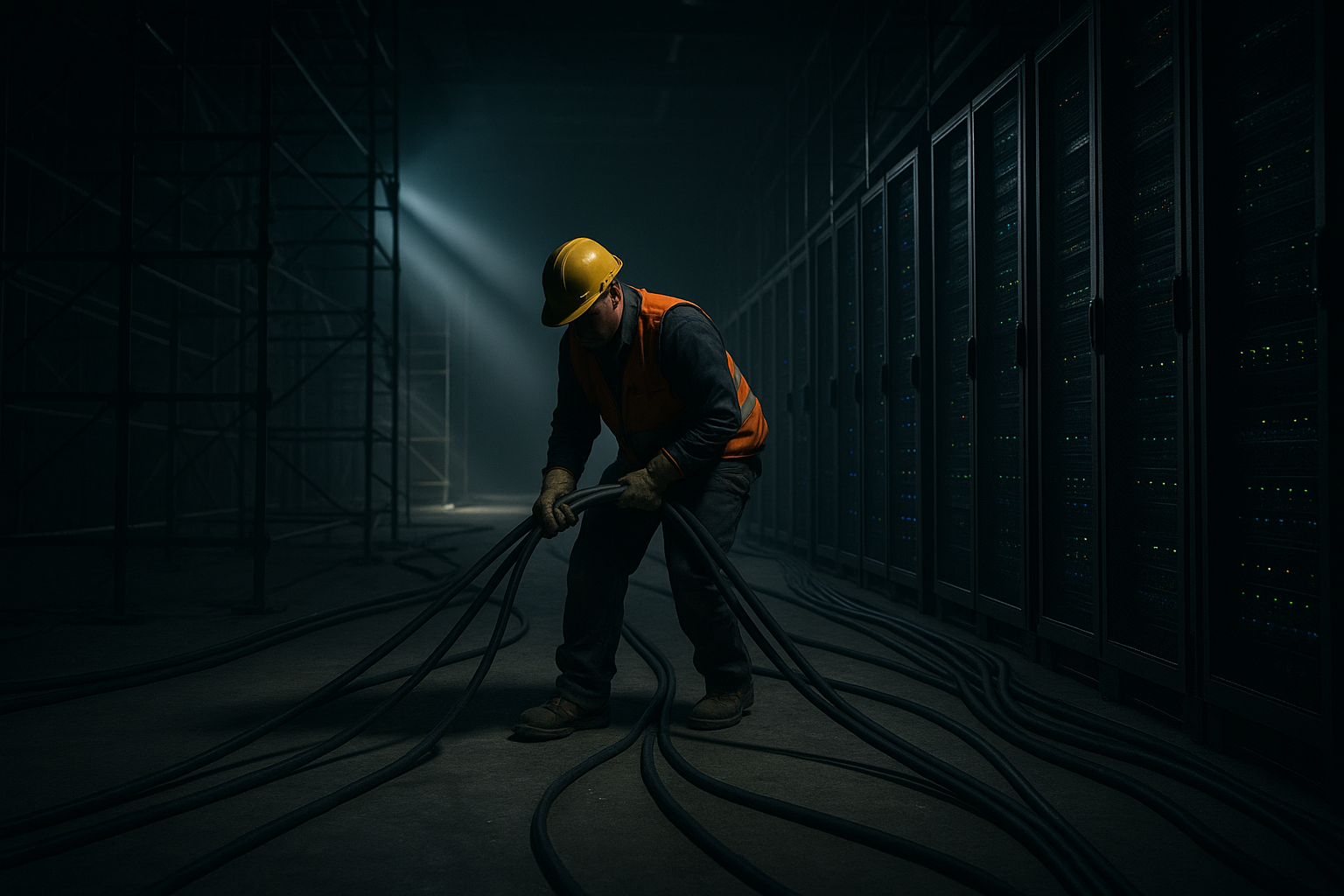
The highest-paid people on many construction sites in America right now are not the project managers. They are the electricians.
On hyperscale data center projects, industry pay surveys now put all-in compensation for journeyman electricians at roughly $58 to $75 per hour once overtime, per diems, and market premiums are counted — six-figure money for a job that requires no college degree. Union locals in Northern Virginia and Phoenix have expanded apprenticeship class sizes and are still dispatching traveling electricians from out of state to fill the gap. Recruiters report that time-to-fill for journeyman roles has climbed from about 21 days in 2020 to more than 38 days in early 2026.
This is not a temporary squeeze. It is a structural shortage two decades in the making, and it just collided with the largest construction program in modern American history.
The gap nobody trained for
Associated Builders and Contractors, the trade group whose workforce model is the industry benchmark, estimates the construction industry needs to attract roughly 349,000 net new workers in 2026 just to meet demand — and about 456,000 in 2027 as spending growth resumes. The 2025 figure was 439,000. These numbers are net: they already account for everyone entering through apprenticeships, trade schools, and immigration.
The pipeline problem is generational. For thirty years, American high schools dismantled shop classes and funneled students toward four-year degrees, while the message that trades were a fallback — not a career — did its slow demographic work. Roughly one in four skilled construction workers is now over 55 and heading toward retirement. The Bureau of Labor Statistics projects tens of thousands of electrician openings every year through the early 2030s, driven as much by replacement as by growth. Median pay for electricians has climbed into the mid-$60,000s nationally, and well past that in tight markets — and the openings still are not filling.
What changed in the last three years is the demand side. The AI data center buildout has become the single largest new driver of skilled-trades demand in the country. A single hyperscale campus can require hundreds of electricians for high-voltage distribution, plus pipefitters for cooling loops, HVAC specialists for chillers, and commissioning teams to bring it all online. Layer on semiconductor fabs, grid upgrades, and reshored manufacturing, and every megaproject in America is bidding against every other megaproject for the same finite pool of certified labor.
Wages are doing exactly what economics says they should. Signing bonuses, over-scale premiums, and per diems that were once reserved for oil-patch turnarounds are now standard on data center sites. For American workers, this is one of the great overlooked income stories of the decade: the trades, written off for a generation, now out-earn a large share of white-collar entry-level work — without the student debt.
But for investors, the more interesting question is the one hiding underneath the wage data. When labor becomes the scarcest input in a trillion-dollar buildout, the economics don't accrue to the people writing the checks. They accrue to whoever controls the labor. And a small group of publicly traded companies has quietly become exactly that.
The rest of this briefing is for paid members: the three listed contractors converting the labor shortage into record pricing power, the one balance-sheet metric that matters more than revenue growth, where the valuations stop making sense, and the bottom-line positioning framework.
AlphaBriefing Paid gets you every investment thesis, scenario framework, and catalyst brief we publish — the analysis private intel clients pay four figures for, at a fraction of that.