America Is Racing a November Deadline for the Metal Behind Every Bullet
China's ban on antimony, gallium, and germanium was lifted only until November 27, 2026. The race to reshore the metal behind every bullet is one of the year's most under-priced trades.

There is a date on the calendar that almost no one is trading around, and it sits about four months out: November 27, 2026.
That is the day a temporary reprieve expires. In November 2025, Beijing quietly lifted its outright ban on exporting three obscure but strategic materials to the United States — gallium, germanium, and antimony. It did not lift it permanently. It lifted it with an expiration date and kept every shipment gated behind Chinese export licenses. The message to Washington and to every defense contractor, chipmaker, and ammunition producer downstream was not subtle: you have until late November. Use it wisely.
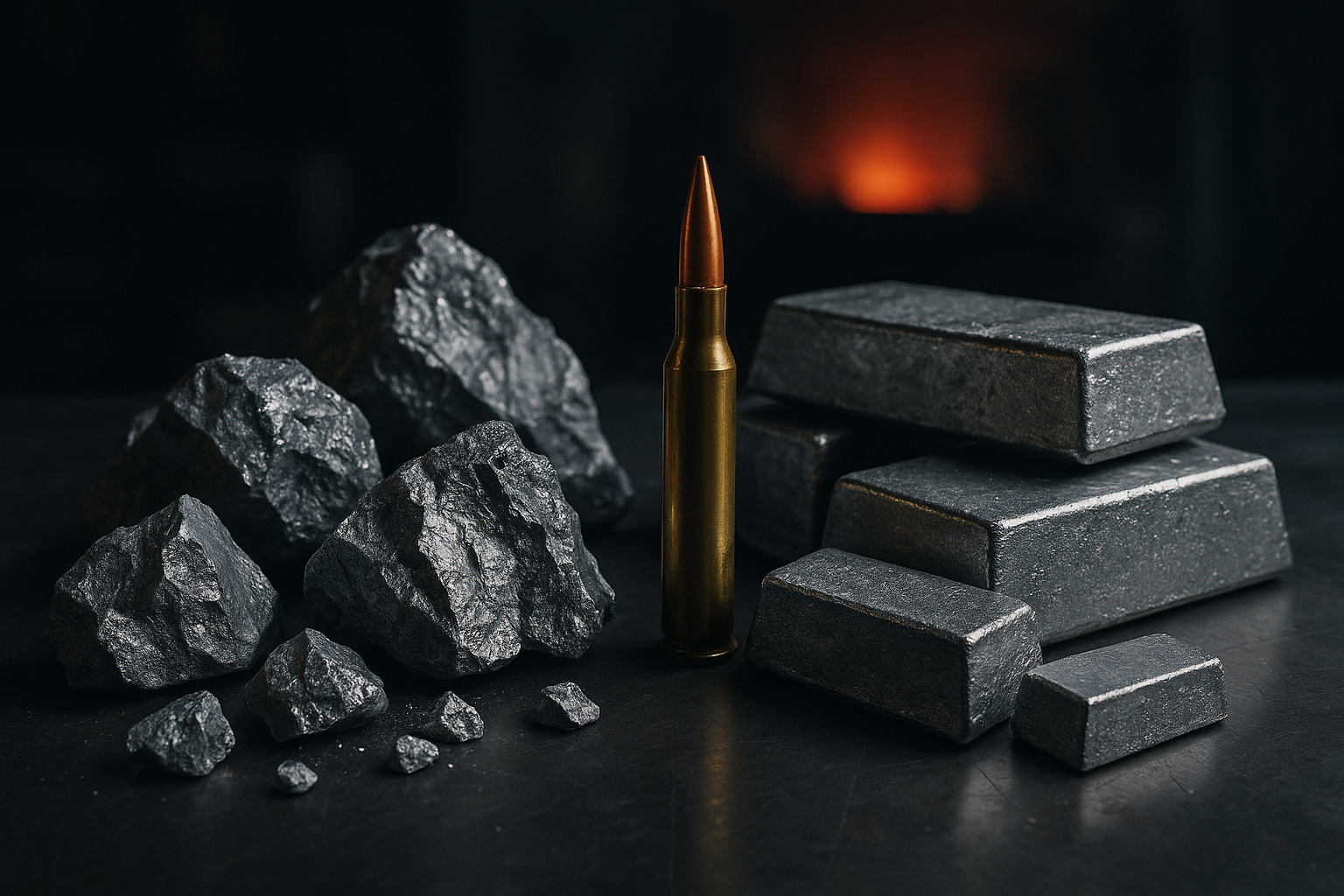
The market has, for the most part, treated this as an all-clear. Prices cooled from their panic highs. The headlines moved on to more exciting narratives — AI datacenters, the air-taxi washout, the next Fed meeting. But the people who actually have to buy these materials are not relaxing. They are stockpiling. And the single sharpest pressure point in the entire complex is the one investors understand the least: antimony, the silver-gray metalloid that sits, quietly and irreplaceably, in the primer of nearly every bullet the U.S. military and its allies fire.
This is a story about a supply chain that a rival power can switch off, a Western scramble to rebuild it before the switch flips again, and a very short list of companies positioned to benefit if it does.
The weapon nobody saw coming
For two decades, the phrase "critical minerals" mostly meant rare earths — the seventeen elements that go into the permanent magnets inside electric motors, wind turbines, and precision-guided weapons. That fight is real, and we have covered it. But China's most effective act of economic coercion so far did not target rare earths at all. It targeted the minor metals — the unglamorous inputs that no one stockpiled because they were always cheap and always available.
The timeline is instructive. In July 2023, Beijing imposed export licensing on gallium and germanium, two metals essential to semiconductors and infrared optics. In August 2024, it added antimony to the licensing regime. Then, in December 2024, it escalated to an outright ban on all three flowing to the United States.
The effect was immediate and brutal. U.S. antimony shipments from China collapsed by roughly 97%. The price of antimony, which had traded around $1,400 per ton not long before the controls began, rocketed toward $40,000 per ton at the peak — a move of roughly 2,600% that ranks among the most violent repricings any industrial input has seen this decade. By 2025, antimony averaged around $25 a pound, more than double its 2024 average, and it has stayed structurally elevated ever since.
Here is why that matters more than the number suggests. China accounts for roughly 60% of the world's mined antimony and an even larger share of refined supply. And antimony is not a nice-to-have. It hardens lead in ammunition, stabilizes the primers that ignite in more than 200 types of military munitions, flame-proofs everything from uniforms to aircraft interiors, and clarifies the glass in solar panels and night-vision optics. There is no drop-in substitute for most of these uses. You cannot 3D-print your way around it. You either have the metal or you do not.
Briefings like this land in members' inboxes before the market prices them in. Join free →
A reprieve that looks a lot like a countdown
When China reopened the taps in November 2025, it did not do so out of goodwill. It did so as a bargaining lever — a concession dangled inside a broader trade negotiation, with a hard expiry and a licensing chokehold left firmly in place. Exporters still need Beijing's permission for every dual-use shipment, and Beijing can slow-walk, deny, or re-impose at will.
That structure has created a strange, urgent dynamic beneath a calm surface. Defense primes, ammunition makers, and the Pentagon's own stockpile managers are not treating the reprieve as peace. They are treating it as a window — a chance to buy, build, and reshore before the door can close again on November 27. The current price spread in the antimony market is not the sound of a shortage resolved. It is the sound of a market frantically pulling forward every ton it can secure before the deadline.
Which raises the question that actually matters for your money: if the smartest buyers in the world are racing a clock to escape dependence on a single hostile supplier, who gets paid when they succeed — or when the clock runs out?
The rest of this briefing is for paid members: the specific reshoring play that just secured a $2.9 billion federal loan, why the investable universe here is dangerously thin (and what that does to the names that exist), the two ways this trade can pay off — reprieve renewed or reprieve revoked — and the price scenarios for antimony under each, plus the bottom-line positioning framework.
AlphaBriefing Paid gets you every investment thesis, scenario framework, and catalyst brief we publish — the analysis private intel clients pay four figures for, at a fraction of that.