America Can't Build Fast Enough — Because It Doesn't Have the Workers
The U.S. is pouring trillions into data centers, chip fabs, and infrastructure. But with 530,000 skilled trade jobs sitting empty and retirements accelerating, the biggest risk to the AI boom isn't technology — it's the electrician who doesn't exist.

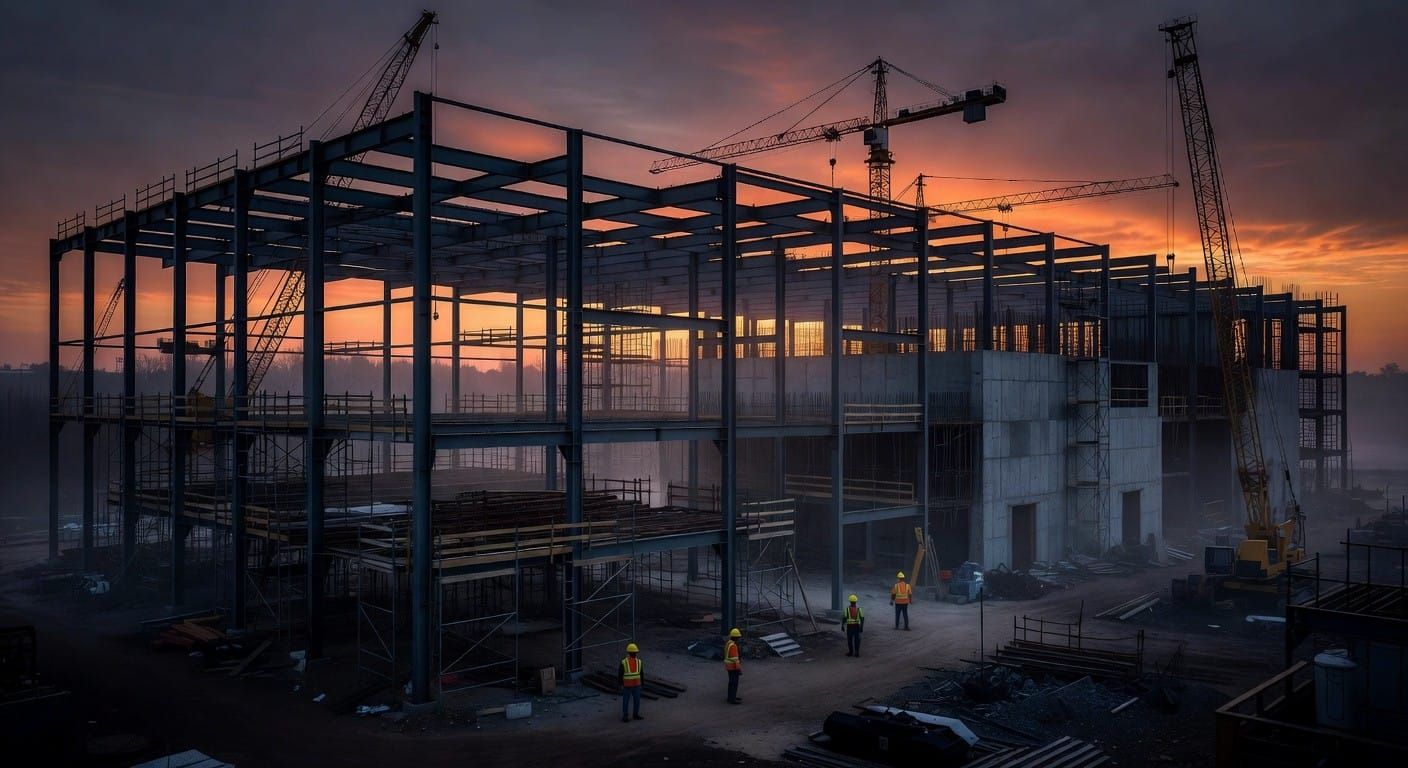
The United States is in the middle of the largest construction boom in a generation. Between the CHIPS Act, the Inflation Reduction Act, the Bipartisan Infrastructure Law, and hundreds of billions in private AI-driven capital expenditure, the pipeline of megaprojects stretches from Arizona semiconductor fabs to Virginia data center campuses to offshore wind installations along the Atlantic seaboard.
There's just one problem: there aren't enough people to build any of it.
The Numbers Are Brutal
The construction industry needs to attract 349,000 net new workers in 2026 just to keep pace with current demand, according to Associated Builders and Contractors. By 2027, that figure jumps to 456,000 — a 31% year-over-year increase. Broader projections from JLL and the U.S. Department of Education estimate 2.1 million unfilled skilled trade positions by 2030, with potential annual economic losses reaching $1 trillion.
Right now, roughly 530,000 skilled trade jobs are sitting empty nationwide. The pipeline to fill them produces about 150,000 new apprentices per year.
Do the math. It doesn't work.
The shortage cuts across every critical trade: electricians, plumbers, HVAC technicians, pipefitters, welders, heavy equipment operators, and construction laborers. But it's electricians — the very workers most essential to data center buildouts, grid modernization, and the electrification of everything — who are in the most severe deficit.
The Bureau of Labor Statistics projects electrician demand growing 9-11% through 2034, roughly triple the average for all occupations, with 81,000 annual openings. Meanwhile, 39% of the existing electrician workforce is over 45. Half of licensed plumbers are over 50.
America is trying to build a 21st-century economy with a workforce that's retiring out from under it.
The Collision: Trillion-Dollar Demand Meets an Empty Pipeline
This isn't an abstract labor market story. It's a direct threat to the most consequential capital deployment cycles in American history.
Data centers are where the pain is sharpest. Nine out of ten data center projects are experiencing delays, according to industry tracking. A typical 60-megawatt facility delay costs approximately $14.2 million per month — or $2 million per day in lost revenue. Some 2026 capacity has already slipped to 2028.
The data center construction workforce faces a projected shortfall of up to 499,000 workers this year alone. Workers on data center projects command 25-30% wage premiums over standard construction — electricians and HVAC specialists on these sites are earning six figures with incentives.
Semiconductor fabs face the same bottleneck. Intel's Ohio fabrication facility, the crown jewel of CHIPS Act reshoring, has seen production timelines pushed from 2026 to 2030. Labor competition from data centers is a cited factor alongside power and supply chain constraints.
Manufacturing construction spending peaked above $235 billion annually — more than double pre-2022 levels — driven by the CHIPS Act's $52.7 billion in federal incentives and the IRA's clean energy provisions. But the workers needed to convert those dollars into physical infrastructure simply don't exist in sufficient numbers.
The result: project cancellations have quadrupled since 2025. Cost overruns are becoming the norm, not the exception. Turner & Townsend's data center cost index rose 5.5% in the most recent period. And the competition for certified tradespeople between data centers, chip fabs, grid projects, and traditional commercial construction is creating a wage spiral that ripples through every adjacent sector.
The Immigration Compressor
If the demographic math was already bad, recent immigration enforcement has made it worse.
Foreign-born workers represent approximately 29% of the U.S. construction workforce, with concentrations far higher in specific trades: 57% of drywall installers, 53% of roofers, 43% of construction laborers. In California and Florida, immigrant workers account for over 40% of the construction labor force.
Intensified ICE enforcement in 2026 has created what industry groups describe as a "chilling effect." A survey by the Associated General Contractors found 28% of construction firms reporting workforce disruptions — 10% losing workers directly to enforcement actions, 20% experiencing losses through subcontractors.
A National Bureau of Economic Research working paper found something counterintuitive: recent ICE activity caused job losses for both immigrant and U.S.-born workers in construction. American-born workers actually lost more jobs than the undocumented workers who were removed. The mechanism is straightforward — immigrant laborers in foundational roles (framing, laboring, concrete) complement skilled tradespeople (electricians, plumbers, project managers). Remove the foundation, and the whole project pipeline contracts.
The policy was supposed to free up jobs for American workers. In construction, it eliminated them.
This is where the analysis gets actionable. AlphaBriefing members get the full investment framework — the companies profiting from the shortage, the sectors most exposed, and how to position around the biggest infrastructure bottleneck in American history.
Subscribe to AlphaBriefing — Free, Member, and Paid tiers available.