Air Taxis Missed Their Year. The Companies That Build Them Are Buying Drones Instead.
Joby and Archer just moved America's first passenger air-taxi flights to 2027 and closed the week at 52-week lows. The real story is what both companies are buying while they wait for the FAA.

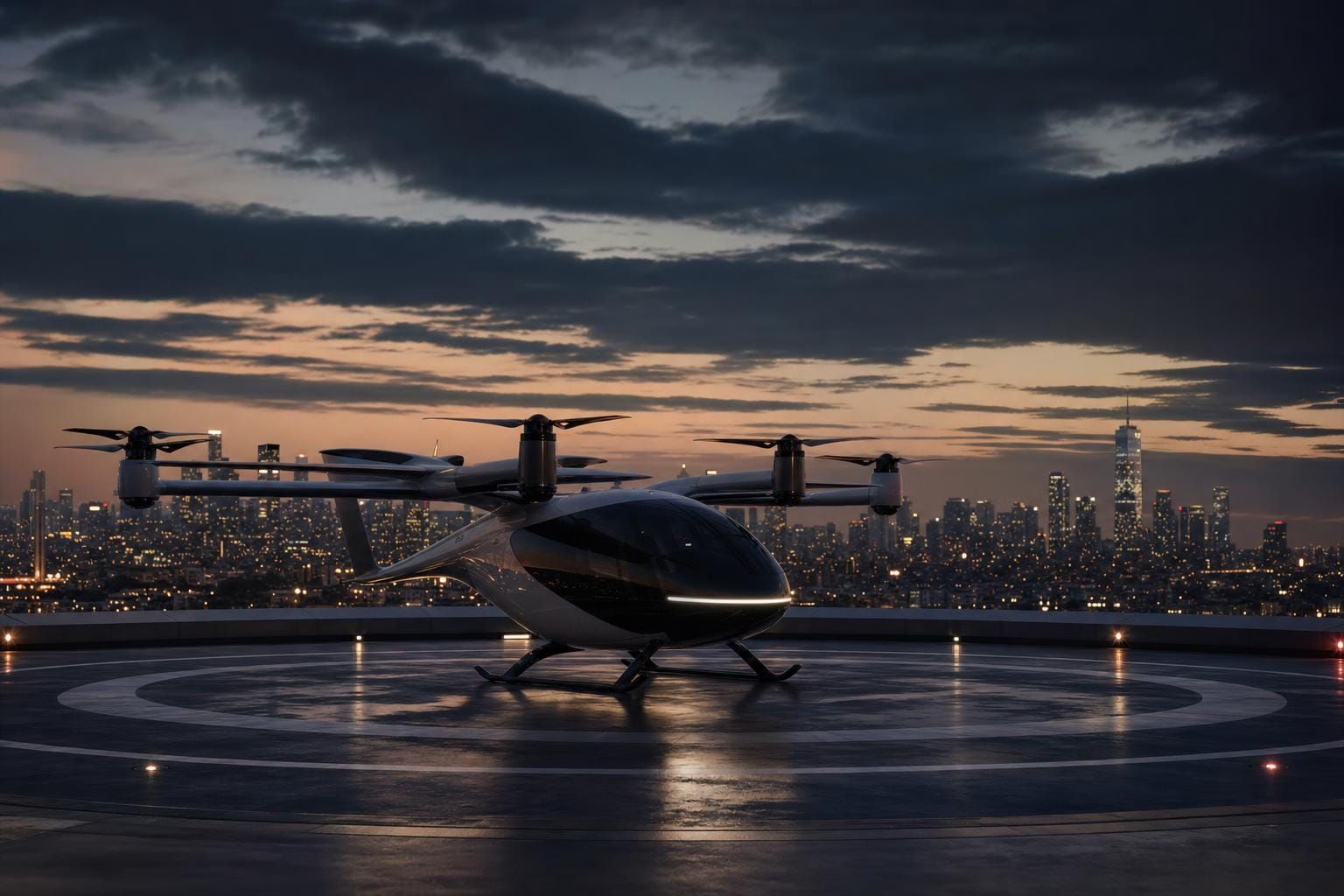
On Friday, Joby Aviation closed at $3.60 and Archer Aviation at $2.91 — the lowest closing prices either stock has seen in the past year. Joby is down roughly 73% in 2026; Archer, roughly 61%. That is a remarkable scoreboard for a year that was supposed to end with Americans riding in electric air taxis.
It won't. Over the span of a week in early November, both companies — the two best-funded eVTOL developers in the United States — told investors in their third-quarter updates that the first passenger flights now land in 2027. Neither press release used the word "delay." Both once targeted 2025, as AIN's FutureFlight noted in its read of the earnings reports. The target has now slipped two years without ever officially being missed.
How the year quietly disappeared
The mechanics of the slip matter more than the date itself, because they explain what actually gates this industry.
Both companies are flying today — visibly, deliberately, in some of the busiest airspace in America — under the eVTOL Integration Pilot Program (eIPP), a White House-backed initiative created by executive order in mid-2025 that lets selected operators run real routes before their aircraft hold a full FAA type certificate. Joby flew demonstration missions around Dallas–Fort Worth this fall, including an approach into DFW between two active runways, and made Florida's first eIPP flights over Tampa in late October. Archer's Midnight spent weeks touring seven Northern California cities, circling San Francisco Bay with the Golden Gate Bridge in the background.
What the eIPP does not do is let anyone carry a passenger early. The FAA has told participants that passenger flights — paying or not — require an aircraft to be in "substantial" certification flight testing, the phase where FAA test pilots fly the aircraft for credit. And that phase is where both timelines now point to next year:
- Joby says it has completed the first three of five certification stages and is deep into the fourth and fifth. By its own tracking, as disclosed in its November 4 shareholder letter, stage four stood at 83% complete at the end of October — 78% by the FAA's count — and stage five at 25% versus the agency's 14%. The critical milestone, Type Inspection Authorization (TIA), comes after FAA pilot training and additional company flight testing that Joby now expects in the first half of 2027.
- Archer is a step earlier. Its Midnight aircraft has still not completed a piloted transition from hover to wingborne flight — a milestone Joby reached in April 2025 — though the company says it is "closing in" on it by the end of this year. What Archer did get in November is an FAA Market Survey special airworthiness certificate, which unlocks piloted flights around Los Angeles from Hawthorne Airport, the airfield Archer controls, in the coming weeks.
Briefings like this are free to read with a free AlphaBriefing membership. Join free →
There is one detail worth pausing on, first flagged by industry trackers: Joby's quarterly SEC filing, submitted the same day as its shareholder letter, still lists 2026 as the target for first passengers. The letter simply no longer repeats the goal. That is how aviation timelines die — not with an announcement, but with an omission.
The part of the story the stock charts are actually pricing
Here is the puzzle. Joby reported $55 million of third-quarter revenue — mostly from Blade, the New York air-shuttle operator it acquired, which flew a record 44,000-plus passengers in the quarter — and raised its full-year outlook 15% to $135–140 million. It holds $2.2 billion in cash. Archer sits on $1.35 billion. These are not companies on the edge of insolvency. Yet both stocks fell every single session last week on the way to those lows.
The answer is that the market is no longer pricing the air taxi at all. It is pricing what both companies are becoming while they wait for the FAA — and both of them, in the same quarter, made that transformation explicit with transformative acquisitions. One is buying a classified-programs defense contractor. The other is about to make Boeing its largest shareholder.
A free AlphaBriefing membership gets you access to every free article at AlphaBriefing.com: Join AlphaBriefing
The rest of this briefing is free — it just requires a free AlphaBriefing account: the cash-burn and runway math on both companies, the details of Joby's $500 million defense acquisition and Archer's three-company deal with Boeing and what each buys in real revenue, and the five dated catalysts that decide whether 2027 is finally the year.
Create your free account → — 30 seconds, no card.