Why the Best Freight Business of 2026 Flies at 35,000 Feet
Missile strikes deleted 12% of the world's air cargo capacity overnight — and handed airlines' forgotten cargo divisions Covid-era pricing the equity market refuses to value. The boom is real. So is the clock.

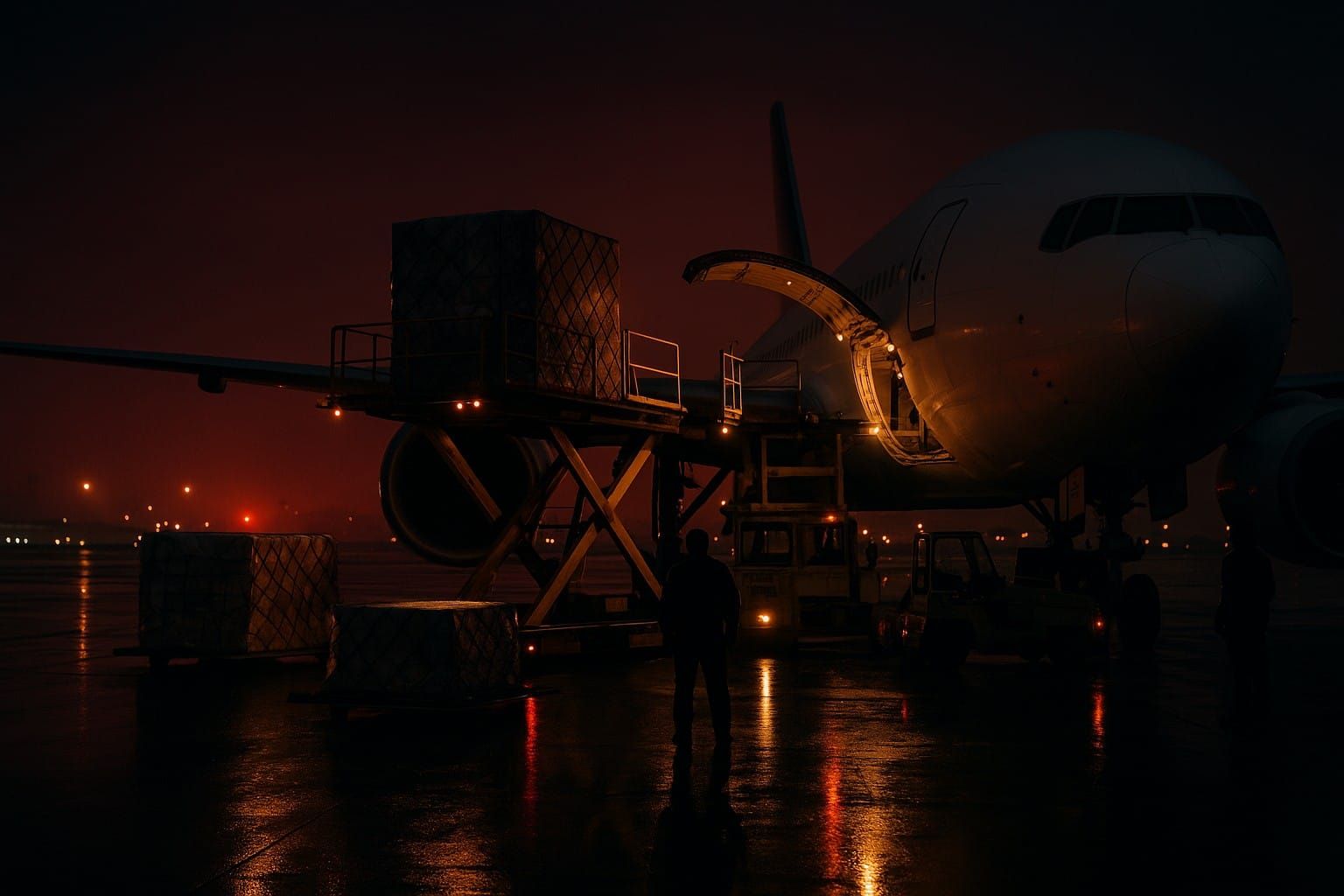
On the evening of February 27, the global air cargo market was priced for a boring year. Xeneta, the freight-rate benchmarking firm whose data underpins most of the industry's contract negotiations, had December forecasts showing long-term air freight rates falling 5% to 10% through 2026. Capacity was growing faster than demand. Shippers had the leverage. Everyone went home.
The next morning, missiles closed Dubai.
The February 28 escalation of the US–Iran war shut major air hubs across the Gulf overnight and removed 12% of global air cargo capacity in a single day — what Xeneta's chief airfreight officer, Niall van de Wouw, calls "the most significant, sudden shock to air freight capacity in living memory." Covid was bigger, he notes, but Covid built up over weeks. This happened between one shift and the next.
Five months later, the numbers look like 2020 wearing a different uniform:
- Global air cargo supply grew just 1% in the first half of 2026. Demand grew 4% — ahead of the full-year forecast — because cargo doesn't stop moving when capacity disappears; it just pays more.
- Spot rates jumped roughly 40% year-on-year by May. They have plateaued since. They have not fallen.
- Combined spot and contract rates rose 17% year-on-year in H1. Xeneta has now inverted its full-year forecast: long-term rates are expected to rise 5% to 15% in 2026, a 20-point swing from the December outlook.
The earnings receipts arrived this week. United's second-quarter cargo revenue came in at $527 million, up 22.6%, on 347 million pounds flown — the most cargo United has moved in a second quarter since the pandemic airlift of 2020. And here is the detail that matters: "Most of the gains in cargo were yield related, not volume related," chief commercial officer Andrew Nocella told analysts, adding that he expects the same in Q3. Delta's cargo revenue rose 39% to $294 million. Cathay Pacific moved 9% more tonnage in June than a year ago. Korean Air is squeezing more lift out of its 23 freighters and has converted seven A350-1000 passenger orders into freighters — a decade-length bet that this is not a blip.
The market is looking at the wrong line item
Now look at how the equity market treated the same companies. Airline stocks have spent the summer trading as a fuel-cost short. Delta paid a record $4.4 billion for jet fuel in a single quarter. Southwest's results this week were read almost entirely through the fuel line. With Brent back near $97, the sector-wide reflex is simple: war means expensive kerosene, expensive kerosene means sell airlines.
That reflex is not wrong for a domestic narrowbody carrier hauling passengers between Dallas and Denver. It is badly incomplete for a widebody international network. Bellyhold cargo is close to pure-margin revenue: the plane is flying anyway, the fuel is burned anyway, and every kilogram in the hold at 2026 yields drops almost straight to the bottom line. The same war that inflated the fuel bill handed these carriers a cargo repricing that offsets a meaningful piece of it — and because cargo is a footnote in most airline models, almost nobody is valuing it.
The physical freight market has already voted. Ocean services are only now trickling back through the Strait of Hormuz; air freight charters were operating again within days of the February strikes. When the world's supply chains needed speed and resilience at any price, the price was paid six miles up.
The question that matters for the next two quarters: who actually captures this — and how long does the window stay open? Because this boom has an expiration mechanism built in, and one of air cargo's two demand engines just died.
The rest of this briefing is for paid members: the two demand engines pulling air cargo in opposite directions (one just structurally broke), the three buckets of public-market exposure with specific names, the two groups to avoid even though they look like obvious plays, and the three-scenario clock that tells you when this trade ends.
AlphaBriefing Paid gets you every investment thesis, scenario framework, and catalyst brief we publish — the analysis private intel clients pay four figures for, at a fraction of that.