Why Is America Importing Russian Diesel?
A Russian tanker is steaming toward a US port, Washington is lending out a third of its emergency heating oil reserve, and retail diesel is above $6 a gallon. The crisis isn't crude — it's refining. Here's what that distinction is worth.

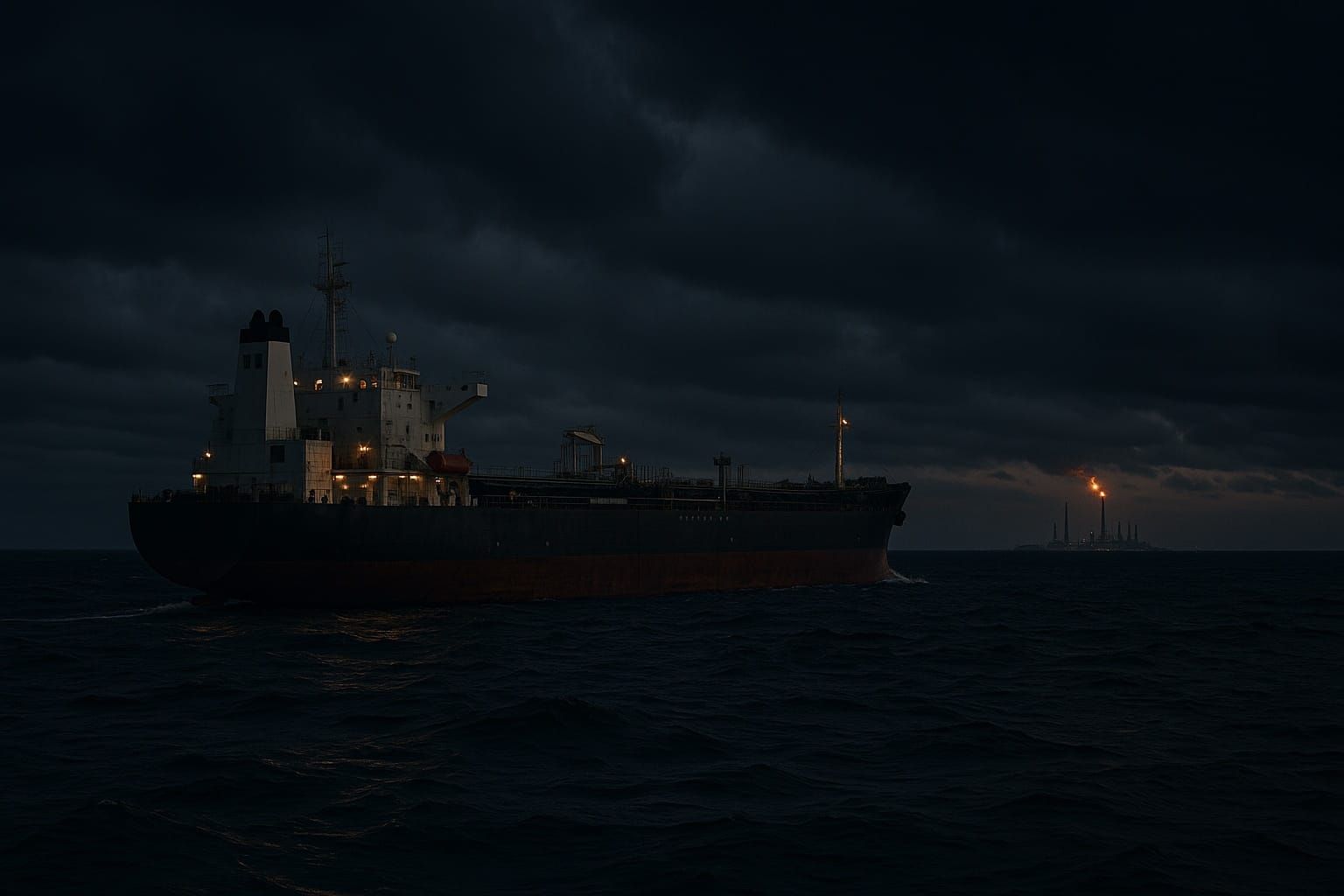
This week, two things happened that would have been unthinkable three years ago.
On Thursday, a tanker loaded with Russian diesel set sail for an undisclosed American port — the first such shipment under the deal President Trump struck with Vladimir Putin, announced during envoy Steve Witkoff's visit to St. Petersburg. And a day earlier, the Department of Energy said it would loan out up to 315,000 barrels from the Northeast Home Heating Oil Reserve — roughly a third of the entire stockpile — with deliveries due by November 13, according to Reuters.
Take those two headlines together and the message is unambiguous: the United States, the world's largest oil producer, is scrambling for refined fuel ahead of winter — and ahead of the November 3 midterms.
Retail diesel averaged $6.28 a gallon in the latest EIA weekly survey (October 19). A year ago, per AAA data cited by Al Jazeera, it was $3.62. Heating oil futures have more than doubled this year. For the millions of Northeast households that heat with oil, and for every trucking company, farm, and railroad in the country, this is the most expensive sustained fuel environment American consumers and shippers have faced.
Here's the detail most coverage misses: this is not really an oil crisis.
The tell is in the spread
Crude is expensive — WTI trades near $102 and Brent near $111, up roughly 77% and 82% this year on the Iran conflict and attacks on Gulf shipping. But refined products have risen far faster. Heating oil futures (the exchange proxy for diesel) are up about 123% year to date at $4.72 a gallon.
The gap between the two is the refining margin, and it has gone vertical. The spread between front-month heating oil and WTI — what a refiner earns turning crude into diesel — now sits near $97 a barrel, computed from live futures prices — multiples of what refiners earned in calmer years.
When crude and products rise together, the world is short oil. When products rise twice as fast as crude, the world is short refineries. That's where we are — and it's why Gulf crude exports running above prewar levels (24.6 million barrels a day, per the Financial Times) have done almost nothing for pump prices.
Three forces converged:
- Russia's refining complex is being systematically destroyed. Ukrainian drone campaigns have knocked out so much capacity that Russia — historically one of the world's largest diesel exporters — imposed restrictions on its own fuel exports to protect its domestic market. The Washington deal carves out an exception: Trump has said Russia would send 300,000 tonnes of diesel, then 500,000 tonnes in November and a million tonnes "immediately thereafter."
- The Middle East war has made every cargo a target. Kpler counted at least 18 attacks on vessels in two weeks. Before the US-Israel strikes on Iran, roughly a fifth of the world's oil and LNG passed through the Strait of Hormuz; cargoes still move, but at wartime freight and insurance costs.
- There is no spare refining capacity left to call on. US refiners have run flat-out all year — the EIA noted this week that tight diesel supplies have kept utilization and margins elevated. US distillate inventories stand at 104.3 million barrels heading into winter, about 9% below the five-year average for mid-October and lower than any mid-October reading since at least 2021.
The politics of six hours
Against a problem this size, Washington's responses are gestures. The entire Northeast Home Heating Oil Reserve holds one million barrels; the US burns roughly four million barrels of distillate a day. The full reserve is about six hours of national consumption. The 315,000-barrel loan is about two.
The Russian cargo is the same story. "The reported shipment is equivalent to roughly two hours of US distillate consumption," Raksha Intelligence's Aarathi Krishnan told Al Jazeera. "Even if it arrives as planned, it will make very little difference to national supply." It may not even dock before the polls open.
But the politics are not hard to read. A Washington Post–ABC News–Ipsos poll has voters trusting Democrats over Republicans on the economy 37% to 28%, with the president's economic approval at 28%. Washington has gone from sanctioning Russian energy to waiving planned sanctions — including a threatened 100% tariff on China and India for buying Russian crude — and importing Russian diesel, inside a month. France is doing its own version: Macron made a surprise visit to Saudi Arabia this week to secure extra diesel supplies. Every Western government is now bidding for the same scarce barrels of refined fuel.
J.P. Morgan's private bank put it plainly in a client note this week: the new oil crisis runs through diesel.
The interventions won't move national prices. What they tell you is how much pressure policymakers are under — and how long the underlying shortage is likely to persist. Refineries take years to build, Russia's can't be repaired under drone fire, and winter demand starts now.
Which raises the question that actually matters for a portfolio: if the world is short refining capacity and every government response is cosmetic, who gets paid while it lasts — and what ends it?
A free membership gets you access to every free article at AlphaBriefing.com: Join AlphaBriefing
The rest of this briefing is free — it just requires a free AlphaBriefing account: the refiner scoreboard (who's up 120–180% this year and why the margin may hold), the second-derivative trade in product tankers, the three specific developments that would end the diesel squeeze, and the watch-list of dates through November 13.
Create your free account → — 30 seconds, no card.