Why Driverless Trucks Won't Make Their Builders Rich
Autonomous 18-wheelers are hauling paying freight across Texas right now. The market is betting on the companies that built the technology — but in a commodity industry, the value flows to the chassis and the freight network, not the robot.

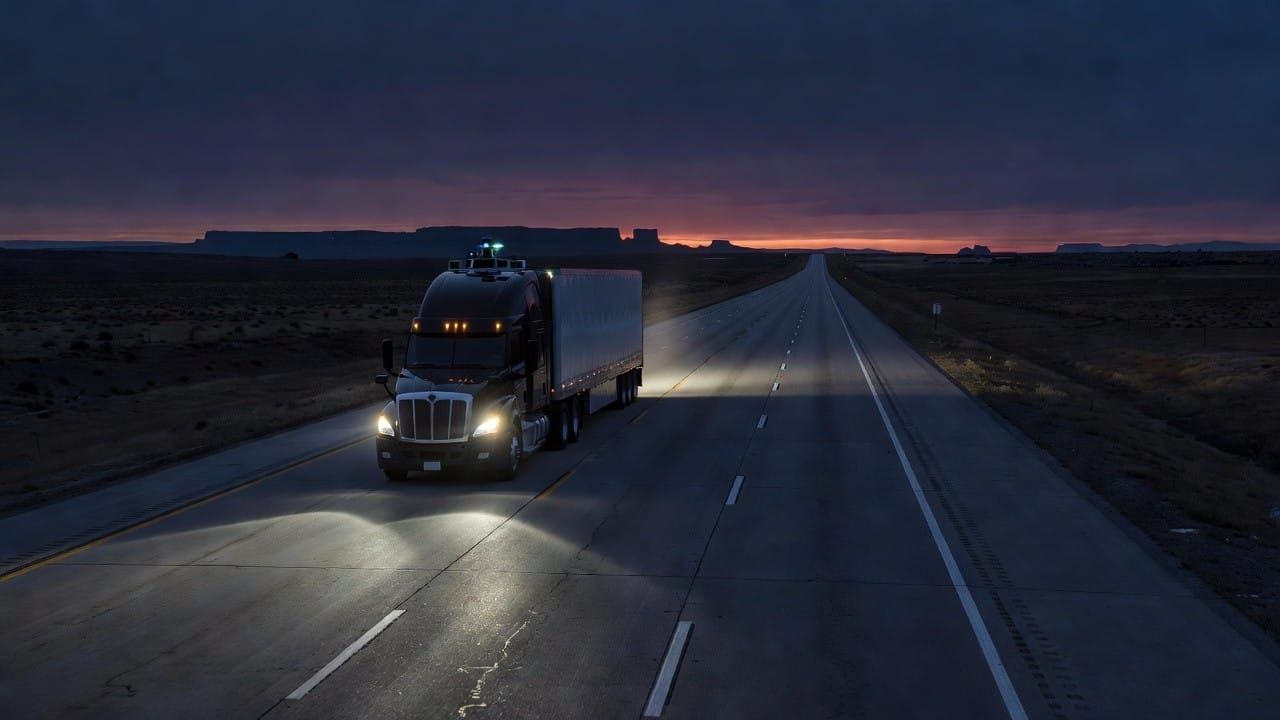
On a stretch of Interstate 45 between Dallas and Houston, fully loaded 18-wheelers are running with nobody in the cab. No safety driver. No observer. Just 80,000 pounds of freight, a roof full of sensors, and software making every decision at 70 miles per hour.
This is not a pilot. It is commercial freight, moving paying customers' goods, every day. Aurora Innovation began fully driverless commercial operations on that corridor in April 2025. By the end of April 2026 the company had logged more than 5.3 million commercial miles, expanded into a 600-mile Fort Worth–El Paso lane, and signed McLane Company — one of America's largest private fleets — to driverless hauls. It plans to have more than 200 driverless trucks running across the Sun Belt by year-end.
It is not alone. Kodiak AI is hauling autonomous loads for Roehl Transport on the same Dallas–Houston run. Daimler Truck's Torc Robotics is testing driverless rigs on I-35 between Laredo and Dallas. Volvo has partnered with Waabi; PACCAR and Traton's International brand are integrating autonomy stacks into their flagship trucks. The thing the industry has promised for a decade has quietly become real — in one of the most boring, brutal, low-margin businesses in the American economy.
That combination — a genuine technological breakthrough landing inside a commodity industry — is exactly where investors lose money. Because the question that decides who gets rich is not does it work. It is who captures the value when it does. And the market is currently betting on the wrong answer.
The economics that make this inevitable
Trucking is not glamorous, but the math is overwhelming. The driver is the single largest line item in a truck's operating cost — roughly 43% of the total. Driver wages run about $0.63 per mile, and once you add benefits and payroll taxes the figure climbs past $0.80. Total operating cost sits near $2.26 per mile. Remove the human and you do not trim a rounding error; you delete the biggest cost in the business.
The labor side is breaking at the same time. The American Trucking Associations puts the 2026 driver shortfall at roughly 82,000 and says the industry needs to hire 1.2 million new drivers over the next decade just to stand still. The average driver is 46 years old. A federal rule that took effect in March 2026 restricts commercial licenses for asylum seekers, refugees, and DACA recipients — a population that supplies nearly one in six American truckers. Supply is tightening exactly as freight demand recovers.
So you have a $300 billion-plus truckload market sitting on top of a labor cost that is simultaneously its largest expense and its scarcest input. A machine that removes that cost is not a curiosity. It is a structural reordering of the most important artery in the physical economy. The only real question is who pockets the savings.
This is where the analysis gets actionable. AlphaBriefing members get the full investment framework — scenarios, positioning, and the bottom line.
Subscribe to AlphaBriefing — Free, Member, and Paid tiers available.