Why a Dead Tariff Loophole Is Reshaping American Retail
The $800 de minimis exemption built Shein and Temu into American shopping habits. Washington closed it — and the spoils are flowing to the players nobody was watching. Here's who profits.

For nearly a decade, the most important number in American discount shopping was not a price. It was a threshold: $800. Under a customs rule called de minimis, any package worth less than that could enter the United States duty-free and with almost no inspection. That single line of tariff code is what allowed a $4 phone case or a $9 dress to be air-freighted from a factory in Guangdong directly to a doorstep in Ohio — cheaper than the same item sitting in a domestic warehouse.
Two Chinese-founded platforms turned that loophole into an empire. Temu, owned by Nasdaq-listed PDD Holdings, and Shein, the fast-fashion giant now chasing a Hong Kong listing, rode de minimis to a combined audience of well over a hundred million American shoppers. At their 2024 peak they were the two most-downloaded shopping apps in the country and, between them, the largest advertisers on Meta's platforms.
Then Washington closed the door. Beginning May 2, 2025, the Trump administration ended the de minimis exemption for goods from China; by late August 2025 it had scrapped the exemption for every country on earth. The single largest structural subsidy in cross-border e-commerce — worth an estimated tens of billions of dollars a year in avoided duties and friction — simply vanished.
The conventional read was that this would kill Temu and Shein. The more interesting truth, eighteen months on, is that it didn't kill the demand. It transferred the prize. Ultra-cheap shopping is not going away. The question every investor should be asking is who collects it now.
The demand shock was real — and it was fast
When the platforms raised US prices in late April 2025 to absorb the new duties, the customer response was immediate and brutal. In the week the hikes landed, observed US sales fell roughly 23% at Shein and 17% at Temu. App-store rankings collapsed: Temu fell from around #3 to #85 in a matter of weeks; Shein slid from #7 into the 80s. Temu's daily active US users dropped more than 50% from March to May; Shein's fell about a quarter.
Crucially, both companies chose to bleed share rather than buy it back. Temu cut daily US ad spend by roughly 31% and Shein by about 19%. The growth-at-any-cost playbook — subsidize the customer, dominate the feed, worry about margins later — only works when the underlying unit economics are subsidized too. Strip out the duty-free advantage and the math that justified billions in advertising no longer closes.
PDD Holdings told the market as much. Its earnings came in below estimates, with management pointing directly at tariffs and de minimis as a structural pressure on its sellers. The stock, which had been priced as one of the great growth stories in global e-commerce, had to be re-rated as something more complicated: a company whose flagship US business was being rebuilt mid-flight.
The pivot: from the sky to the warehouse
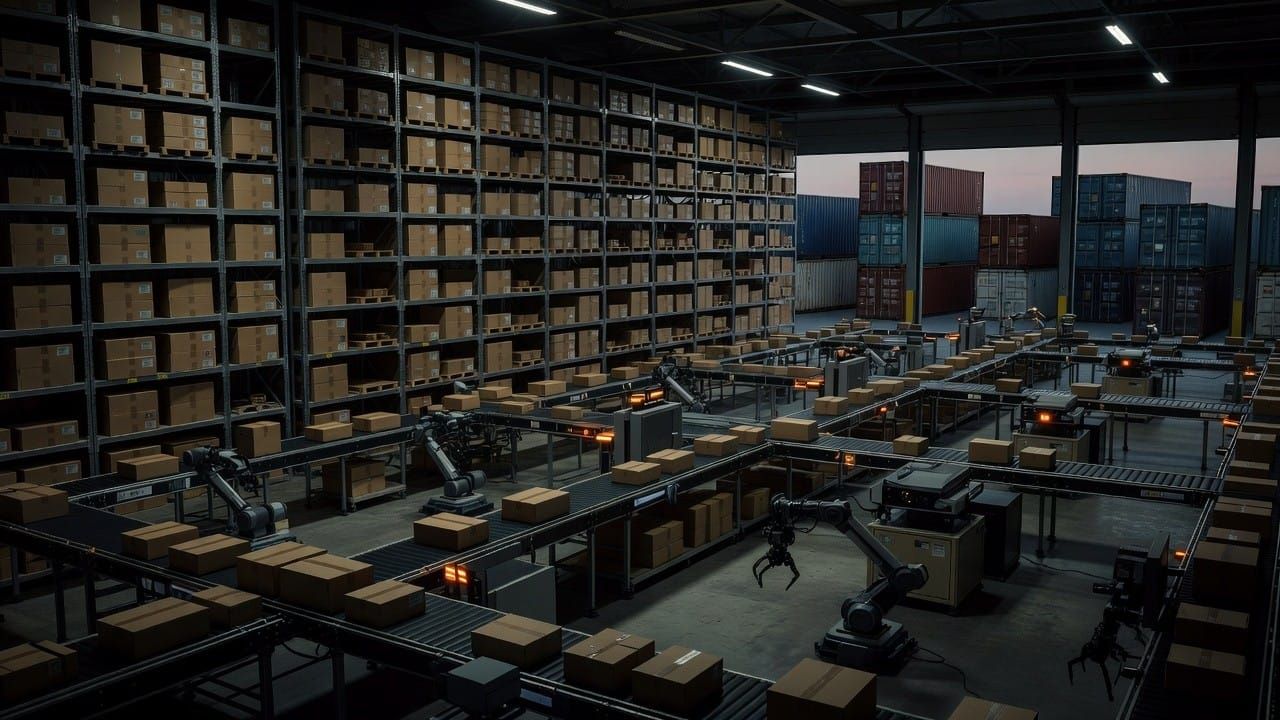
Neither platform is retreating. They are re-architecting. The duty-free parcel flown individually from China is being replaced by the boring, capital-intensive machinery of domestic retail: bulk ocean freight, US bonded warehouses, and local fulfillment.
Temu moved aggressively to a "local-warehouse-only" model for US shoppers — goods still largely sourced from China, but shipped in bulk, cleared through customs once, and stored stateside. Shein is building out a semi-managed model with US warehouses in Indiana and California and a web of third-party logistics partners. Both are doing in 2026 what Amazon spent twenty years and tens of billions of dollars building: a physical American supply chain.
That shift is the whole story. It narrows the price gap that made the disruptors special, raises their fixed costs, and — most importantly — moves the locus of competitive advantage away from a tariff quirk and toward something far more ordinary and far more investable: who owns the warehouses, the marketplace, and the customer relationship.
This is where the analysis gets actionable. AlphaBriefing members get the full investment framework — scenarios, positioning, and the bottom line.
Subscribe to AlphaBriefing — Free, Member, and Paid tiers available.