Who Gets Paid When Venezuela Reopens?
Maduro is awaiting trial in New York, Washington owns 35% of a Barbados-registered oil venture, and more than $100 billion in defaulted claims is lining up behind every new barrel. The queue — not the oil — is the trade.

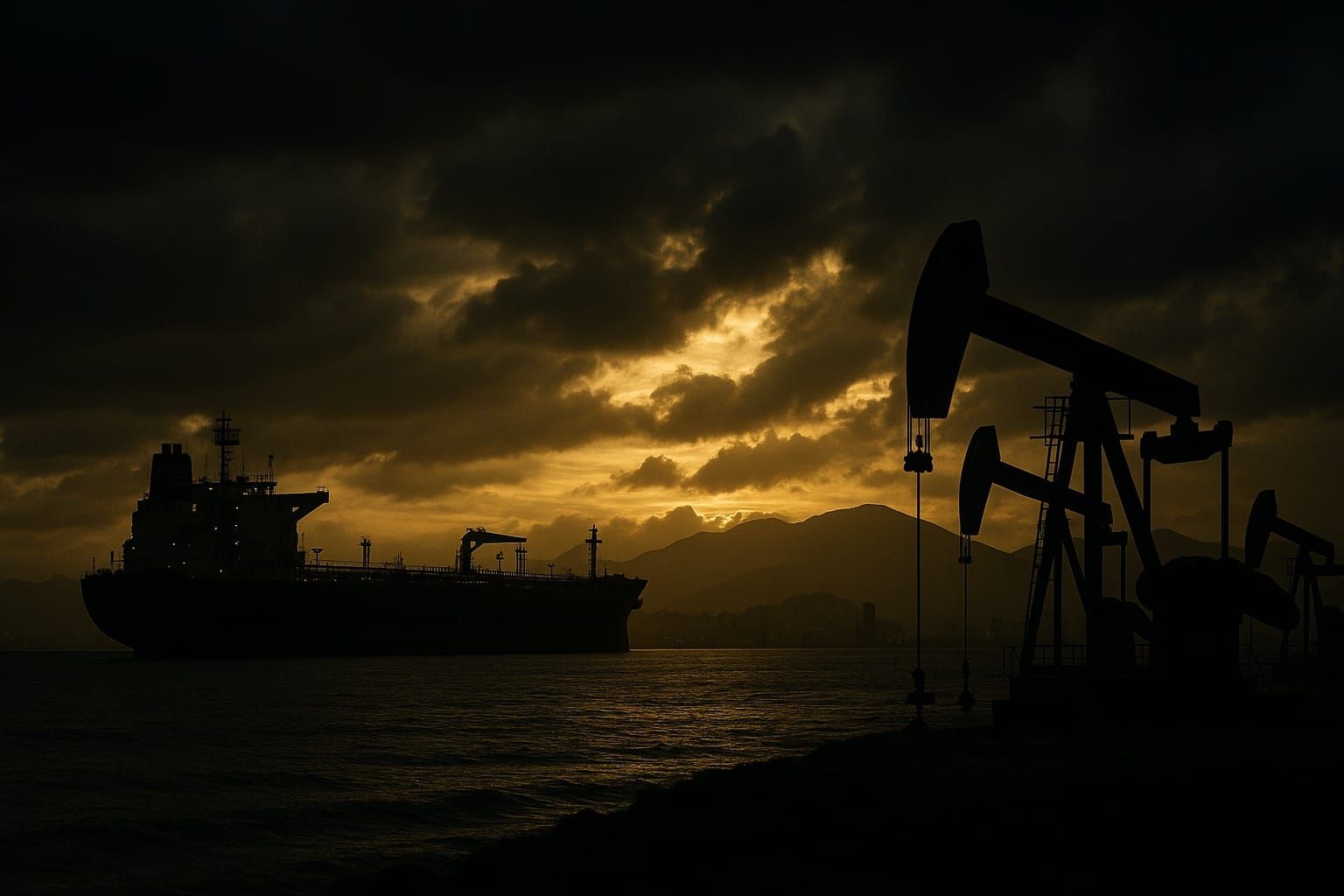
Ten months ago, Venezuela was the most sanctioned country in the Western Hemisphere. Today, Nicolás Maduro sits in US federal custody — removed from power in a January US operation, indicted on charges that now include torture, and scheduled to stand trial in New York on June 1, 2027, according to ABC News. His former vice president, Delcy Rodríguez, runs the country as interim president with Washington's open backing. The US Treasury has been peeling sanctions off the new government one name at a time: Rodríguez herself in April, then the central bank and the state airline, and on October 14, her brother Jorge Rodríguez, president of the National Assembly, removed from OFAC's blacklist.
American Airlines is expanding its Venezuela network again. Oilfield hiring is picking up as the first wave of investment arrives, Reuters reports. The World Bank is sketching out as much as $5 billion in possible loans, per Bloomberg. And the interim government says it expects nearly $76 billion in oil investment over the next five years.
The question in Caracas is no longer whether money comes back. It is the order in which it gets paid out — and that order is being written right now, mostly behind closed doors.
The Deal Washington Wrote for Itself
In late August, President Trump announced what he called the "biggest oil deal in world history." The text stayed secret for two months. This week, ProPublica published the terms of the 18-page strategic partnership agreement, signed for the United States by Secretary of State Marco Rubio and Defense Secretary Pete Hegseth.
According to ProPublica's review of the document, the United States is taking a 35% stake in North American Blue Energy Partners (NABEP), the firm of Venezuelan oligarch Alejandro Betancourt — acquired through a parent company registered in Barbados, where the other owners can stay anonymous. The deal gives Washington:
- The right to buy 20% of NABEP's oil at $30 a barrel — with Brent trading near $109 this week, less than a third of market price
- First priority to purchase all of the company's remaining production for the next 50 years, including an irrevocable right to its entire supply if the US declares a national emergency
- A "most favored nation" clause requiring NABEP to disclose any other agreements it signs and match the terms for Washington
- A seven-member board with a US-citizen majority and a 15-year initial term, structured — according to people familiar with the negotiations cited by ProPublica — specifically so that future US and Venezuelan governments cannot unwind it
Betancourt, who has faced money-laundering investigations in three countries (NABEP says neither he nor his co-signatory has ever been charged with any crime), is locked in as chief executive; removing him requires a board supermajority. NABEP produces about 200,000 barrels per day today — about three days of US consumption over a full year — and is targeting 500,000 by the end of 2028, per Bloomberg.
The crucial parts are what the document does not say. ProPublica found no binding guarantee of the estimated $200 billion in royalties and taxes the White House says Venezuela will receive. A US official described 100-year operating concessions — which do not appear in the accord and would appear to conflict with Venezuelan law capping concessions at 25 years. And disputes cannot be heard in Venezuelan courts at all.
Around this centerpiece, the rest of the reopening is assembling fast: Chevron and Italy's Eni are expanding their Venezuelan projects, and Rubio has been courting India's Reliance Industries — operator of the world's largest refining complex — to take more Venezuelan crude.
The $100 Billion Line Outside the Door
Here is what makes Venezuela different from every other reopening trade of the past decade: the claims. The Peterson Institute for International Economics this month catalogued what is waiting at the door, and calls the coming scramble a global asset "grab race" that could make Venezuela's restructuring "not only the biggest but also the messiest in history."
The known pile, per PIIE and the court records it cites: roughly $60 billion in defaulted unsecured bonds. More than $20 billion in outstanding ICSID arbitration awards, including $8.7 billion for ConocoPhillips — the largest in ICSID history. Over $19 billion in claims registered in Delaware courts alone. At least $18 billion owed to China, $4 billion to Russia, $4 billion to multilateral lenders, and about $2 billion in secured PDVSA 2020 bonds. Unpaid and penalty interest could multiply those numbers.
Caracas has kept Centerview Partners as its financial adviser and says a debt sustainability analysis is coming "very soon," per Reuters. Trump and Delcy Rodríguez have personally discussed a debt overhaul, according to Rubio. A bondholder bloc representing $22 billion in claims has organized ahead of talks, Bloomberg reports. And yet the restructuring itself has reportedly been pushed down the queue while the oil deals close first.
Every new barrel out of Venezuela now has a dozen claimants standing behind it. Which claims are structured to get paid — and which are structured to wait forever — is the whole trade.
Get the next briefing free in your inbox: Join AlphaBriefing
The rest of this briefing is for paid members: the creditor queue as the documents actually rank it, the four ways investors are expressing the reopening (and which one is structurally senior), the catalyst calendar from the debt sustainability analysis to the June 2027 trial, and the three scenarios that break the thesis.
AlphaBriefing Paid gets you every investment thesis, scenario framework, and catalyst brief we publish — the analysis private intel clients pay four figures for, at a fraction of that.