Trucking's Four-Year Bust Just Turned Into a Squeeze
Truckload spot rates just hit an all-time record and carriers are rejecting one in six contracted loads. The longest freight recession on record is over — and the repricing is coming for carrier earnings, retail margins, and the Fed's inflation math.

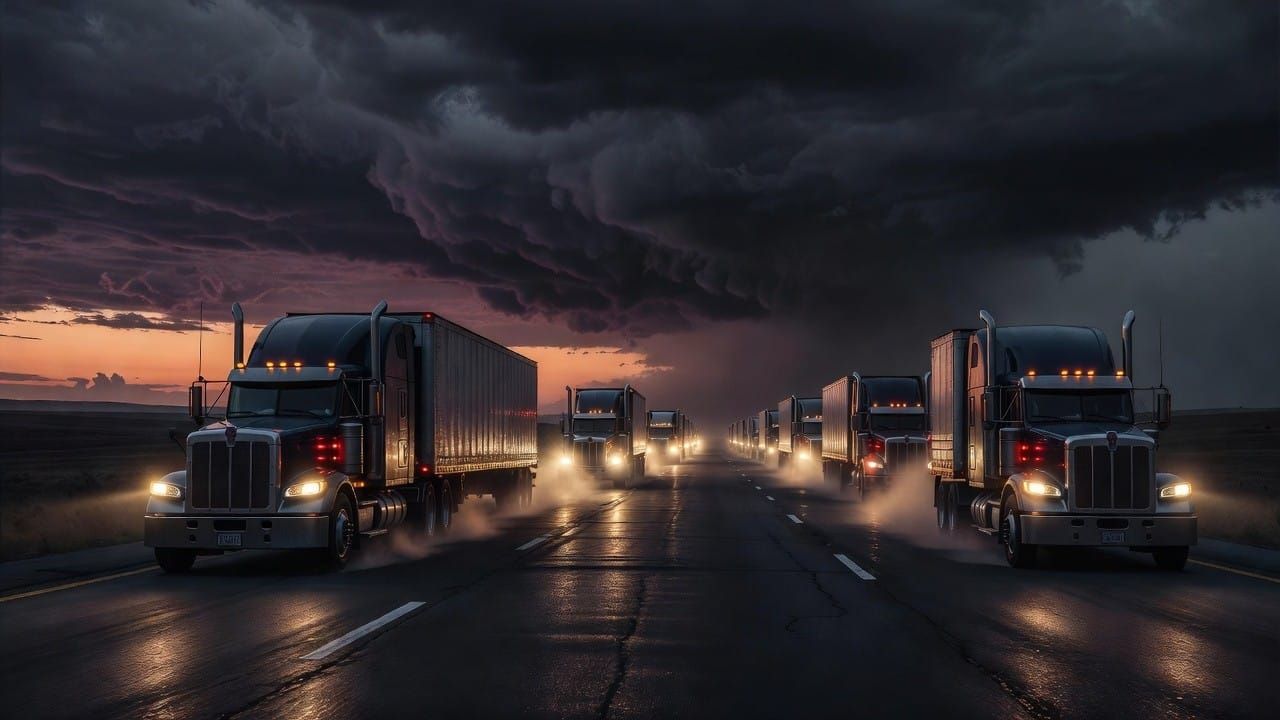
Truckload spot rates just did something they have never done before — not in the 2018 boom, not even in the COVID frenzy of 2021. In early June, the national all-in spot rate touched a record $3.83 per mile, and carriers were rejecting roughly one in six contracted loads — rejection rates around 17%, the highest since 2022.
For four years, trucking was the deadest market in America. The "Great Freight Recession" that began in 2022 outlasted every previous downturn in the industry's history: rates below operating cost, tens of thousands of small carriers liquidated, used-truck prices in freefall, and every quarterly earnings call from the big public fleets reading like a hostage note.
That era just ended. Quietly, without a single dramatic headline, the longest freight bust on record flipped into a squeeze — and almost nobody outside the industry has noticed.
What actually turned
Here's the part most commentary gets wrong: demand didn't boom. Supply broke.
Freight volumes are up a healthy but unspectacular 11–13% year over year, according to FreightWaves SONAR tender data — and notably, it's industrial freight, not consumer retail, doing the lifting. Produce, construction, and manufacturing are driving loads, not another import binge.
The real story is on the other side of the ledger:
- Attrition finally caught up. Four years of sub-cost rates bled out the small-carrier population. Owner-operators who entered during COVID's gold rush burned through their cash, then their equity, then their trucks. Capacity exited faster than demand recovered — the classic end-state of every commodity bust.
- Regulation accelerated the exit. Federal enforcement of English-language proficiency requirements and new FMCSA restrictions on non-domiciled CDLs pulled a meaningful slice of drivers off the road in a matter of months — a supply shock layered on top of a cyclical bottom.
- Diesel piled on. Retail diesel is up roughly 40% since early March on the back of the Hormuz crisis, squeezing whoever survived the rate war and pushing marginal operators out.
The result: ACT Research now projects spot rates up more than 40% year over year in June, net of fuel, and expects the supply-driven tightening to strengthen into 2027. Uber Freight sees rates holding 20–25% above prior-year levels through the rest of 2026. Route guides are failing, tender rejections are at four-year highs, and shippers who spent three years dictating terms are suddenly the ones making phone calls that don't get returned.
Why this is bigger than trucking
Trucking moves roughly 70% of US freight tonnage. It is the upstream cost of nearly every physical good in the economy — and for three years it was a powerful, invisible disinflationary force. Falling freight rates quietly subsidized retail margins and helped drag goods inflation to zero and below.
That subsidy just expired. Freight costs are repricing 20–40% higher at the exact moment CPI is running at 4.2% and the Fed is openly debating whether its next move is a hike. Ocean container rates are firming into peak season too. The goods-disinflation tailwind that did so much quiet work for the soft-landing narrative is now blowing the other way.
For investors, this is one of those rare setups where a multi-year cycle turns and the equities haven't fully repriced — because everyone who covered the space spent four years being punished for calling the bottom early.
This is where the analysis gets actionable. AlphaBriefing members get the full investment framework — scenarios, positioning, and the bottom line.
Subscribe to AlphaBriefing — Free, Member, and Paid tiers available.