The Strait of Hormuz Is Reopening Without America
Iran and Oman just agreed on a phased framework to reopen the world's most important oil chokepoint — with Washington outside the room. Oil is trading the reopening; the durable repricing is in who administers the strait.

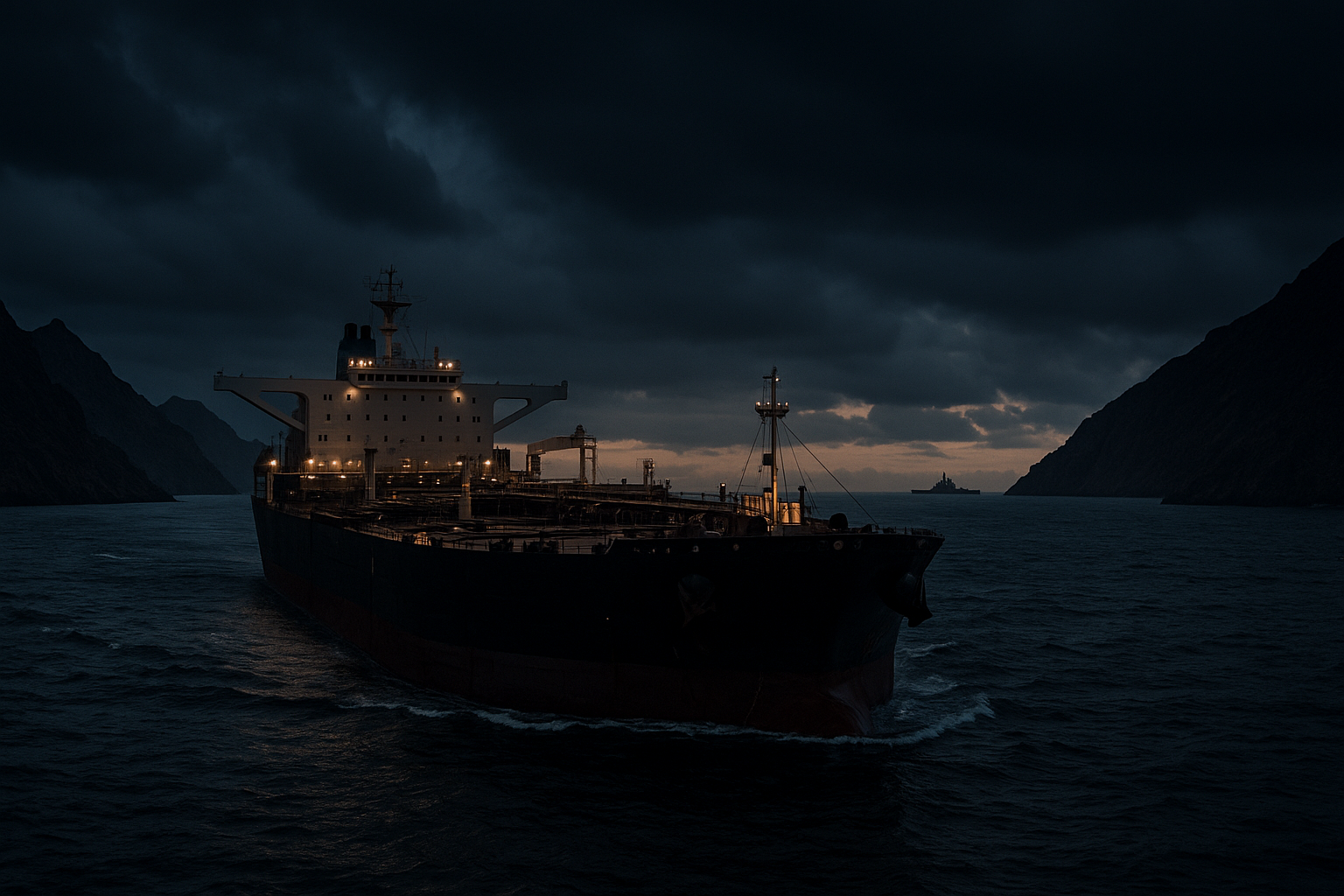
Iran and Oman released a joint statement on Tuesday agreeing to a phased framework for a temporary shipping corridor through the Strait of Hormuz — including a joint project to clear the waterway of mines, an information-sharing mechanism for navigation and security, and continued technical talks on what both governments are calling "future management of the strait." Oil fell for three straight days on the news. Brent is back near $86 a barrel, WTI near $80, and President Trump amplified the move by declaring that every mine in the strait has been removed or detonated, that the United States is monitoring "every square inch" of the waterway, and that any vessel attempting to lay new mines will be destroyed.
The market is trading this as a reopening story. It is one — but that is the smaller half of it.
Read the joint statement again and notice who isn't in it. The corridor is being built by Tehran and Muscat. Qatar has publicly backed the effort. The "joint discussions" that follow are with the Gulf littoral states. The United States — the power that has guaranteed free passage through Hormuz for four decades, and whose navy is currently blockading Iranian ports — is not a party to the framework that will govern the world's most important oil chokepoint. Six months into the war, the strait is reopening through Muscat, not Washington.
Six months of a closed artery
The war that began on February 28 closed a waterway that carries roughly one-fifth of the world's oil and LNG exports. QatarEnergy declared force majeure on LNG cargoes in March and has never fully lifted it. War-risk insurance that historically cost about 0.15% of a vessel's hull value spiked to 5–10% at the height of the fighting — a premium that could add millions of dollars to a single voyage — and six P&I clubs withdrew coverage from the Gulf entirely. Transits collapsed from roughly 178 ships a day before the war to a trickle.
There has already been one failed reopening. The 14-point memorandum signed in June guaranteed toll-free passage for 60 days while a longer-term framework was negotiated. What Iran built during that window told you everything about its intentions: a new Persian Gulf Strait Authority that required every transiting vessel to obtain Iran-approved insurance, apply for permits, and follow a designated route hugging the Iranian coast near Larak Island — with the explicit right to "introduce insurance fees in the future." When the 60-day window lapsed in mid-August, the ceasefire collapsed with it, and the strait closed again.
Why Washington's absence is the story
The American position, stated plainly by Vice President Vance, is that "international waterways should be free of tolls." In July, the administration floated the opposite of a free strait — a plan for the United States to charge for the naval protection it provides. Neither vision is what's emerging. What's emerging is a corridor administered jointly by Iran and Oman, blessed by Qatar, negotiated among the Gulf states themselves, with the US Navy reduced to escorting ships along a southern route and declaring the mines cleared.
That inversion matters for prices, because in a chokepoint, the administrator — not the security guarantor — ultimately holds the pricing power. Iran's demands for a full reopening haven't changed: removal of the naval blockade, sanctions relief, and the unfreezing of assets. The corridor framework is Tehran's way of restarting commerce on its own terms while those demands are negotiated — and every week the framework operates, the Gulf-administered model hardens from an emergency measure into an institution.
Tanker traffic is already voting. Transits rose more than 30% in the week ending August 24 — 114 passages, with westbound entries into the Gulf jumping to 42 from 29 the week before, including liftings tracked from ADNOC, Saudi and Kuwaiti terminals. Shipowners are moving before the diplomats finish.
The rest of this briefing is for paid members: the war-premium unwind map — the insurance normalization sequence and which transits recover first, the tanker math on a strait going from 114 passages a week back toward 178 a day, the Qatar LNG force majeure clock and the US exporters positioned on the other side of it, and the three-scenario framework for how the corridor plays out — with positioning for each.
AlphaBriefing Paid gets you every investment thesis, scenario framework, and catalyst brief we publish — the analysis private intel clients pay four figures for, at a fraction of that.