The Space Station Gap Is Coming. China Is Counting On It.
The ISS deorbits around 2030 and its American replacements are all slipping. NASA is funding a race, China is expanding Tiangong, and there's exactly one public-market ticker on the board.

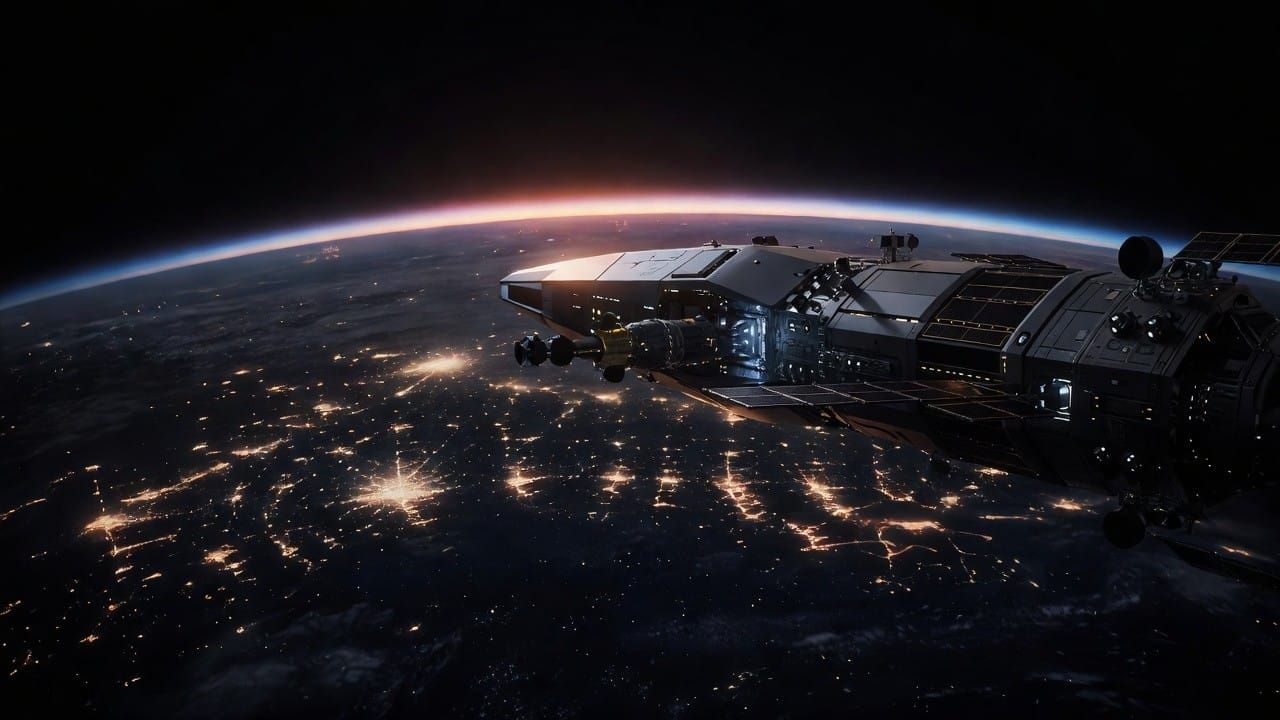
The International Space Station has a death warrant with a signature on it. In June 2024, NASA paid SpaceX $843 million to build the vehicle that will drag the 420-ton laboratory out of orbit and bury it at Point Nemo, the most remote stretch of ocean on Earth. Target date: around 2030.
That part of the plan is funded, contracted, and on schedule. The other part — the one where American commercial space stations are flying before the ISS comes down — is not.
Every private station meant to replace the ISS has slipped. Vast's Haven-1, once targeting 2026, is now a first-quarter 2027 launch. Axiom Space reshuffled its entire assembly sequence after its first module turned out to be competing for the same docking port as the deorbit vehicle. Starlab, the Voyager-Airbus joint venture, just cleared its critical design review — but isn't targeting orbit until roughly 2029, one year before the deadline.
Meanwhile, China's Tiangong station is adding modules, not losing them. Beijing is preparing a fourth module on its way to a planned 180-ton configuration, and this fall a Pakistani air force pilot is expected to become the first foreign astronaut to fly on a Chinese mission — the opening move in positioning Tiangong as the diplomatic hub of low Earth orbit.
If the timelines don't close, the world's only permanently crewed space station in the early 2030s could be Chinese. Washington knows it. And the scramble to prevent it is creating one of the more asymmetric setups in the space economy.
The Deadline Is Real This Time
The ISS has survived retirement talk before — it was originally supposed to come down years ago, and partners kept extending. What's different now is physics and money. The station's structure is aging; cracks in the Russian segment have been a live concern for years, and the ISS program consumes roughly $3 billion of NASA's budget annually — money the agency wants redirected to the Moon.
The deorbit contract makes the deadline concrete. SpaceX's U.S. Deorbit Vehicle is a heavily modified Dragon designed to perform the final burn that steers the station into the South Pacific spacecraft cemetery. NASA has structured everything around it — including forcing Axiom to redesign its assembly plan so that its hardware and the deorbit vehicle don't collide over the same port.
NASA's strategy for what comes next is a deliberate role reversal: stop being the landlord of low Earth orbit and become a tenant. Under the revised second phase of its commercial stations program — Commercial Destinations Development and Demonstration Objectives, or C3DO — the agency plans to put $1 billion to $1.5 billion into at least two competing station developers between fiscal 2026 and 2031, with a crewed demonstration required no later than 2030. The FY2026 budget request includes $272 million for the effort, scaling to $2.1 billion over five years.
That structure matters for investors: NASA is intentionally funding a race, not picking a winner. Milestone payments flow to whoever executes.
Three Horses, Three Very Different Bets
Vast is the speed play. The California startup — bankrolled by founder Jed McCaleb, the crypto billionaire who has said he is prepared to put roughly $1 billion of his own money into the venture — finished welding Haven-1's hull last October and completed pressure and load testing in Mojave. The single-module station is now in final integration for a Falcon 9 launch in early 2027, with a four-person crew visiting for up to two weeks shortly after. Haven-1 is small — closer to a proof-of-concept than an ISS replacement — but it would make Vast the first company in history to fly a commercial space station, a credential it intends to convert into NASA's larger Haven-2 award.
Axiom Space is the incumbent-adjacent play. The Houston company has flown private astronaut missions to the ISS since 2022 and holds NASA's original station contract. Its revised plan launches a Payload Power Thermal Module to the ISS no earlier than 2027, follows with a habitat module, then detaches the stack to free-fly before the station comes down — as early as 2028, by the company's own telling. The advantage: it gets to assemble its station while attached to existing infrastructure. The risk: its schedule is now structurally hostage to the ISS's own end-of-life choreography.
Starlab is the institutional play — and the only one with a public-market ticker attached.
This is where the analysis gets actionable. AlphaBriefing members get the full investment framework — scenarios, positioning, and the bottom line.
Subscribe to AlphaBriefing — Free, Member, and Paid tiers available.