The Road Money Runs Out on December 11
The $1.2 trillion infrastructure law expired with no successor, a 13% federal road-funding cut is already in effect, and the lame-duck Congress has until December 11. How the market is pricing the split, ticker by ticker.

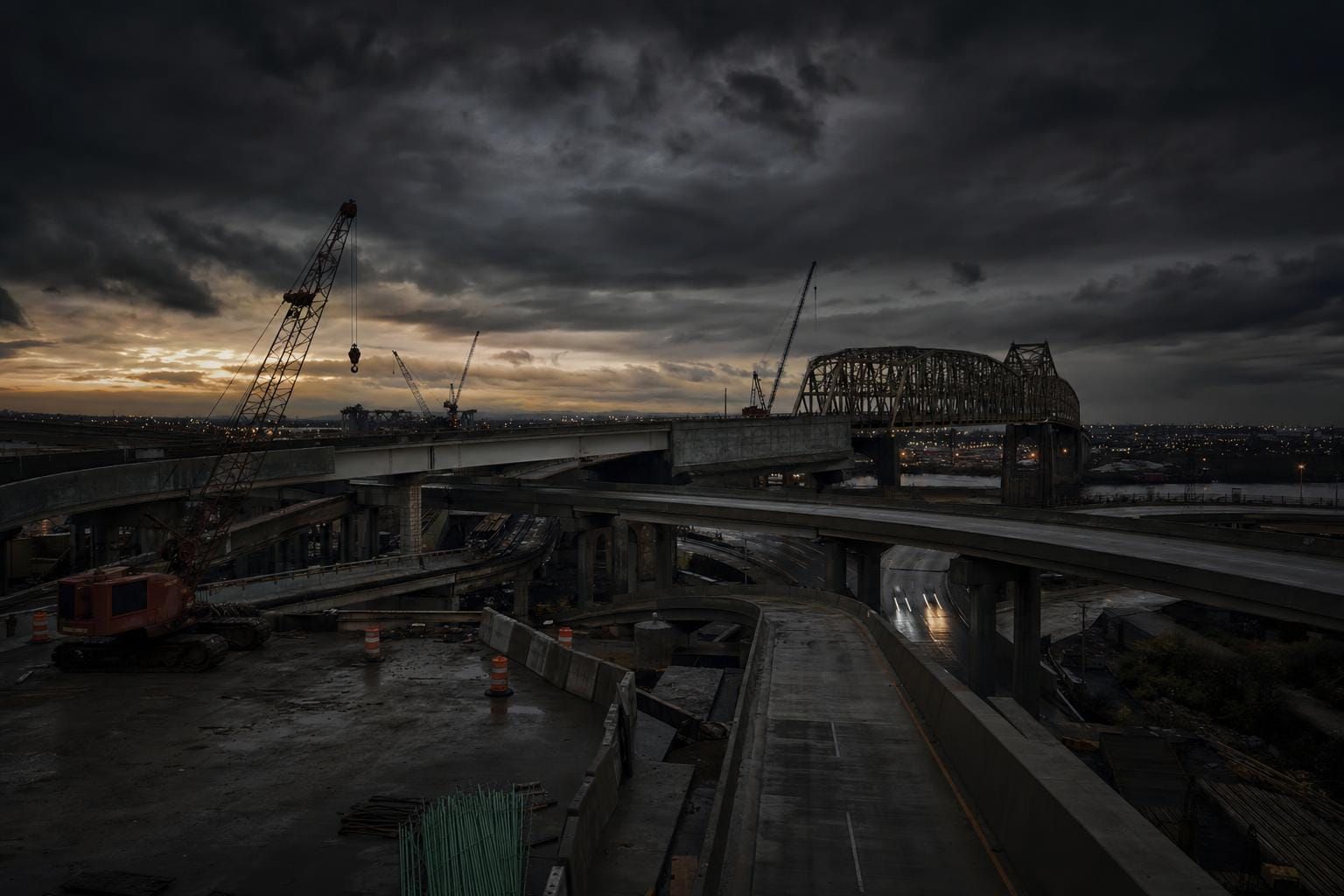
On September 30, the largest infrastructure law in American history quietly died. The Infrastructure Investment and Jobs Act — the $1.2 trillion package signed in November 2021, with roughly $550 billion in new federal spending — reached the end of its five-year authorization with no successor in place. Congress passed a stopgap that keeps highway and transit programs alive until December 11.
That is the same day government funding runs out. A lame-duck Congress, working its final weeks before the gavel changes hands in January, now has to settle the next five years of American infrastructure policy in the middle of a shutdown fight — or punt again, with consequences that have already started to bite.
This is not an abstract Beltway deadline. The IIJA provided $326 billion for the nation's roads and bridges alone, according to the Pew Charitable Trusts. For four years it was the quiet bull case under every aggregates producer, highway contractor, and engineering firm in the country. What replaces it — and when — is now genuinely uncertain. The market has noticed before the headlines have.
The Cut That Already Happened
Here is the detail most coverage missed: the December 11 extension did not actually preserve the status quo.
The IIJA had an unusual funding structure. It paired traditional Highway Trust Fund money with large advance appropriations — general-fund dollars appropriated years in advance — that expired with fiscal 2026. When Congress passed the Surface Transportation Extension Act in early September (tucked into the same bill as the continuing resolution), it extended the trust fund programs but not the advance appropriations.
The result, per the Bipartisan Policy Center's analysis of the law's funding structure: even under a clean extension, states face an immediate reduction of roughly 13% in federal road and bridge funding. The National Association of Development Organizations puts the gap at $36.8 billion a year, effective October 1. State departments of transportation have been living with that haircut for seven weeks. It isn't a forecast. It's the current run rate.
That is why state budget offices are quietly reworking their capital plans. Pew's November analysis found states now budgeting for roadways "without a clear picture of how much federal support will be available." Formula funding — the predictable base that flows automatically to states, 83% of the IIJA's road money — will likely survive in some form; Congress has renewed those core programs for decades. The genuinely at-risk money is everything the IIJA layered on top: the dedicated bridge program (roughly $40 billion more than the previous law, a 22% increase), the competitive grants that bypassed state capitals and went straight to cities, and the resilience programs that hardened roads against the floods that keep washing them out.
Briefings like this are what AlphaBriefing does daily — a free membership gets you access to every free article at AlphaBriefing.com: Join AlphaBriefing
The Hole the Money Was Filling
The case for urgency isn't rhetorical. The American Society of Civil Engineers' 2025 Report Card gave U.S. roads a D+ and bridges a C, and put the gap between infrastructure needs and funded investment at $3.7 trillion through 2033 — including roughly $680 billion for roads and $370 billion for bridges. Nearly 43,000 bridges remain rated in poor condition in the Federal Highway Administration's latest inventory, and the American Road & Transportation Builders Association estimates one in three U.S. bridges needs repair or replacement.
And the IIJA's dollars bought less than advertised. Highway construction costs rose roughly 50% in the two years after the law passed, by the Eno Center for Transportation's estimate — erasing about $21.5 billion in purchasing power before much of the money ever hit a job site. At an ASCE briefing this month, one transportation design executive put five-year construction cost inflation near 70%. North Carolina's chief highway engineer described resurfacing needs rising by $447 million this decade while appropriations rose $118 million. "We're going to see our overall pavement conditions continue to worsen," he said.
So the baseline is: a system graded D+, a repair bill growing faster than the money, and the money itself now shrinking. The question that matters for investors is what Congress does in the next 23 days — and what each path means for the companies that have spent four years staffing up for a highway cycle that may just have peaked.
That's where this briefing goes next.
The rest of this briefing is free — it just requires a free AlphaBriefing account: the trust fund arithmetic that goes broke in 2028, the three scenarios for December 11 and which one is the base case, and the ticker-by-ticker read on how the market is already pricing the split.
A free membership gets you access to every free article at AlphaBriefing.com: Create your free account → — 30 seconds, no card.