Shoppers Are Supposed to Be Tapped Out. Target Just Posted Its Best Growth in Five Years.
Net sales up 7.1%, traffic up 5%, guidance raised — in a quarter when the consumer was supposed to be tapped out. What Target's best print in five years says about the American shopper, and the tariff-refund asterisk inside the EPS beat.

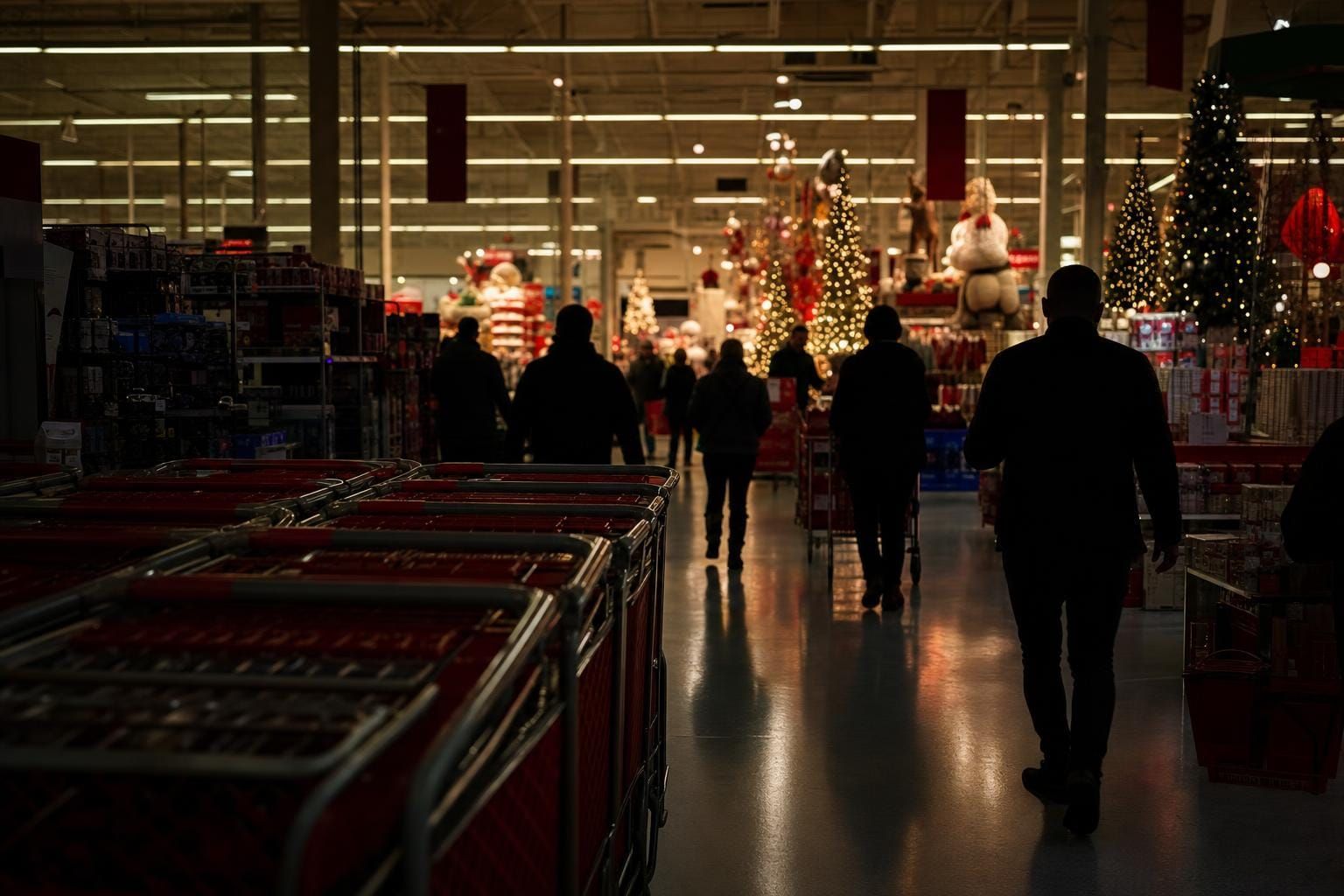
The American consumer is supposed to be exhausted. Sentiment is depressed, inflation is still running hot enough that the Federal Reserve is signaling another rate hike in December, and household budgets have been the market's favorite worry all year. That is the backdrop against which Target — a retailer coming off years of flat revenue — just reported what CNBC calls its best sales growth in more than five years.
On Wednesday morning, Target posted third-quarter net sales of $27.1 billion, up 7.1% from a year ago and well ahead of the $26.56 billion Wall Street expected. Comparable sales rose 5.6% against analyst estimates of 3.8%. Earnings per share came in at $2.65, up from $1.51 a year earlier. The company raised its full-year guidance across the board, and the stock — already up 63% in 2026 before the print — had one of the most convincing data points of its turnaround to show for it.
The number that matters most, though, isn't any of those. It's this one: comparable traffic rose 5.0%. More people walked into Target stores and opened the Target app, more often. That is not an inflation illusion or a pricing trick. That is volume — and in this economy, volume is the scarcest commodity in retail.
The Quarter, Itemized
The fiscal third quarter ran through October 31. The headline figures, from Target's own release and analyst estimates compiled by LSEG and StreetAccount:
- Net sales: $27.1 billion, up 7.1% (vs. $26.56 billion expected)
- Comparable sales: +5.6% (vs. +3.8% expected), driven by traffic up 5.0%
- Store comparable sales: +4.6%; digital comparable sales: +9.8%
- Earnings per share: $2.65 GAAP and adjusted, vs. $1.51 GAAP a year ago
- Net income: $1.21 billion, up from $689 million the year prior
- Gross margin: 30.5%, up 2.3 percentage points year over year
- Operating income: $1.7 billion, roughly double last year's $0.9 billion
Growth showed up across most of the store. The company's "Fun 101" category grew nearly 27%. Beauty rose more than 9%. Food and beverage grew nearly 7%. Sales rose in all three months of the quarter, with the strongest stretch during back-to-school season — and Target says November is tracking in line with its guidance and accelerating from October's trend.
The quieter story is the stuff Target sells that isn't merchandise at all. Non-merchandise revenue — the Roundel advertising business, Target Circle membership income, credit card profit sharing, and the Target+ third-party marketplace — grew nearly 20%. That is high-margin revenue layered on top of a retail recovery, and it is a meaningful part of why operating margin expanded as fast as it did.
Briefings like this are free to read with a free AlphaBriefing membership. Join free →
The Asterisk Worth Understanding
There is one large caveat in the quarter, and Target, to its credit, disclosed it precisely: tariff refunds.
Target booked $301 million of pretax tariff refund benefits in the third quarter — import duties it had already paid that are now being returned — worth $228 million in net earnings, or $0.50 of the $2.65 in earnings per share. Across the full year, roughly $2.14 of the company's new $10.65–$11.40 EPS guidance comes from tariff refunds recognized to date, and about 1.1 percentage points of its expected 6.2% operating margin.
So is the beat real once you strip the refunds out? Mostly, yes. By Target's own math, excluding tariff refunds entirely, GAAP earnings per share still grew 42% year over year, and adjusted EPS grew 21%. Gross margin still expanded about 1.2 percentage points. The refunds flattered an already good quarter; they did not manufacture it. But investors extrapolating the headline EPS number into 2027 should remember that a meaningful slice of this year's earnings power is a refund of taxes already paid, not recurring retail profit.
How a Left-for-Dead Retailer Found Traffic
Target's playbook here was not complicated — it was just expensive, and it took time to show up in the numbers.
The company has cut prices on more than 10,000 items, adding roughly 2,000 more reductions in the third quarter alone. It leaned into cheap, giftable, trend-driven merchandise — thousands of holiday items priced at $5 and under, a $30 Thanksgiving meal that feeds six — aimed squarely at a shopper who still wants small indulgences but refuses to pay full price for them. And it spent: roughly $3.8 billion of capital expenditure this year, nearly $1 billion more than last year, on store remodels, new locations, and supply chain capacity. Management now says it will invest $5 billion to $6 billion in 2027.
CEO Michael Fiddelke's summary was measured: "The changes we've made across our assortment and guest experience are adding up. While we're encouraged by the progress, we know there's more work ahead to sustain this momentum and deliver consistent growth over time."
The contrast across retail this week sharpens the picture. Home Depot beat earnings expectations on Tuesday while naming a new CEO, and Lowe's raised its outlook Wednesday on strong online sales — but both remain tethered to what even Lowe's calls a slow housing market. Target's categories — beauty, food, toys, apparel — are where the trade-down consumer actually spends. The American shopper hasn't disappeared. They have repriced themselves, and the retailers winning in late 2026 are the ones that repriced first.
What It Says About the Consumer — and What to Watch
The cleanest read from this quarter: the bifurcated consumer is still spending, but only where value is unambiguous. Traffic-driven growth at a discounter-adjacent retailer, during a quarter when sentiment surveys were dismal, is consistent with a household sector that is stressed but not broken — cutting back on big-ticket housing-linked purchases while still showing up for groceries, beauty, and $5 stocking stuffers.
The test comes now. Target's fourth quarter is the holiday season, and it is walking into it with momentum but also with a Federal Reserve that appears set to raise rates again in December, elevated long-term borrowing costs, and a tariff-refund tailwind that will eventually lapse. The company raised full-year sales growth guidance to around 6% — a number that embeds a solid holiday. If traffic holds through December, the turnaround narrative graduates to simply "growth." If it doesn't, this quarter was the high-water mark.
Either way, Wednesday's print settles one argument: reports of the American consumer's death remain, for now, greatly exaggerated — as long as you're selling them something they can afford.
If this analysis was useful, this is what AlphaBriefing does every day — markets and the forces moving them, connected to what it means for your money. A free membership gets you access to every free article on AlphaBriefing.com; paid members get the investment frameworks, scenario pricing, and catalyst calendars behind the paywall.
Sign up free → — upgrade whenever it earns it.
A free membership gets you access to every free article at AlphaBriefing.com: Join AlphaBriefing
Get this level of intelligence every day. Subscribe to AlphaBriefing — free, member, and paid tiers available.
Sources & Further Reading
- Target Corporation — Third Quarter 2026 Earnings Release
- CNBC — Target posts best sales growth in five years, raises guidance
- CNBC — Lowe's posts strong online sales, raises outlook despite slow housing market
- CNBC — Home Depot names Richard McPhail as new CEO, beats earnings expectations
- CNBC — Fed officials set to raise rates again in December, but the future still looks murky
- Yahoo Finance — Target Corporation (TGT)
Disclaimer
AlphaBriefing is an independent intelligence publication. The content in this article is produced for informational and educational purposes only. Nothing published by AlphaBriefing constitutes financial, investment, legal, tax, or regulatory advice, nor should it be construed as a solicitation or recommendation to buy, sell, or hold any security, asset, or financial instrument.
All views expressed are those of the author at the time of writing and are subject to change without notice. Markets are volatile and unpredictable; past performance is not indicative of future results. Any investment involves risk, including the possible loss of principal.
AlphaBriefing and its principals, employees, or contributors may hold positions in securities or assets mentioned in this article. This should be considered a potential conflict of interest. No material relationship with any company referenced exists unless explicitly disclosed. Readers should conduct their own due diligence and consult qualified financial, legal, and tax advisors before making any investment decisions.
Information in this article is drawn from public sources believed to be reliable at the time of publication. AlphaBriefing makes no warranty, express or implied, as to the accuracy, completeness, or timeliness of any information herein. AlphaBriefing accepts no liability for any loss or damage arising from reliance on this content.
© AlphaBriefing. All rights reserved. Unauthorised reproduction or distribution is prohibited.