The Port Wars: How China and the West Are Battling for the Chokepoints of Global Trade
From Panama to Peru, the world's most critical port infrastructure is being fought over in real time. Here's who's winning, who's losing, and where the investment opportunity lives.

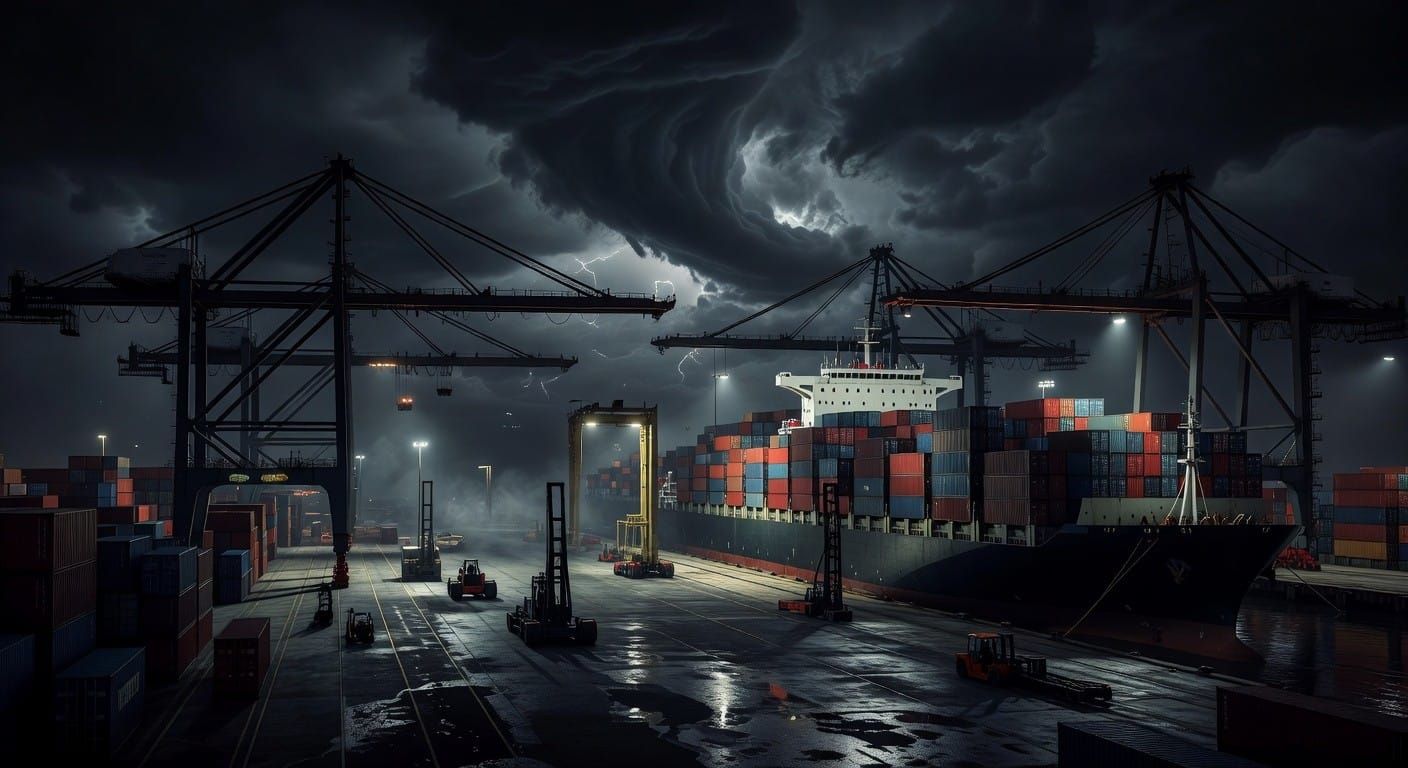
The world's chokepoints are no longer just military targets — they're investment battlegrounds.
In the past 18 months, a $22.8 billion transaction, a Supreme Court annulment, a Chinese state-order to European shipping companies, and the opening of a new Pacific gateway in Peru have collectively redrawn the map of who controls the infrastructure that moves global trade. The battle for the world's ports is accelerating — and for investors who understand what's at stake, the signal is loud.
The $23 Billion Flashpoint
In March 2025, Hong Kong-based CK Hutchison Holdings — controlled by billionaire Li Ka-shing — announced it would sell an 80% stake in its global ports division, Hutchison Ports, covering 43 terminals across 23 countries, to a consortium led by BlackRock and Mediterranean Shipping Company (MSC). The headline price: $22.8 billion. The headline claim from Washington: a strategic victory.
President Trump called it "taking back" the Panama Canal. Secretary Rubio echoed the framing. Hutchison shares surged 25–33% in a single session.
But the story that followed has been anything but clean.
Beijing intervened immediately, pressuring CK Hutchison to ensure China's state-owned COSCO Shipping received a controlling stake in the Panama assets. Chinese state media condemned the deal as "kowtowing" to Washington. The 145-day exclusivity window expired in July 2025 without closure.
Then, in January 2026, Panama's Supreme Court annulled the concessions for Hutchison's Balboa and Cristóbal terminals — the two facilities flanking the canal's Pacific and Atlantic entrances — citing procedural irregularities in a 2021 no-bid renewal. The Panamanian government seized interim control. Hutchison filed for international arbitration.
As of this week, the situation has escalated further: China has reportedly told Maersk and MSC to exit their interim operational roles at the Panama terminals, using economic and diplomatic leverage to reassert influence at the canal even as its formal ownership stake unravels.
The deal, restructured to exclude Panama, is still expected to close later in 2026 — covering approximately 41 other terminals across Europe, the Middle East, and the Americas.
Why This Is About More Than Panama
Panama handles roughly 5% of global trade and approximately 40% of U.S. container volume. But the Hutchison saga is a symptom of a much wider realignment.
Beijing has spent the past decade systematically building a global port network that now positions Chinese-controlled terminals near virtually every major maritime chokepoint:
- Suez Canal (12% of global trade): COSCO holds a 20% stake in the Suez Canal Container Terminal at Port Said.
- Strait of Malacca (25% of global trade, 40% of global oil): COSCO holds a 49% stake in Singapore's Cosco-PSA Terminal.
- Strait of Hormuz (20% of global oil): COSCO operates the Abu Dhabi Khalifa Terminal (40%) and Jeddah's Red Sea Gateway Terminal (20%).
- Mediterranean: Piraeus, Greece — 100% COSCO-owned — is the single largest container hub in the Mediterranean.
- Northern Europe: Hamburg (24.99%), Antwerp (20%), Rotterdam (17.85%), Zeebrugge (90%).
Together, COSCO and China Merchants Ports control an estimated 12.6% of global container throughput. The dual-use potential — commercial infrastructure that can be leveraged for intelligence, logistics prioritization, or in extremis, disruption — is not theoretical. It is, at this point, baked into every allied defense review.
This is where the analysis gets actionable. AlphaBriefing members get the full investment framework — scenarios, positioning, and the bottom line.
Subscribe to AlphaBriefing — Free, Member, and Paid tiers available.